Windows
Windows 10/11 - 64-bit installer
- Download the installer
- Run it and accept the prompt
- First launch takes about a minute, then the app opens
Every feature is a module: a folder with a manifest, a lazy-loaded page component and an entry in the registry. Drop one in, reload, and it shows up in the Modules page ready to toggle on.
frontend/src/modules/
├── _registry.ts        ← add your import here
├── your-module/
│   ├── manifest.ts     ← metadata, routes, nav, i18n
│   ├── YourModule.tsx  ← main page (React.lazy loaded)
│   └── index.ts        ← barrel export
Make frontend/src/modules/your-module/.
manifest.ts
Unique id, name, icon from lucide-react, category, optional deps, routes and nav items. Bundle translations if you need module-specific strings.
export default function YourModule() { ... }. Keep pure data logic in data/ and unit-test it with vitest.
Add the import + manifest to _registry.ts, and a nav.* key in i18n.ts for each language (the sidebar renders before async translations arrive).
Run npm run dev. Enable in Modules page → appears in sidebar → navigates via React.lazy. Search (/) picks up your searchEntries.
import { lazy } from 'react';
import { Sparkles } from 'lucide-react';
import type { ModuleManifest } from '../_types';

const MyModule = lazy(() => import('./MyModule'));

export const manifest: ModuleManifest = {
  id: 'my-feature',
  name: 'My Feature',
  version: '1.0.0',
  icon: Sparkles,
  category: 'tools',
  defaultEnabled: false,
  routes: [{ path: '/my-feature', title: 'My Feature', component: MyModule }],
  navItems: [{ labelKey: 'nav.my_feature', to: '/my-feature', icon: Sparkles, group: 'tools' }],
};idexport default (required for React.lazy)_registry.tsnav.* key in all 4 language blocks of i18n.tsdefaultEnabled: false (opt-in)Start with 110+ built-in modules, then build or install your own. From estimating to BIM to the field, with an SDK, hooks and a marketplace so the platform becomes exactly the software your business runs on.
Up and running in one command
pip install openconstructionerp
docker run -p 8080:8080 ghcr.io/datadrivenconstruction/openconstructionerp
Download
A native build of OpenConstructionERP. No Python, no pip, no Docker, no database to set up. One file, run it, done. Your data stays on your machine.
Windows 10/11 - 64-bit installer
macOS 12+ - Apple Silicon
AppImage, deb and rpm
curl -fsSL https://openconstructionerp.com/install.sh | shOne command and you are running
Already have Python or Docker? Pick a line, paste it, and the full ERP is up. No build step, no extra database to set up, your data stays on your machine.
pip install openconstructionerpopenconstructionerpNeeds Python 3.12+. Installs, then opens at http://localhost:8080.
docker compose -f docker-compose.quickstart.yml updocker run -d -p 8080:8080 -v oe_data:/data ghcr.io/datadrivenconstruction/openconstructionerp:latestBundles PostgreSQL and the app. Open http://localhost:8080 when it boots.
No six-figure licence to read back your own data.
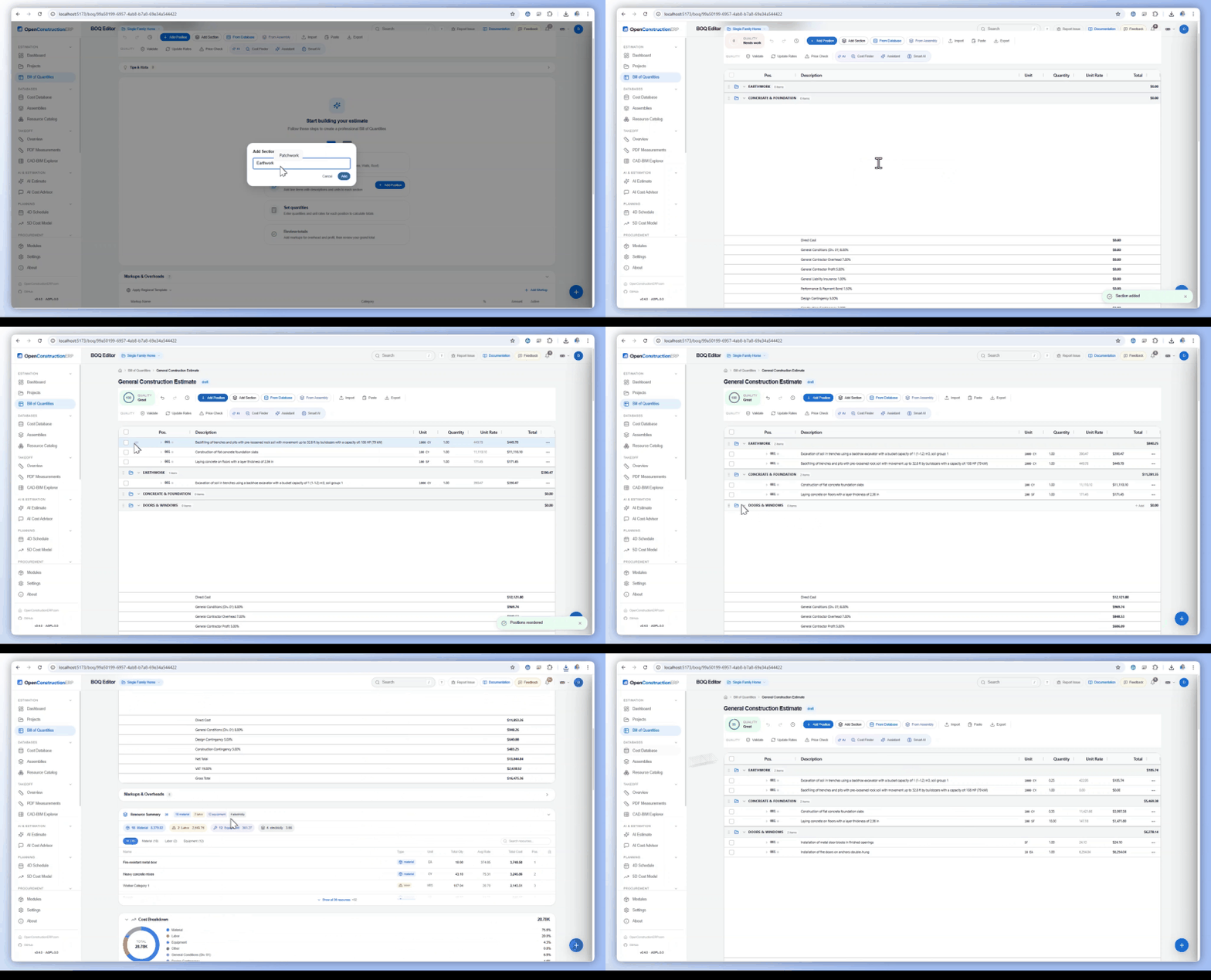
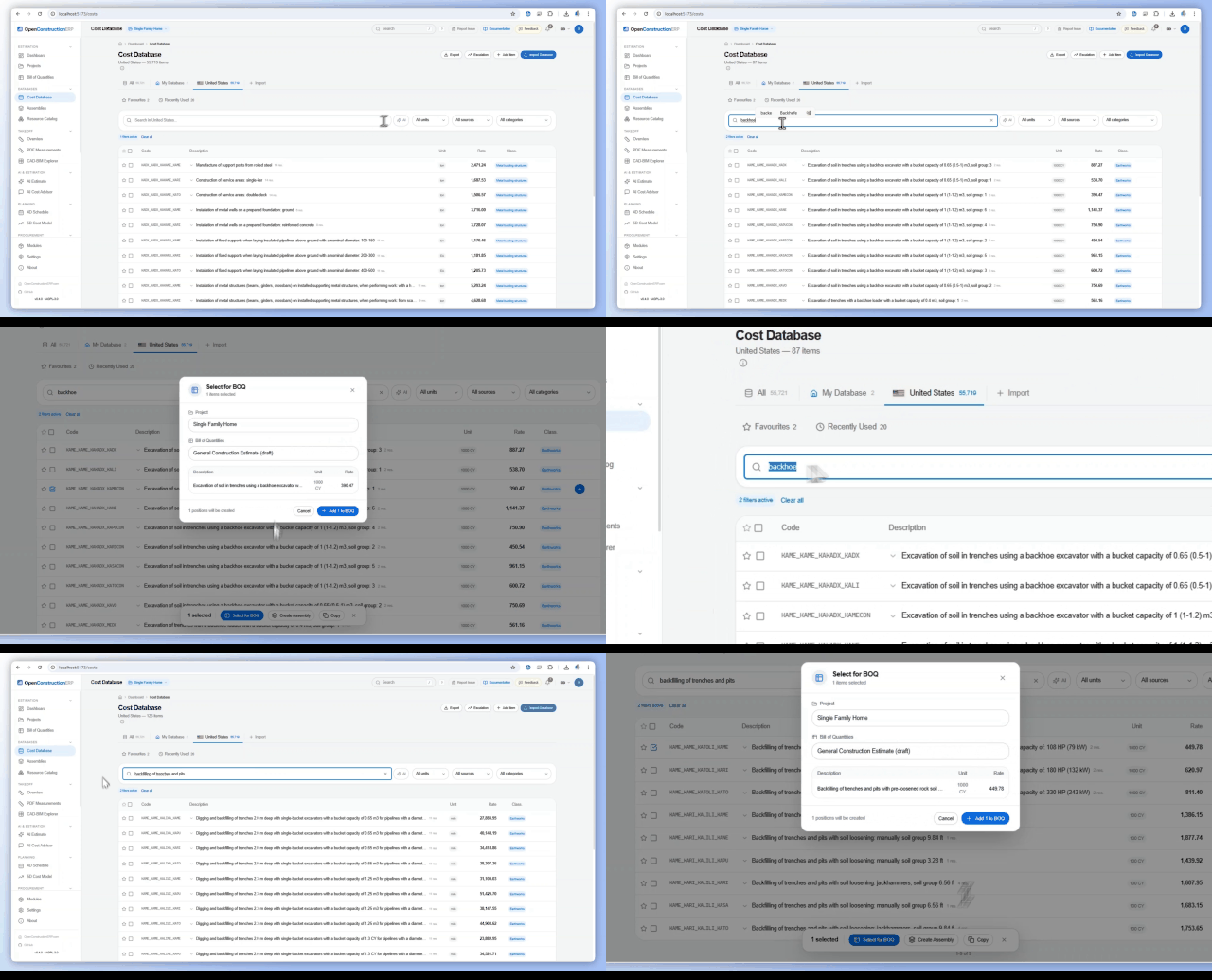
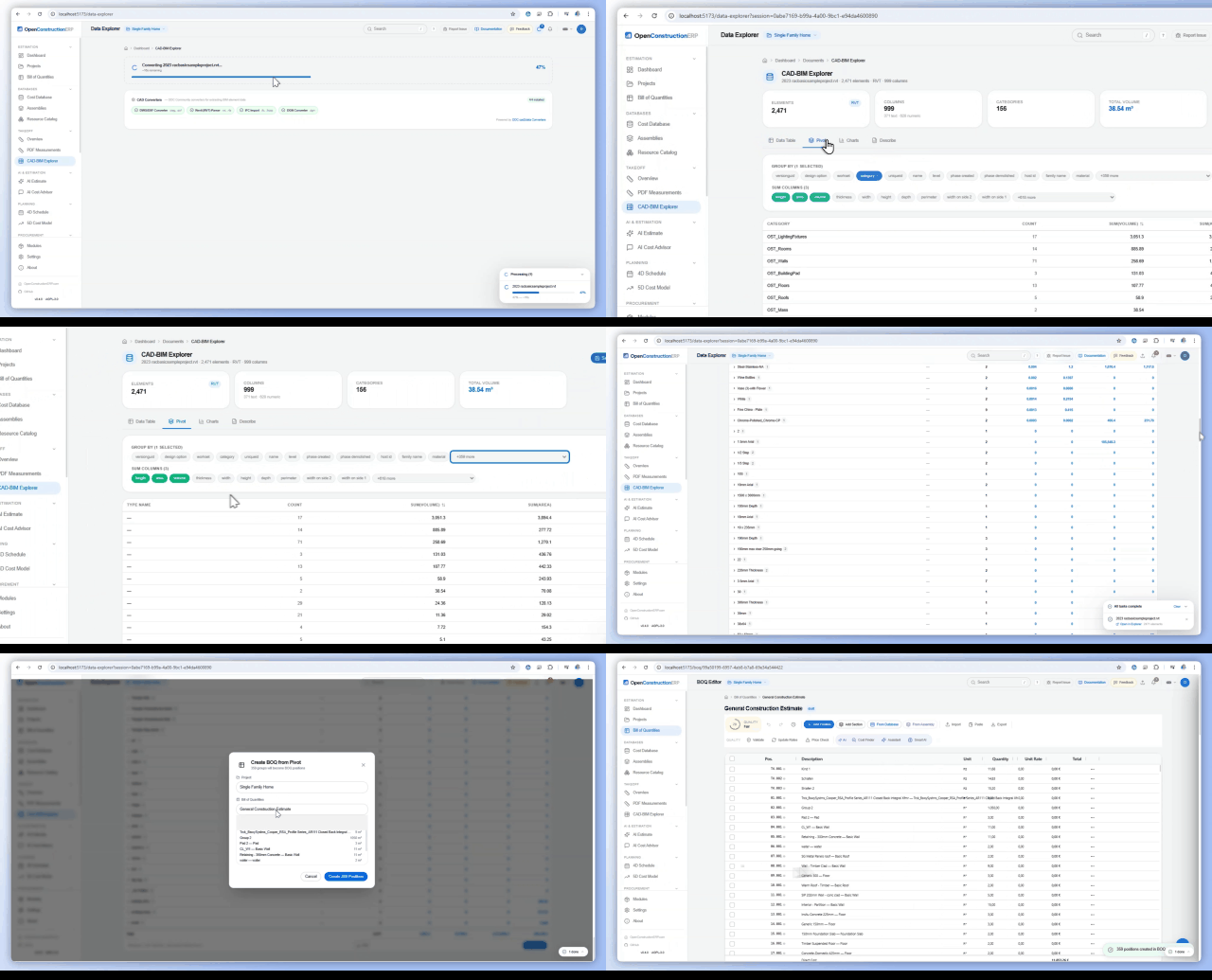
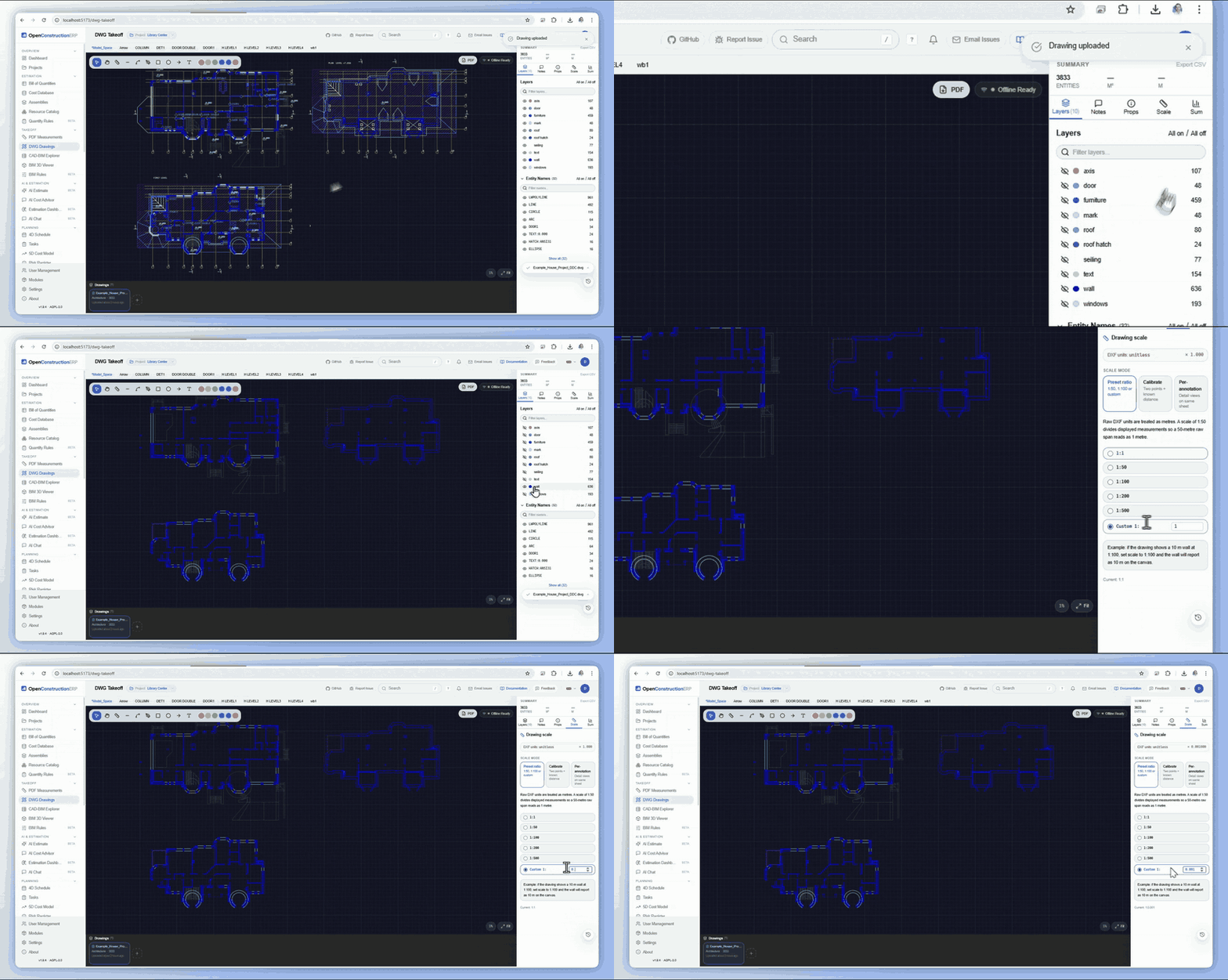
01 BOQ editor Build bills of quantities, priced rows
Estimating, takeoff, BIM, scheduling, finance, field ops, every module already wired into the same database. No marketplace, no paywalls, no per-seat add-ons.
Live KPIs, open work, recent activity. Customizable tiles per role.
Scan portfolio KPIs, click a tile to drill in
Create projects, set scope and currency, invite the team. The home base for every other module.
Create a project, set its essentials, open the hub
One unified file tree for documents, photos, BIM and CAD. Drag, drop, version, share.
Drop a file in, open it, the right tool launches
Hierarchical bill of quantities with assemblies, formulas, multi-currency, and live cost rollup.
Add priced positions, quantities and rates roll up live
Tens of thousands of priced positions across regions, with semantic search and rate history.
Search the priced catalogue, send the rate to your estimate
AI-ranked cost-code candidates per element group, with confidence scores and human review.
Match model elements to cost codes, priced BOQ appears
Reusable recipes: bundle materials, labor and equipment into one priced line you reuse across projects.
Bundle materials, labor and equipment into one rate, apply to BOQ
Master library of materials, products and SKUs across suppliers and regions, ready to drop into any BOQ.
Search a priced resource, drop it into your BOQ
Define how takeoff numbers turn into priced BOQ lines, then auto-apply to every model and drawing.
Write a rule, apply it, quantities fill the BOQ
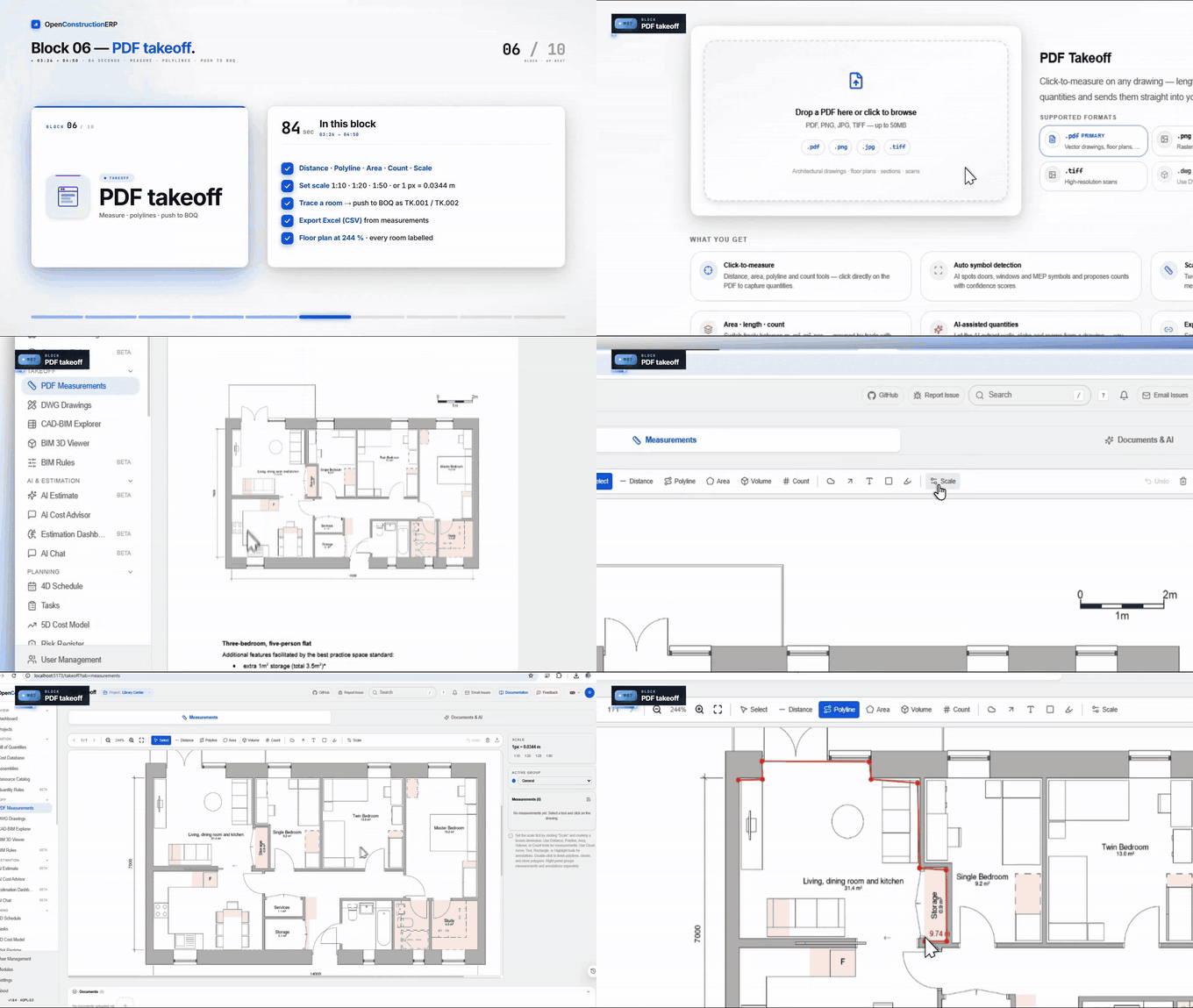
Click-to-measure on PDF drawings. Lengths, areas, counts push straight into the BOQ.
Click to measure on drawings, quantities push to BOQ
Import DWG drawings, isolate layers, count blocks and measure polylines without leaving the browser.
Measure off the DWG, quantities flow to the BOQ
Spreadsheet view over every element in your model. Filter, group, pivot, export as if it were a database.
Load a model, slice and pivot its elements, export
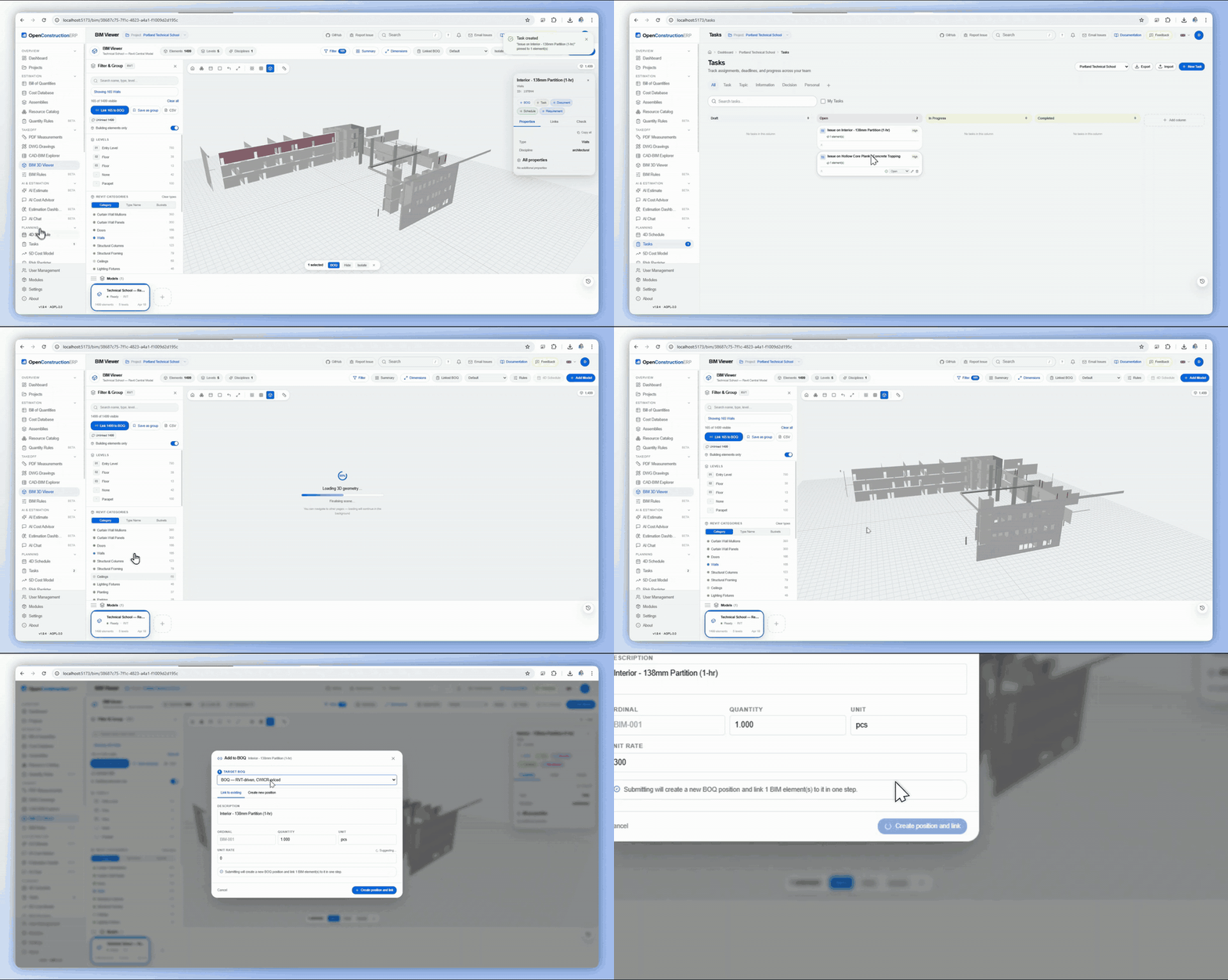
Upload IFC, RVT, DWG. View, slice, color by property, and link elements straight to the BOQ.
Open a 3D model, click elements, read quantities into the BOQ
Find geometric collisions across federated models with depth-aware clustering and issue tracking.
Run a check across models, triage every conflict it finds
Declare what your model must contain - required properties, value ranges - and validate every upload automatically.
Define your model requirements, validate every BIM upload against them
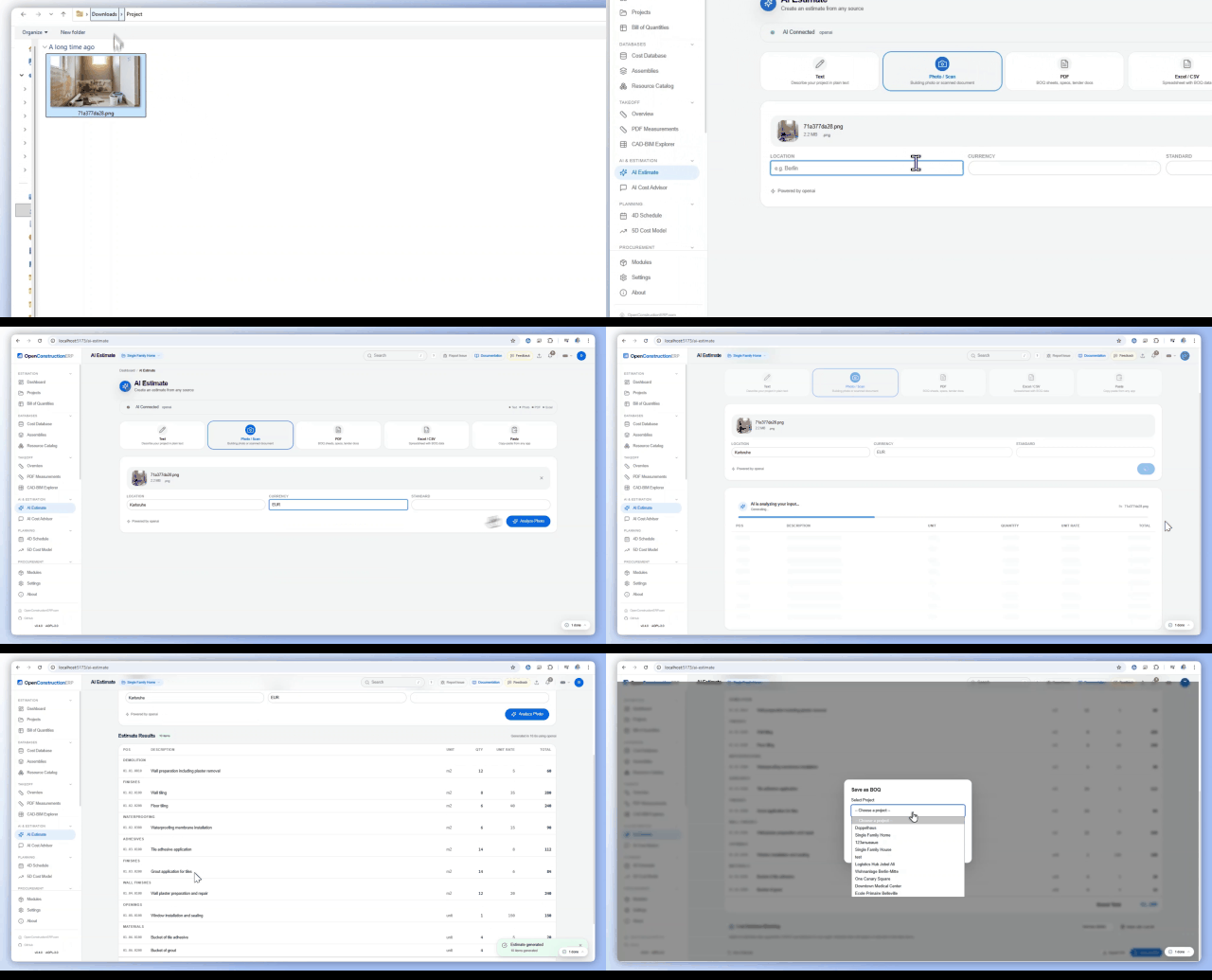
Photo, sketch or document in, first-pass priced estimate out. You review and adjust before saving.
Feed in a source, AI prices it, you confirm
Ask questions about your estimate in plain English. Get cited answers, not vague chatter.
Ask a cost question, get cited rates back
Project intelligence: completeness, cost benchmarks, anomalies and risks at a glance.
Grade estimate readiness, fix the top gap
Conversational interface across all your project data. "What's my exposure on lot 4?" works.
Ask in plain language, answers render as live tables
Build the project timeline with dependencies, milestones and a draggable Gantt view.
Build activities, drag them across the Gantt timeline
Critical path, resource leveling, baselines, what-if scenarios for planners who need the full kit.
Clear look-ahead constraints, lock in weekly commitments
Lightweight task tracker tied to projects, BOQ lines, drawings and people. Kanban or list view.
Add a task, drag the card across columns to done
Time-phased cashflow: see budget burn week-by-week as the schedule slides or scope changes.
Turn the BOQ into a budget, watch it burn
Log risks, score impact and likelihood, assign owners, track mitigation through to closeout.
Log a risk, score probability times impact, it lands on the matrix
Site log per day: crews on site, weather, deliveries, delays. Becomes the official record.
Open today's diary, log the day, sign it
Track machines, hours, fuel, service intervals. Move equipment between sites with full history.
Log machine hours, maintenance work orders fire automatically
Plan and assign crews, skills and rates. Match the right team to the right task without spreadsheets.
Assign a crew to dates, double-bookings flagged instantly
Maintenance tickets, callouts, recurring inspections. Close the loop from request to sign-off.
Log a ticket, dispatch an engineer, bill the visit
Lightweight outside-facing workspace for subcontractors, clients and inspectors. Share only what they need.
Invite an outsider, grant access to one resource
Budgets, invoices, payments and cashflow per project. Multi-currency with frozen FX appendix on every export.
Log invoices and payments, watch budget variance light up
Purchase orders, three-way invoice match, supplier scoring. From RFQ to delivery to payable, in one flow.
Raise a purchase order, issue it, turn it into a payable
Package a tender, send to suppliers, collect bids, compare side-by-side, award and convert to contract.
Package a BOQ, collect bids, compare, award the winner
Track scope changes from request through approval. Roll the delta back into the BOQ and budget automatically.
Log a scope change, approve it, delta flows to the BOQ
Pipeline of leads and opportunities, tied to estimates. Win-loss reasons feed back into your bid library.
Drag deals stage by stage across the pipeline, win or lose
Master and subcontracts with their clauses, milestones, retentions and signatures all in one place.
Set up a contract, bill progress claims against it
Roster of trades with rates, insurance, performance scores. Pull them into bids in a couple of clicks.
Prequalify a trade, approved firms unlock for bids
Track every bid you've sent and received, with status, leveling, anomalies, and award recommendations.
Level bids side by side, award the winner
Branch a contract version, price the variation, get sign-off, merge back. The same way you handle code, for scope.
Raise a variation, price the impact, approve into an order
Live price lists from your suppliers, mapped to your catalog. Refreshable without breaking historic estimates.
Import supplier price lists, compare per item, buy cheapest
Track lots, units and assets across a development. Sales, leasing, handover dates and warranty in one view.
Reserve a unit, sign the contract, hand over keys
Address book for every company and person on a project. Linked to bids, contracts and correspondence.
Add a company or person once, reuse everywhere
Schedule, agenda, attendees, minutes, action items. Linked to the decisions they produce.
Log the meeting, complete it, action items become tasks
Requests for information with deadlines, attachments and a clear answer trail. No more lost email threads.
Raise a question, track ball in court, answer lands on record
Materials and product approvals tracked from submission to acceptance, with reviewer comments.
Submit a drawing or sample, reviewer returns an approval decision
Send drawings and documents with a proper paper trail: who got what, when, and which revision.
Issue documents to recipients, track who acknowledged receipt
Project email and letters logged against the work they touch. Searchable years later.
Log each letter, attach the file, link the thread
Inventory of physical and digital assets handed over to the client, with warranty and service info.
Record each asset's warranty and service details, export for handover
Common data environment for drawings, models and specs. Status, revision, ownership, all visible.
Move each document container through WIP, Shared, Published
Site photos with date, location and the BOQ line or drawing they relate to. Filter by anything.
Drop in site photos, tag them, find any shot fast
Annotate drawings, PDFs and models. Comments, callouts and clouds saved against the source file.
Draw a markup on the drawing, it sticks to the page
Structured site reports - progress, issues, photos - sent from the field, ready to share with stakeholders.
Log the site day, submit, get it approved
Pre-built and custom report templates. Export to PDF, Excel and JSON. Schedulable.
Pick a report, choose a format, download the file
Build your own dashboards over project, cost and operational data. Drag, drop, drill down.
Open a board, live KPIs render, click to drill in
Run rule sets against any import - BOQ, drawings, models - and get a traffic-light report you can act on.
Pick a BOQ, hit Run, read the traffic-light report
Walk-the-site checklists with pass/fail items, photos and electronic sign-off, online or offline.
Run the checklist, mark pass or fail, raise the defect
Log defects and deviations, assign root cause, track corrective action through to closeout.
Log a defect against spec, fix the cause, close it out
Toolbox talks, incident logs, near-miss reports and corrective actions tied to the work where they happened.
Log an incident or hazard, safety stats update instantly
Closeout snag list per area, trade or unit. Photo, owner, due date, status - visible to the whole team.
Log a snag, drive it to a verified close
Document control, ITP plans, audits and certifications, ready for client and third-party reviews.
Inspect against ITP hold points, sign off or raise an NCR
Health, safety and environment compliance with hazard registers, JSAs and statutory reporting.
Drive a safety finding from investigation to verified close-out
Embodied and operational carbon per project. Compare design options before they're built.
Tag BOQ items with carbon factors, footprint adds up
A set of the flagship modules, each shown as a short loop of its core workflow - the same idea you act out the first time you open it.
Type a position, quantity x rate fills in, the total rolls up live.
Trace a wall on the drawing, the measured length drops into a position.
Select model elements, their quantities flow straight into priced lines.
Search 55,000+ priced positions, the matched rate lands on your line.
Tasks roll out as Gantt bars; the critical path threads through them.
Drop a photo or PDF; a scoped, priced first-pass estimate comes back.
Inspections clear the hold point, then the handover is signed off.
Issue a controlled revision; each recipient is tracked until acknowledged.
One RFQ reaches vendors; the lowest quote is awarded a purchase order.
Clear the permit-to-work checklist, then pin an observation on the site plan.
Capture weather, crew and progress on site; it syncs into the project log.
Sweep the scanned points; clean model surfaces resolve from the cloud.
Thousands of simulated runs build an S-curve; read the P50 and P80 dates.
Several projects roll up into one live set of cross-project KPIs.
Open changes rank by urgency; the most urgent routes to whoever owes the next move.
Planned, earned and actual cost track together; the variance reads off at the data date.
 PDMS
PDMS
 Brevart
 Tekhne
 ATMIID
 Optimum Technology
 Erbud
Erbud
 AtkinsRéalis
 Mace Group
 Swietelsky
 Teichert
 Elevait
 MAD Engineers
 Construccions 360 Plus
PDMS
Brevart
Tekhne
ATMIID
Optimum Technology
Erbud
AtkinsRéalis
Mace Group
Swietelsky
Teichert
Elevait
MAD Engineers
Construccions 360 Plus
Construccions 360 Plus
PDMS
Brevart
Tekhne
ATMIID
Optimum Technology
Erbud
AtkinsRéalis
Mace Group
Swietelsky
Teichert
Elevait
MAD Engineers
Construccions 360 Plus
 LMH
LMH
 ILO
ILO
 Niven Builders
 DK Construction
 Consolis
 Colas
Colas
 Max Bögl
 Colas Rail
 Unispace
 Arkad
Arkad
 Basil Read
 C&C Consulting
LMH
ILO
Niven Builders
DK Construction
Consolis
Colas
Max Bögl
Colas Rail
Unispace
Arkad
Basil Read
C&C Consulting
C&C Consulting
LMH
ILO
Niven Builders
DK Construction
Consolis
Colas
Max Bögl
Colas Rail
Unispace
Arkad
Basil Read
C&C Consulting
 Tegrity Contractors
 PW Pole Barns
 Digitarh
 Overzicht
 CSTB
CSTB
 Midea
Midea
 Forida
 Yutopias
 Matrits
 Virtuza
Tegrity Contractors
PW Pole Barns
Digitarh
Overzicht
CSTB
Midea
Forida
Yutopias
Matrits
Virtuza
Virtuza
Tegrity Contractors
PW Pole Barns
Digitarh
Overzicht
CSTB
Midea
Forida
Yutopias
Matrits
Virtuza
One pipeline, three stages, six file types in. Photos and PDFs on one side, a tender‑ready BOQ on the other - every element classified, measured, priced and traceable.
▸ Worked example · one wall, end-to-end
▸ Element
Wall_Lvl01_E034
stable across model revisions
▸ Class
DIN 276 · KG 330
Außenwände · external wall
▸ Geometry
12.5 × 3.0 × 0.24 m
9.0 m³ · 37.5 m²
▸ Properties
Concrete C30/37
F90 fire rating
▸ Cost
CWICR · DACH
€ 245 / m³ matched
▸ BOQ line
9.0 m³ × € 245
€ 2,205 on the tender
AGPL-3.0 on GitHub. Issues and the roadmap live there; if you want to see what's coming next or what broke last week, it's all on the commit log.
Every issue, PR and roadmap item is public on GitHub. Open an issue, comment on what matters, or send a PR. Contributions of any size are welcome.
No borrowed seals. Every mark here is either a plain fact about the software or a public badge you can check yourself: open standards we read and write, an OSI-approved licence you can read line by line, and your data on your own server.
What is not here, on purpose. Certifications that need a paid third-party audit (a certified EU GDPR seal, GoBD per IDW PS 880, ISO 27001) are not shown. We will only ever display a certificate once it is genuinely earned.
A short walkthrough of the whole pipeline - drawing in, tender out. No voiceover, no narration, just the product doing what it does.
What ships in the box on the current release. Cost data, CAD formats, modules and licensing, with the headline figures in one place.
ready-to-use cost items across trades and assemblies.
native CAD ingest, DWG, RVT, IFC and DGN into one canonical format.
plug-in modules covering the full site workflow, projects, BOQ, takeoff, tenders and more.
open-source core under AGPL-3.0. No vendor lock-in. Your data stays yours.
A straight side-by-side. Commercial suites lead on a few things, mostly integrations paid for over a decade. On everything else, OpenConstructionERP already matches or beats them, at zero licence cost.
| Capability | OpenConstructionERP | Enterprise estimating suite | Heavy civil bid tool | Legacy construction ERP |
|---|---|---|---|---|
| Open-source core (AGPL-3.0) | ✓ | ✕ | ✕ | ✕ |
| Self-host on your infra | ✓ | ~ | ✕ | ~ |
| AI takeoff from PDF / photo | ✓ | ~ | ✕ | ✕ |
| Multi-CAD ingest (DWG / RVT / IFC / DGN) | ✓ | ✓ | ✕ | ✕ |
| 55,000+ cost items out of the box | ✓ | ~ | ✓ | ~ |
| Real-time multiplayer (CRDT) | ✓ | ✕ | ✕ | ✕ |
| 20 languages in core i18n | ✓ | ~ | ✕ | ~ |
| Modular plugin architecture | ✓ | ✕ | ✕ | ✕ |
| Typical cost / seat / yr | € 0 · self-host | € 10-15k | € 6-12k | € 3-8k |
| Implementation / onboarding | € 0 · docs + community | € 20-80k | € 15-40k | € 30-150k |
| Contract term | None · cancel anytime | 1-3 yr lock-in | 1-3 yr lock-in | 3-5 yr lock-in |
OpenConstructionERP is an open platform, not a closed product you have to fit into. You get 110+ working modules on day one, and the same building blocks the core is made of, so you can extend it, connect it and turn it into exactly the software your business runs on.
Estimating, BIM, takeoff, scheduling, finance and field ops are already built in and wired into one shared database. Switch on what you need and ignore the rest.
Scaffold a new module in one command with the SDK and CLI, drop it into your install and it loads in seconds. No fork, no rebuild, no waiting on anyone.
Reach past the surface. Subscribe to events and attach hooks to change how the core behaves, so your own logic runs right alongside ours.
Publish a module for your team or the community, and install what others have built. Regional cost data, connectors and rule sets, a click away.
Begin from ready-made building blocks inside the app, shape them to your workflow and reuse them across every project. Never start from a blank page.
One open platform, AGPL-3.0 and yours to build on, so the software your business runs on is finally your own.
Every feature is a self-contained package. Drop it in, pull it out - the running install picks it up in seconds, zero downtime.
Every feature is a Python package with a manifest. You can add one to a running install without rebuilding anything. The APIs are typed; the OpenAPI spec is generated, not hand-maintained.
make module-newfrom openestimate import Client, Project client = Client(url="https://api.yourco.com") # Create a project and import CAD project = client.projects.create( name="Logistics Hub - Jebel Ali", currency="EUR", ) cad = project.cad.upload("./plans.ifc") takeoff = cad.takeoff(ruleset="boq_quality") # AI matches costs, you confirm for pos in takeoff.positions: if pos.confidence > 0.85: pos.accept() print(project.totals.grand) # → Decimal('4_283_921.50')
# Create project
$ curl -X POST https://api.yourco.com/v1/projects \
    -H "Authorization: Bearer $TOKEN" \
    -H "Content-Type: application/json" \
    -d '{"name": "Logistics Hub", "currency": "EUR"}'

# → HTTP 201 Created
#   Location: /v1/projects/5fa4-...

# Upload CAD and run takeoff
$ curl -X POST .../projects/5fa4/cad \
    -F "file=@plans.ifc" \
    -F "ruleset=boq_quality"

# → { "positions": 248, "confidence_avg": 0.91 }
# modules/my_module/manifest.py
from openestimate.sdk import ModuleManifest

manifest = ModuleManifest(
    name="oe_regional_prices",
    version="1.0.0",
    display_name="Regional Prices",
    depends=["oe_costs"],
    hooks={
        "cost.match.pre": "adjust_for_region",
    },
)

# Drop this folder in modules/, restart.
# Marketplace auto-discovers on next boot.
Deliberately boring choices. All open-source.
These are the jobs teams run on OpenConstructionERP every day, from the first rough estimate to handover on site. Each one is a few clicks from the next, on one shared set of data.
Build a bill of quantities on 55,000+ priced items across national cost bases, with assemblies and live totals as you work.
Estimating and BOQTake off areas, lengths and counts straight from PDFs and models, with AI suggestions you confirm, and feed them into the estimate.
Quantity takeoffRead quantities from BIM for 5D cost and 6D carbon, keep them linked to the model, and skip the manual re-keying.
BIM to cost and carbonPackage the scope, invite subcontractors and compare bids side by side, with the price spread and coverage flagged for you.
Tendering and bidsSchedule the works, then follow progress, earned value and change as it happens, with the plan tied back to the estimate.
Planning and controlsKeep the daily diary, inspections, RFIs, checklists and site photos in one place, captured from the field on any device.
Site and field opsThis is only a slice. The same platform also handles the rest of the job.
Seven steps from first-run to finished tender. Follow them in order or jump ahead. Each one plays a short capture from the running app.
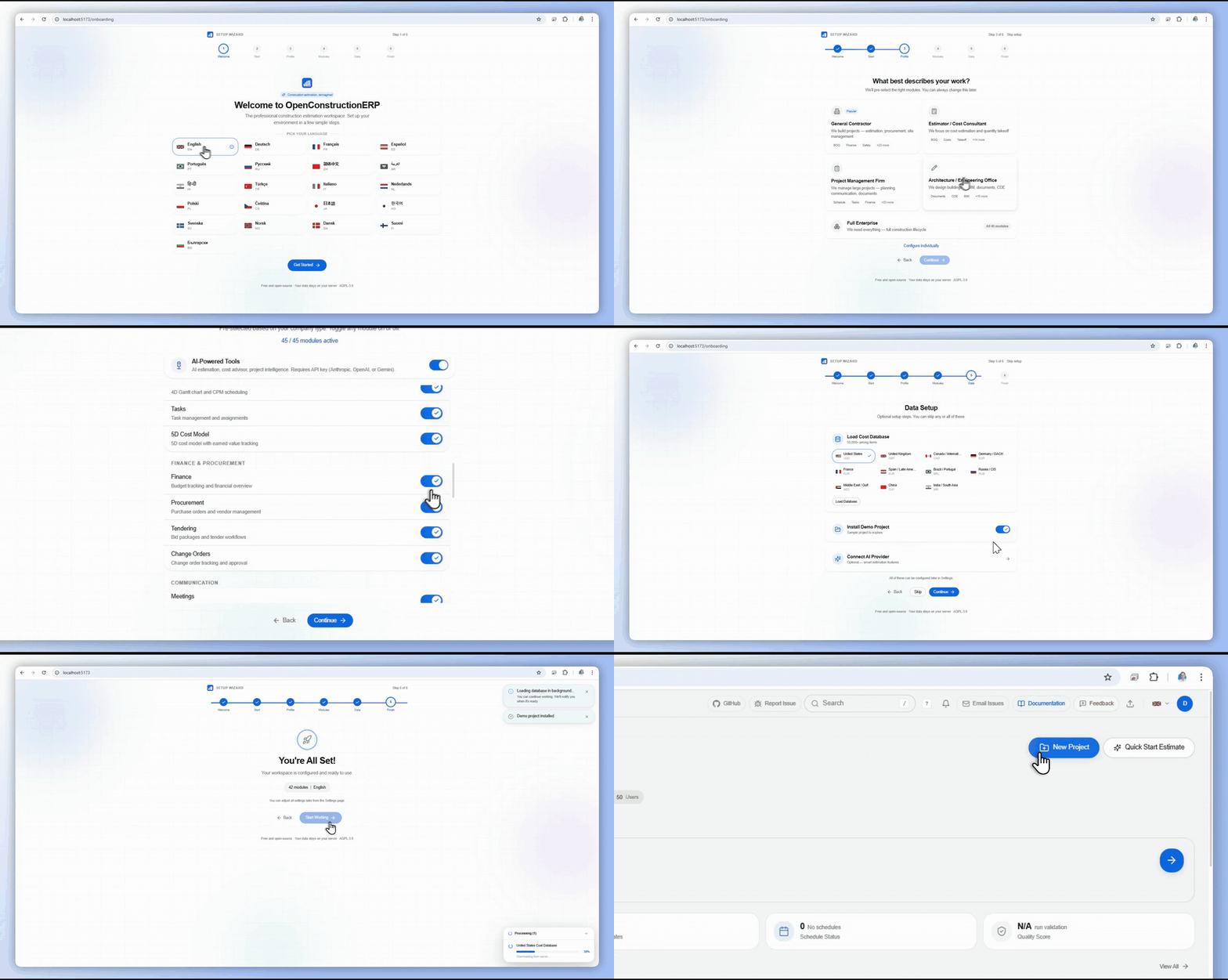
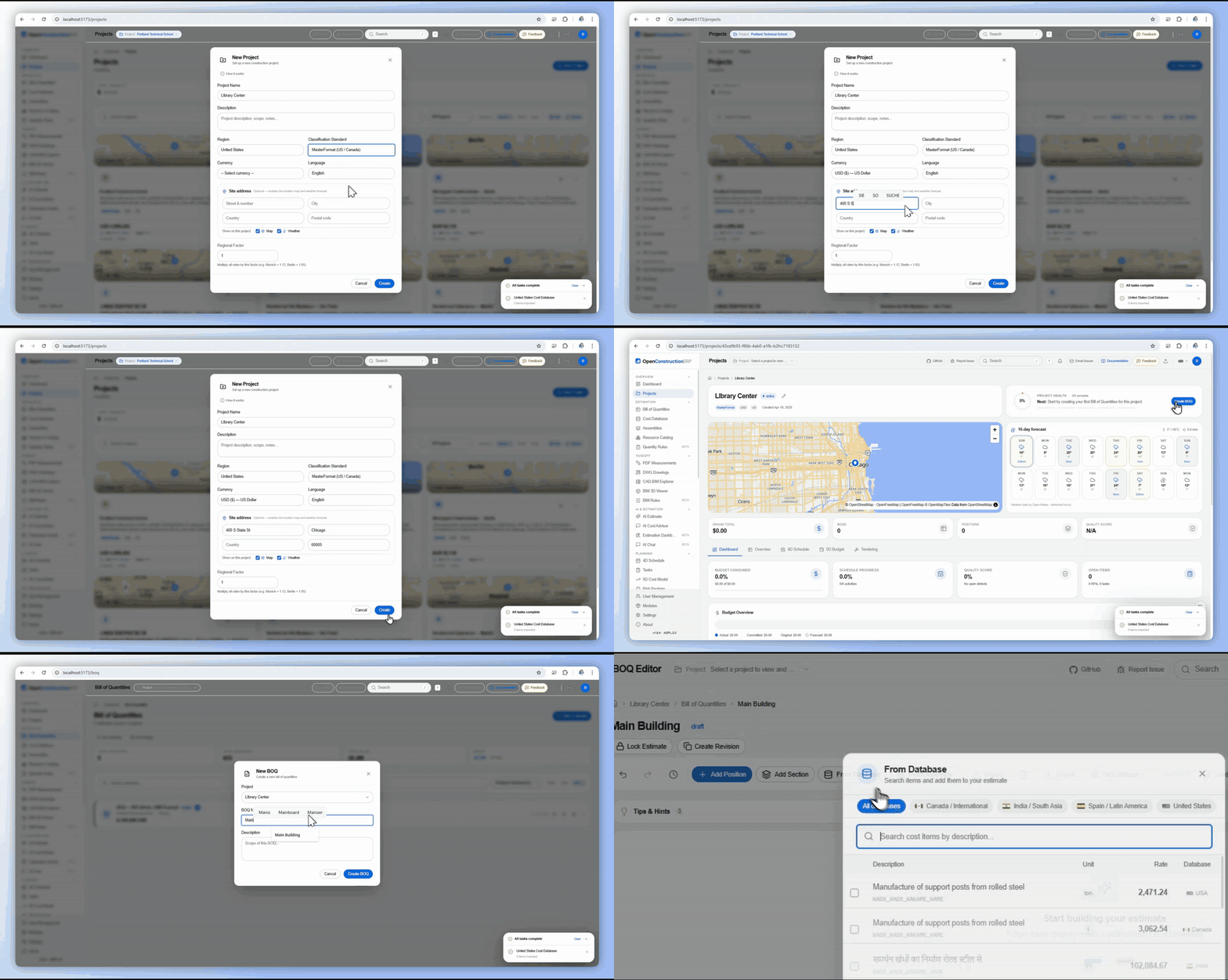
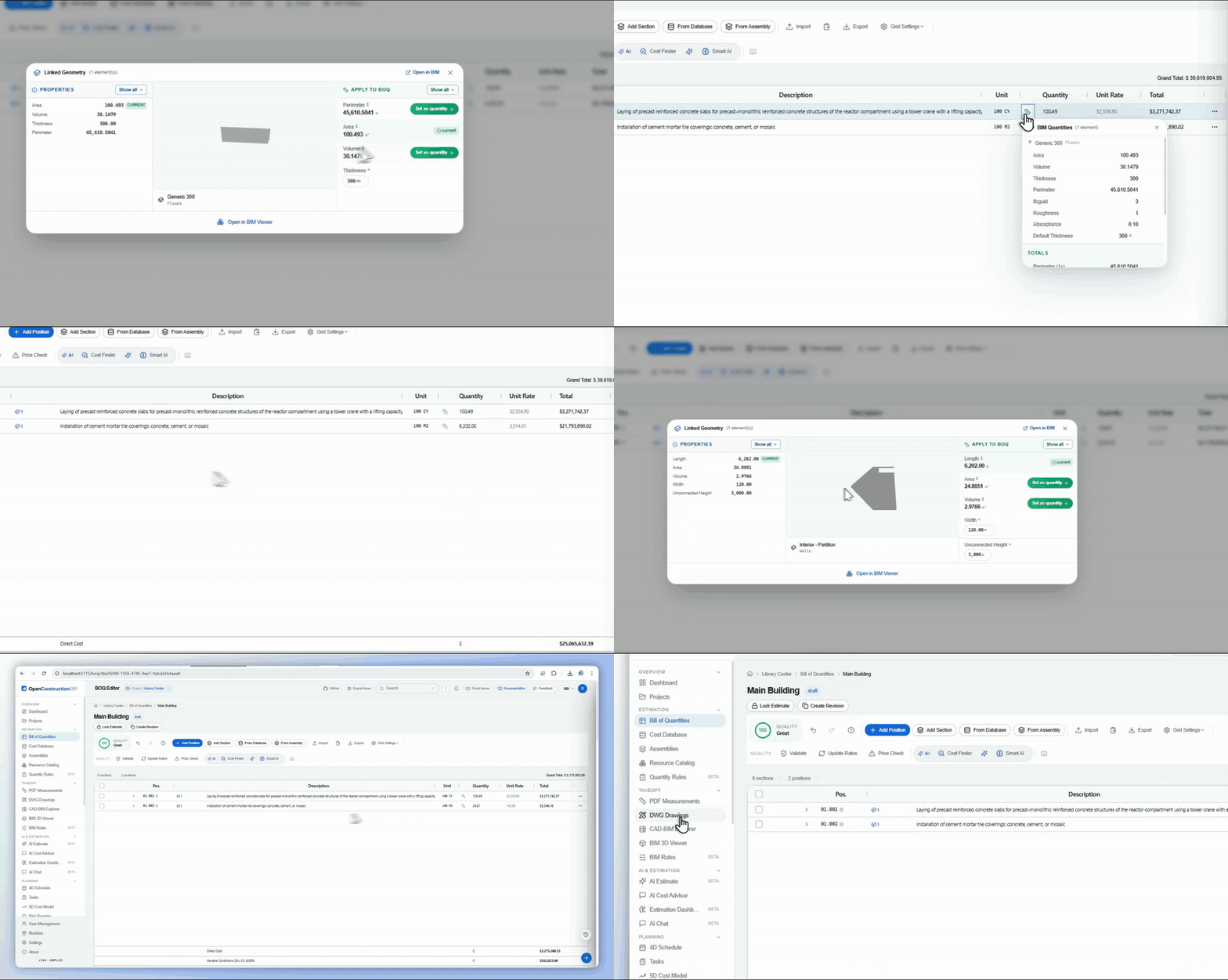
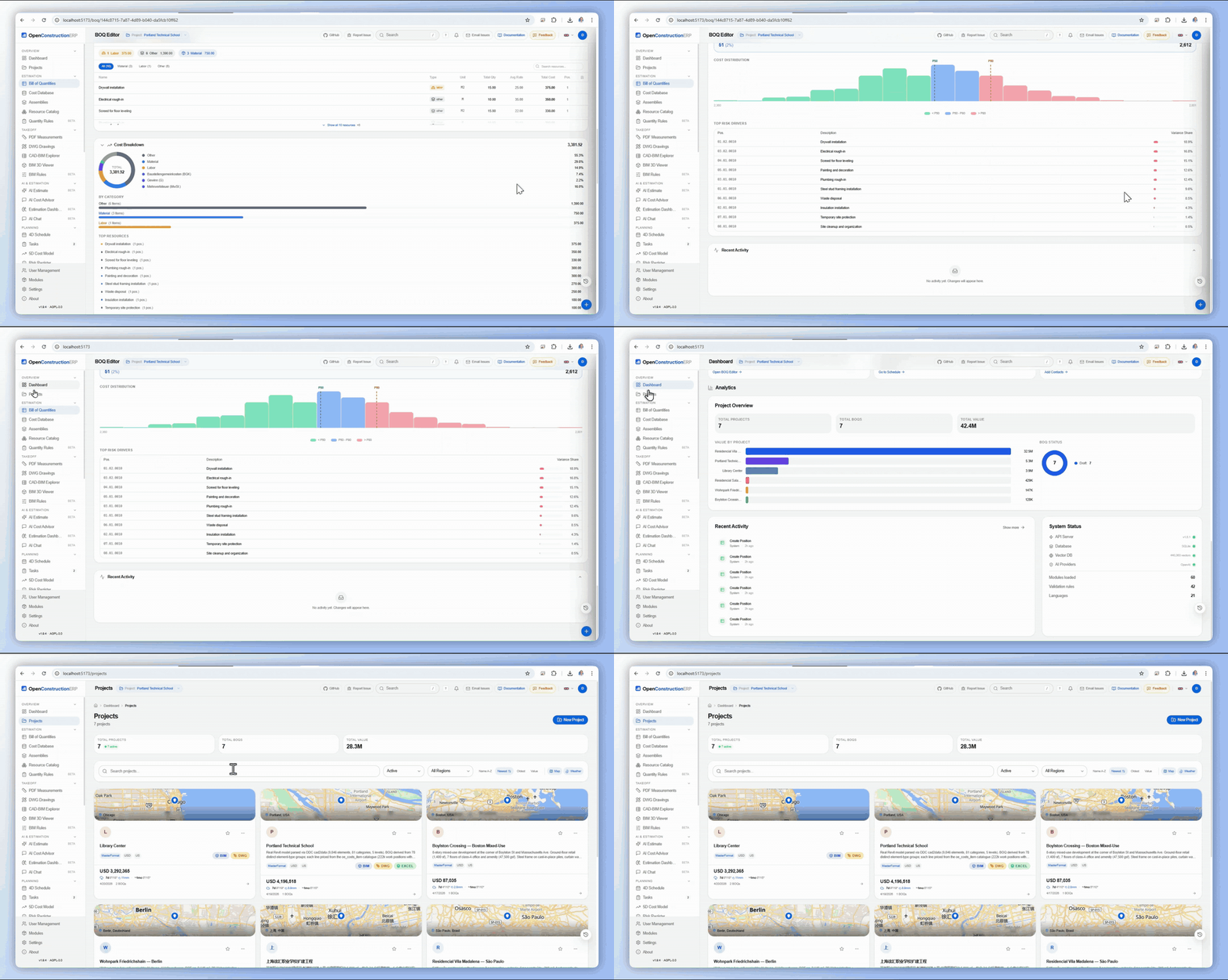
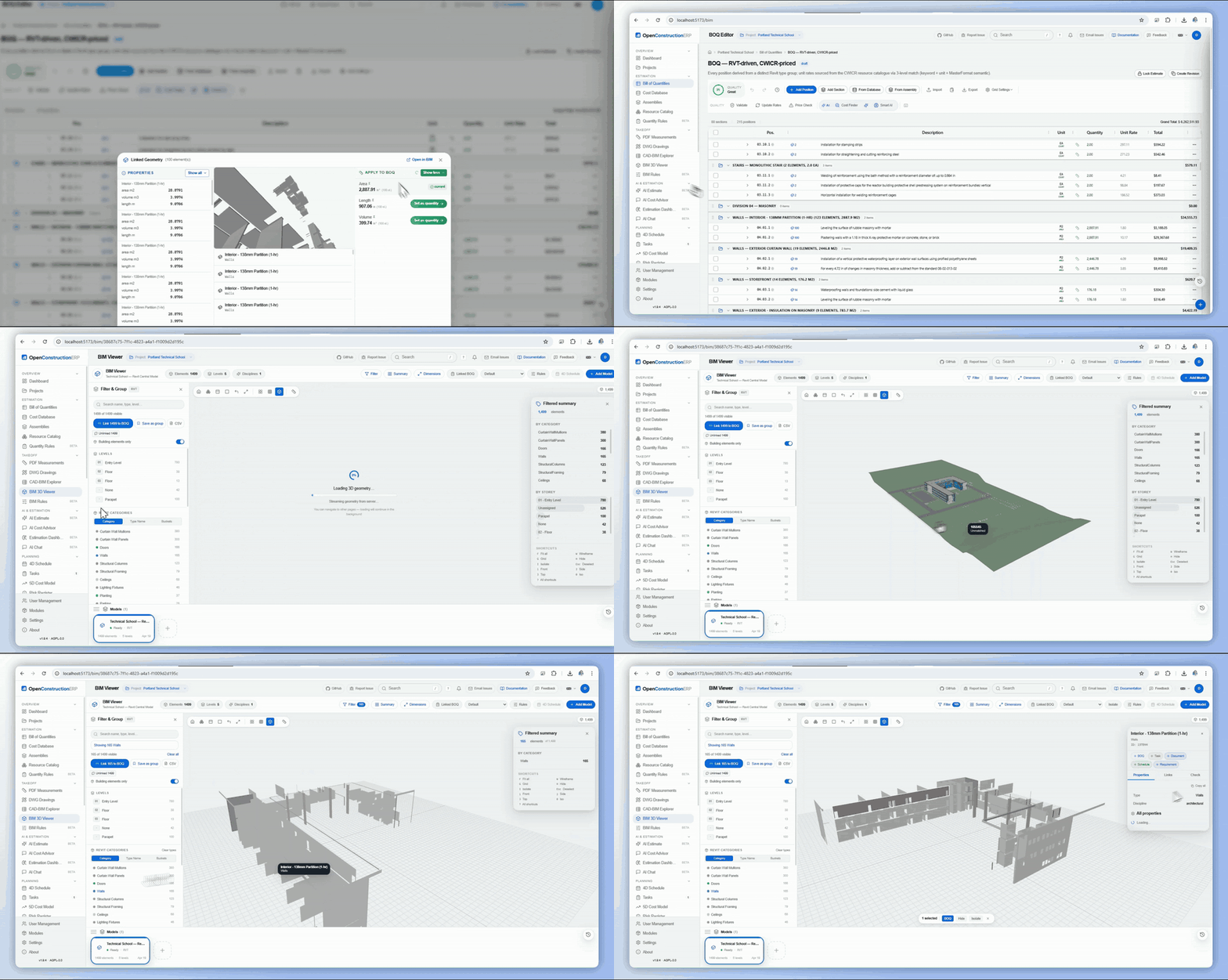
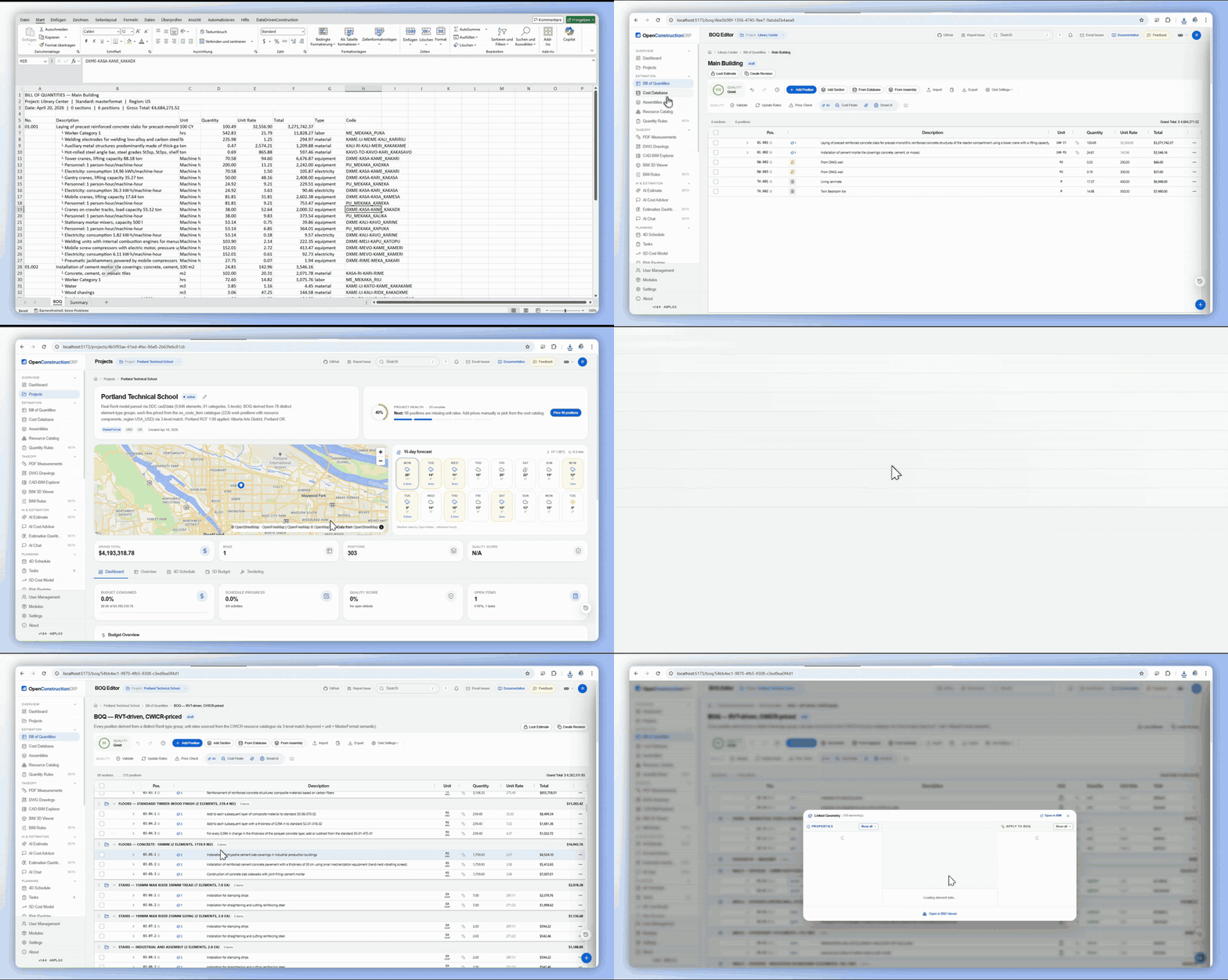
First run. Pick language, region and currency, the app comes with a starter cost database (55,000+ priced positions) already loaded. Zero setup, no seed-data dance.
OpenConstructionERP grows out of a decade of open construction‑tech research. The cost database, CAD parsers and ML models it depends on were built and refined inside the same open lab, and ship as part of the same ecosystem.
Over the past ten years, I have been deeply involved in resource management for construction projects. This journey inevitably led me to study the history of the technologies that have shaped the industry, from the earliest attempts at design automation to modern ERP platforms (see the series of articles “The Lobbyists’ Wars and the Development of BIM” and “The History of the BIM Map”). Without understanding where we came from, it is impossible to see where we are going.
Over the years, dozens of articles have come off my desk, read by millions of professionals around the world. At the same time, I’ve consulted with major construction and consulting firms, developers, and software vendors themselves on data management in projects, helping them navigate processes where data is not a byproduct but the foundation for decision-making. This work gave me a rare opportunity to see the industry from both sides: through the eyes of those who create the tools and through the eyes of those who use them in real projects every day. Many of these observations and reflections are collected in my book Data-Driven Construction, which is now available in 16 languages, at datadrivenconstruction.io/books.
Two other things have kept me busy: helping non-developers get into proprietary formats that were never meant to be opened, and finding a cleaner way to describe construction work through a resource model. These efforts have resulted in free tools, the DDC CAD/BIM data converters (RVT, IFC, DWG, DGN → structured data), available on GitHub, and the multilingual CWICR database of construction works and resources, over 55,000 items in 11 languages, published as OpenConstructionEstimate-DDC-CWICR. All of this was a necessary step toward an idea I’ve been pursuing for the past decade, an open-source modular ERP for the construction industry.
The recent generation of AI tooling finally made it feasible to consolidate that work, the methodology, data models, and prior implementations, into a single platform. It’s now public and open source.
Progress is born from dialogue, from the clash of perspectives and openness to new approaches. I would be grateful if you would be willing to participate in this conversation on the inevitable Uberization of the construction industry and the transparency of cost and time estimation processes for construction projects.
Artem Boiko
founder, datadrivenconstruction.io
 AECOM
AECOM
 Drees & Sommer
 VINCI Energies
 Lindner
 Artelia
 bechtle
 Merck
Merck
 RBS wave
AECOM
Drees & Sommer
VINCI Energies
Lindner
Artelia
bechtle
Merck
RBS wave
RBS wave
AECOM
Drees & Sommer
VINCI Energies
Lindner
Artelia
bechtle
Merck
RBS wave
 Shapemaker
 Scholze-Thost
 VRAME
VRAME
 AXIA Energia
 AFRY
AFRY
 Hofschröer
 TDF
TDF
 Renaissance Construction
Shapemaker
Scholze-Thost
VRAME
AXIA Energia
AFRY
Hofschröer
TDF
Renaissance Construction
Renaissance Construction
Shapemaker
Scholze-Thost
VRAME
AXIA Energia
AFRY
Hofschröer
TDF
Renaissance Construction
 Hyundai AutoEver
 Sintagma
 Trafikverket
 TMM Group
 Dar Al Riyadh
 pbs Ingenieure
 ZPP
ZPP
 SCON GmbH
Hyundai AutoEver
Sintagma
Trafikverket
TMM Group
Dar Al Riyadh
pbs Ingenieure
ZPP
SCON GmbH
SCON GmbH
Hyundai AutoEver
Sintagma
Trafikverket
TMM Group
Dar Al Riyadh
pbs Ingenieure
ZPP
SCON GmbH
Most civil design files are basically data prisons. Loads of useful info, alignments, surfaces, quantities, just sitting there, locked inside formats that were never meant to play nice with anything outside their original software. I’ve wasted way too much time trying to answer simple questions like ‘how many manholes are in this job?’ or ‘what’s the volume by phase?’, only to find out the data’s buried five layers deep in a DWG or DGN. Data Driven Construction fixes that. Their converters crack open these closed formats and give you structured data you can actually use, in Power BI, in Excel, or even in an LLM prompt if you’re doing something fancy. It’s not flashy, but it’s insanely useful. If you’re trying to move beyond screenshots and PDFs and actually use your design data, this is the kind of tool that makes it possible. It’s the difference between guessing and knowing. And honestly, it’s saved me more than a few Saturday mornings.

Be part of the movement with DataDrivenConstruction! Let’s make true freedom in data formats a reality and catalyze a new era of productivity and innovation in construction. The real and necessary journey from closed to “open” formats has not even started: True freedom in data formats, free from proprietary ties and accessible to all, is what we need to unlock innovation and collaboration across the construction industry, particularly benefiting the 99% of construction, i.e. SMEs and unchaining the sector for accelerated growth.

Two paths. Run it yourself for free under AGPL-3.0, or talk to us when you need hosted support, a commercial license for the converters, or anything else that shouldn’t live in the open-source license.
The full open-source platform. Run it on your infra, no strings attached.
When you need managed hosting, commercial licensing for the converters, or anything that doesn’t fit under AGPL, tell us what you need and we’ll scope it.
Learning, teaching or doing research? You get the whole thing for free: the full platform, the cad2data converters and the regional cost data. Build your coursework, a thesis, even your own student startup on it.
Doesn't fit a tier? We design a stack tailored to your operations and hand it over with full source. Your hardware. Your data. Your rules.
Discovery → workshop → modules picked → built → deployed on your hardware. Source delivered.
Hands-on sessions: estimating, BIM-to-BOQ, AI takeoff, GAEB pipelines. Recorded for your team library.
Standards mapping, cost-DB strategy, pipeline architecture, code review.
Public workshops shown below. Many major enterprise engagements remain under NDA - represented anonymously by the lock cards in each row.


Awesome workshop, Artem! Preparations are in full swing! I’m already looking forward to the hackathon in the new year! 💪🏻

What happens when you not only organize construction processes, but also analyse them intelligently? This was the topic of our workshop with Artem Boiko on “Data-Driven Construction”. The focus was on the question of how we can make better use of existing data - to make construction projects more efficient, more transparent and less error-prone. Using specific application examples, Artem showed how structured construction data can help to maintain an overview, identify supplements at an early stage and improve communication between planning and execution. Particularly exciting: how digital tools and models can already be used today to automate processes. Data-driven construction is no longer a topic for the future - we are right in the middle of it. The workshop showed how great the potential is if we work together and really make data work for us.

Artem Boiko delivered an outstanding presentation to the entire Shapemaker team, providing deep insights into data migration from engineering software and related topics. His expertise and clear communication made complex concepts easy to grasp, equipping our team with practical knowledge we can apply immediately. Highly recommend his services for anyone seeking clarity and actionable strategies in this space!

Ich fande DataDrivenConstruction Workshop sehr interessant. Meiner Meinung nach konnten alle folgen. Man merkt auch anhand deiner Folien wieviel Zeit, Ausdauer und Mühe du hineingesteckt hast. Auch die Live Präsentationen waren super. Das einzige was ich bemängeln würde, wäre die Anzahl der Folien, dadurch kamen zu viele slides zustande. Aber das ist meckern auf dem höchsten Niveau. Rundum war es der beste Workshop bei dem ich war. Außerdem bist du auch eine sehr angenehme Person.

Die DataDrivenConstruction Schulung fand ich insgesamt wirklich spannend und sehr bereichernd. Besonders gut gefallen haben mir: der „historische“ Hintergrund zu den verschiedenen CAD-Softwares (das war spannend zu hören und hatte etwas von Investigativjournalismus); der interessante Ansatz zur Automatisierung über DataFrames; deine eigenen praxisnahen Beispiele zur Prozessautomatisierung im Bauwesen; und der Einblick in aktuelle Trends wie Claude Code und OpenClaw, du hast das Thema mit Leben gefüllt. Einziger Nachteil: Es war wirklich viel Input in nur zwei Tagen. Gleichzeitig hast du sehr gut aufgezeigt, wie wir uns selbst weiter orientieren können, zum Beispiel über das strukturierte Aufzeichnen unserer Prozesse im Miro-Board. Vielen Dank nochmal für die Schulung und den Austausch.

It was a fantastic workshop with exciting content that we, and I personally, learned a lot from. Thank you for taking so much time for us. We look forward to trying out what we learned as soon as possible and incorporating it into our projects! #bleedingedge

I work on this project solo, so I prioritize teams that are ready to allocate real resources to a pilot, budget, timeline, a sponsor. Send the brief and I’ll get back to you within a few days.
Download the free desktop app, or install from source. Run on your laptop, VPS, or the cloud of your choice. Self-host forever, or let us do it.
Or install from source
pip install openconstructionerp
docker run -p 8080:8080 ghcr.io/datadrivenconstruction/openconstructionerp
One command and the full ERP is running. PostgreSQL is built in, nothing else to set up. See the install docs.
Practice atlas · the deeper view
Four reference pages built on what OCERP actually ships in v8.6.0 - code‑level audited, no marketing fiction. Take the assessment to find your starting point, then go deeper into practices, industries and standards.
11 questions across 5 dimensions - estimating, BIM/CAD, cost data, validation, openness. Get a per‑dimension score and three prioritised next steps before you pick a practice. Print or save as PDF.
5 disciplines with platform vs partner column per practice. What ships in v8.6.0, what's still partner work.
5 sectors with real pains mapped to what platform does today + honest gap. Residential through Heavy & Energy.
Every standard with a registered reader, writer or validator in v8.6.0. 46 rules · 5 packs. Roadmap items called out separately.
One short email a month - new modules, CAD parser releases, behind-the-scenes notes. No spam, unsubscribe any time.