Obra e campo
Run the site day
Close the day out properly: record the diary, book the labour and plant hours, upload the p…
4 etapas9 minAbrir
Conduza o ciclo da ficha de betonagem de ponta a ponta: emita o pedido, libere o ponto de espera pré-betonagem, libere e betone com os comprovantes de entrega e os corpos de prova, depois registe os resultados dos ensaios e o as-built contra o elemento.
4 passos ao longo da plataforma - o que fazer em cada um e por que importa.
Emita o pedido de betonagem com o elemento, a localização, o traço especificado e o volume, dando aviso suficiente para que a inspeção e o pedido de betão se alinhem.
Por quê: Uma betonagem chamada em cima da hora é uma betonagem que pula verificações. Solicitá-la corretamente dá à inspeção a sua janela e à central de betão o seu prazo, para que nada seja apressado no dia.
Inspecione contra a lista de verificação antes da betonagem: bitola e espaçamento da armadura, cobrimento, amarrações, alinhamento e limpeza das formas, e quaisquer itens embutidos no lugar certo.
Por quê: Este é o último momento em que o aço e as formas estão visíveis. Um ponto de espera liberado aqui pega o erro que de outra forma seria sepultado e só encontrado quando o pacômetro é usado.
Libere o ponto de espera e betone, registando cada comprovante de entrega, o traço e o abatimento na chegada, e retirando os corpos de prova para ensaio à medida que o betão é lançado.
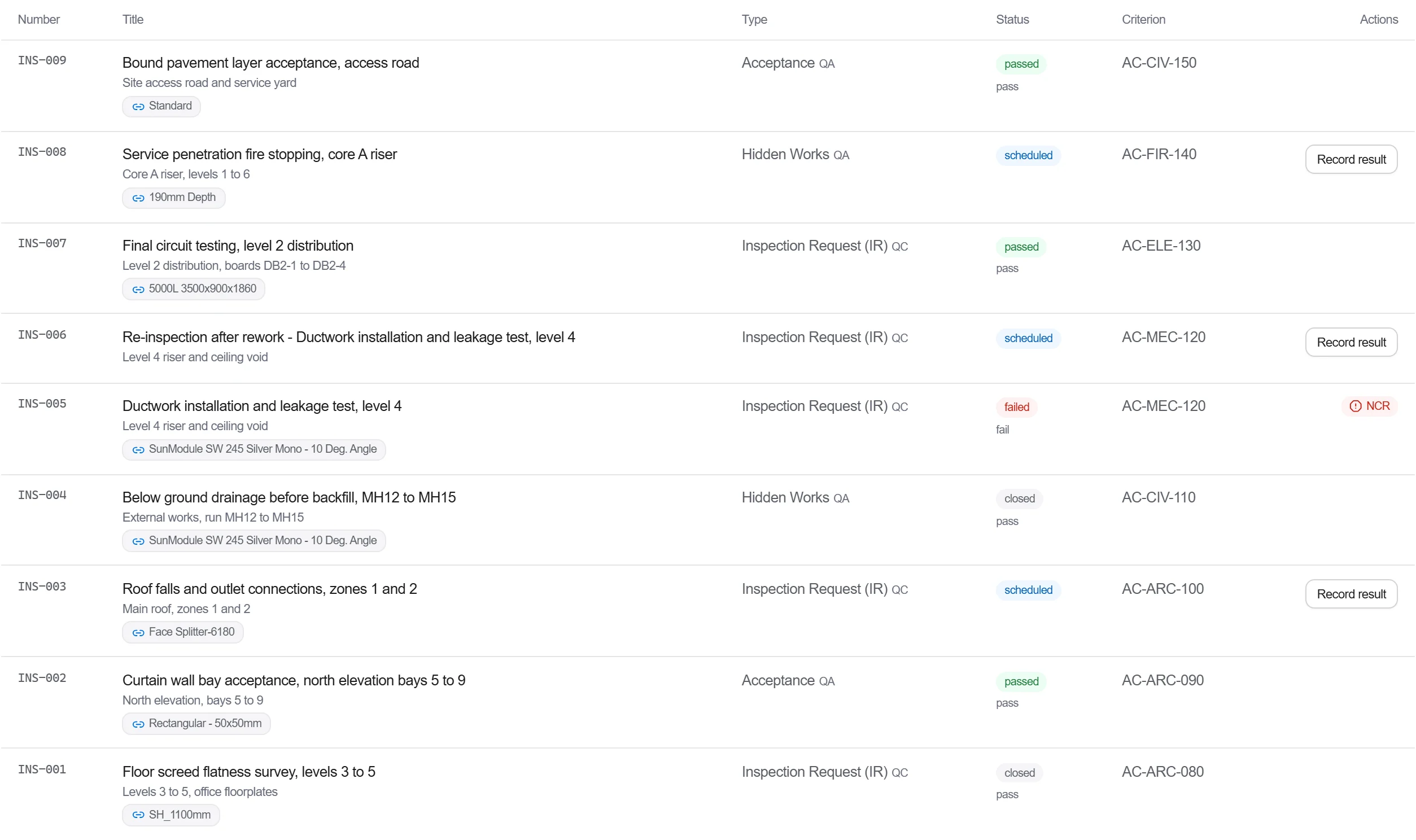
Por quê: Os comprovantes e os corpos de prova capturados durante a betonagem são a prova de que o betão certo foi lançado. Reconstruídos depois, não valem nada, portanto têm que ser retirados no momento em que acontece.
Registe os resultados dos ensaios dos corpos de prova aos sete e aos vinte e oito dias contra a betonagem e feche o registo as-built do elemento, para que o betão tenha uma resistência verificada em arquivo.
Por quê: Uma betonagem não está pronta quando o betão endurece, está pronta quando é comprovada quanto à resistência em registo. Esse registo é do que a aprovação estrutural e a eventual entrega dependem.
3 / 190 módulos da plataforma
Close the day out properly: record the diary, book the labour and plant hours, upload the p…
Turn a question from the working face into a tracked request, drive it to the party who own…
Turn instructed extra work into a claim that gets paid: record the labour, plant and materi…