Quality & safety
Inspect work and close a non-conformance
Inspect the work against its acceptance criteria, raise a non-conformance the moment it fai…
3 steps10 minOpen
 ENEnglish
 DEDeutsch
 FRFrançais
 ESEspañol
 ES-MXEspañol (México)
 ITItaliano
 PTPortuguês
 NLNederlands
 PLPolski
 CSČeština
 RUРусский
 BGБългарски
 TRTürkçe
 SVSvenska
 NONorsk
 FISuomi
 DADansk
 ARالعربية
 ZH中文
ZH中文 JA日本語
JA日本語 KO한국어
KO한국어 HIहिन्दी
 THไทย
THไทย VITiếng Việt
 IDBahasa Indonesia
 RORomână
 HRHrvatski
 MNМонгол
 ETEesti
 BNবাংলা
 KKҚазақша
 KYКыргызча
 FILFilipino
 URاردو
 FAفارسی
 HEעברית
 ELΕλληνικά
Agree the hold and witness points for a trade before it starts, inspect at each point as the work reaches it, and file the signed records so the quality is proven, not assumed.
3 steps across the platform - what you do at each one, and why it matters.
Lay out the inspection and test plan for the trade: each check to be made, the acceptance criteria and specification clause behind it, and whether it is a hold point that stops the work or a witness point the client attends.
Why: Agreeing the checkpoints before the first pour means everyone knows where the work must stop for sign-off, so nothing critical gets covered up in a rush. It turns quality from a hope into a planned sequence.
As the work reaches each point on the plan, raise the inspection, check it against the criteria, and sign it as passed or fail it and hold the next operation until it is put right. Bring the client in at every witness point.
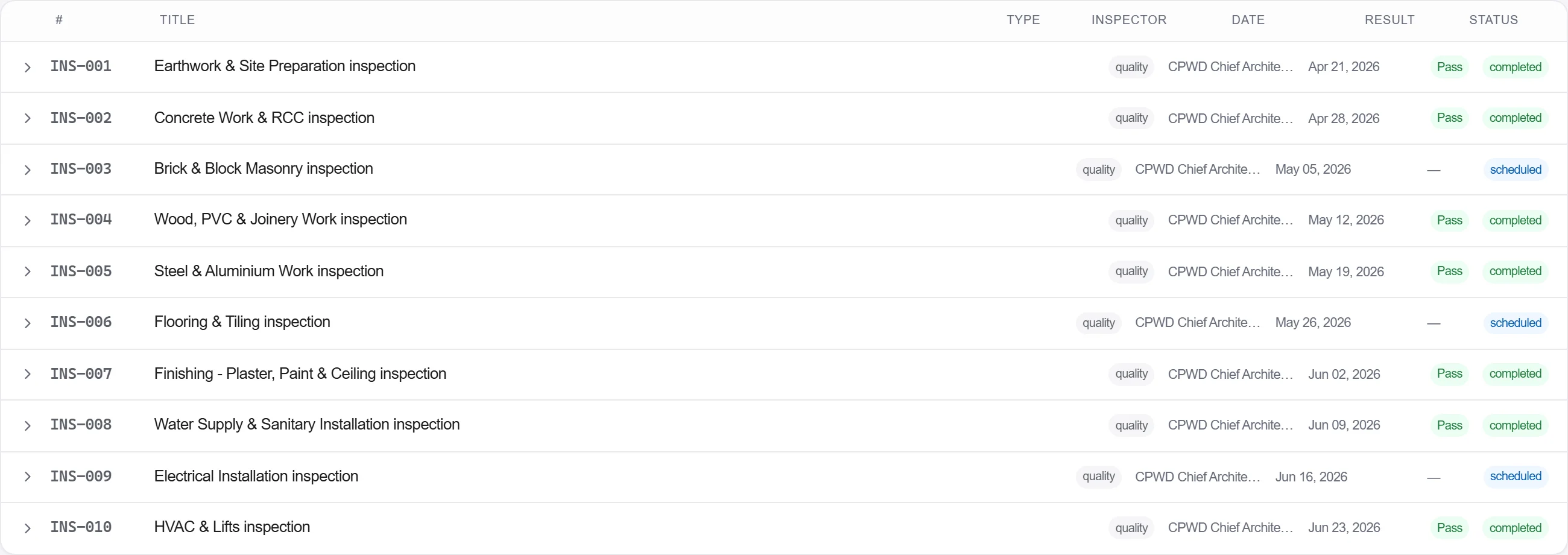
Why: A hold point inspected on time stops a defect being buried under the next layer, where fixing it costs ten times as much. Catching it at the point is the cheapest quality you will ever buy.
Gather the signed inspection records, test certificates and any concession against each ITP line, and file them together so the completed plan reads as one continuous quality trail for the element.
Why: The completed ITP with every point signed is what the client and the certifier accept as proof the work is right. Without it, quality already built is worth nothing you can demonstrate at handover.
3 / 190 platform modules
Inspect the work against its acceptance criteria, raise a non-conformance the moment it fai…
Brief the crew on the hazards this shift actually carries, capture who was there, then prov…
Put the product you plan to buy in front of the designer with its data behind it, get it ch…