

적산 및 원가
Price a building from a PDF
Start from a flat PDF drawing and finish with a priced, validated estimate ready to export.…
5단계15 분열기
공표된 원가 지수를 사용해 기준일 단가를 시공 중간 시점으로 끌어올려, 단가가 정해진 날이 아니라 돈이 실제로 쓰이는 시점을 숫자가 반영하게 합니다.
플랫폼 전반에 걸친 4단계 - 각 단계에서 무엇을 하는지, 그리고 왜 중요한지.
단가의 기준일과 상승 반영 목표일을 고정합니다. 목표일은 보통 지출이 가장 많은 시공 기간의 중간 시점입니다.
이유: 시작이나 끝이 아닌 중간 시점으로 상승 반영하는 것이 지출 곡선 전반의 공정한 평균입니다. 이 두 날짜를 제대로 잡는 것이 전체 작업 정확도의 대부분입니다.
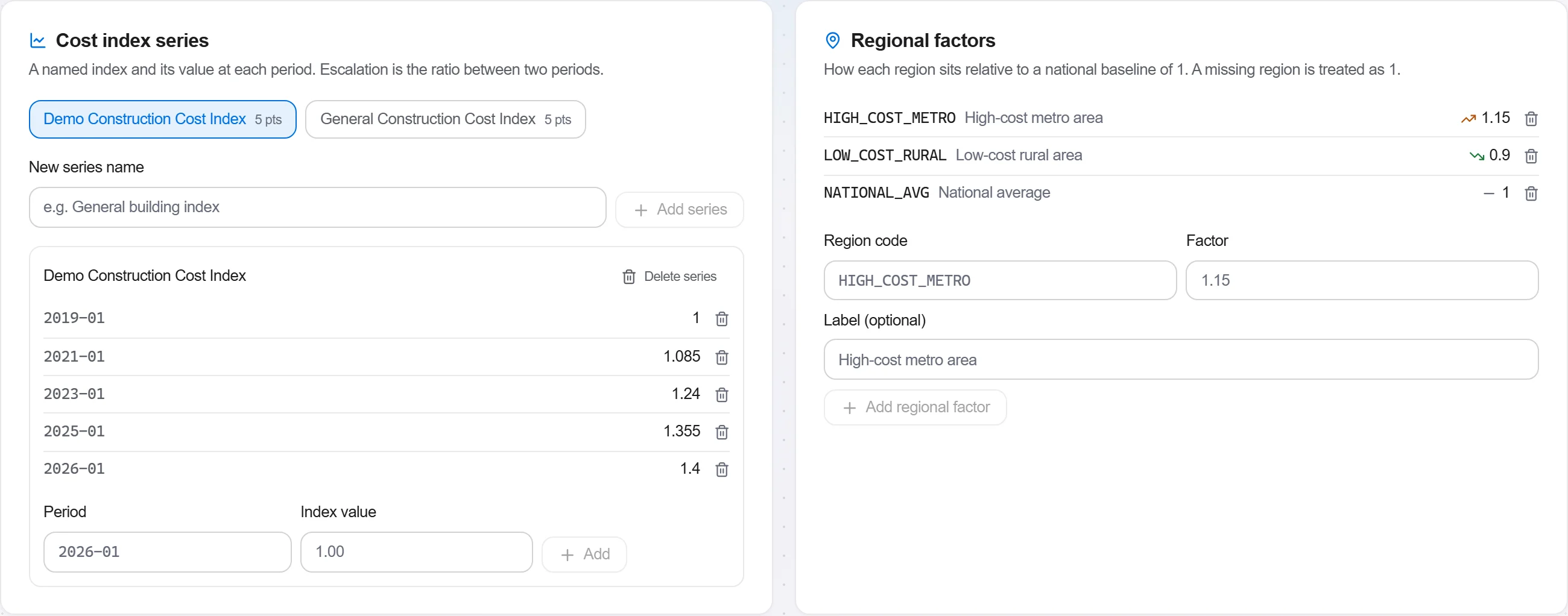
작업에 가장 맞는 지수 계열, 즉 건축, 토목, 또는 특정 공종별 계열을 고르고 기준일과 목표일 사이의 계수를 읽습니다.
이유: 맞는 계열이 중요합니다. 노무, 강재, 에너지는 함께 움직이지 않습니다. 작업에 맞는 지수를 고르는 것이 상승 반영을 뭉뚱그린 추측이 아닌 신뢰할 만한 것으로 만듭니다.
계수를 내역서에 적용하고 상승 반영된 총액을 기준 금액 옆에 읽어, 인상분이 단가에 접혀 들어간 숫자가 아니라 짚어 보일 수 있는 항목이 되게 합니다.
이유: 기준과 상승 반영 총액을 나란히 보이는 것이 발주자의 신뢰를 유지합니다. 또한 착공일이 다시 미끄러지면 인상분을 깔끔하게 재계산할 수 있습니다.
기준일, 지수 계열, 계수를 견적 근거에 적어, 나중에 가격을 읽는 누구든 어떻게 상승 반영되었는지 정확히 알게 합니다.
이유: 아무도 재구성할 수 없는 상승 반영은 아무도 신뢰하지 않는 상승 반영입니다. 산출 과정을 기록하는 것이 방어 가능한 방법을 감사 가능한 방법으로 바꿉니다.
플랫폼 190개 모듈 중 3개
Start from a flat PDF drawing and finish with a priced, validated estimate ready to export.…
Put a priced bill through the validation rules, clear every warning and error, then export…
Pull priced items from a real cost database, build the bill from them, bundle recurring bui…