
打开演示
案例 / 估算与成本
估算与成本

Escalate an estimate with price indices

Bring base-date rates forward to the midpoint of construction using published cost indices, so the number reflects when the money is really spent rather than the day the rate was set.

4 个步骤9 分钟造价咨询 / 工料测量师总承包商开发商/业主

运作方式,逐步说明

贯穿平台的 4 个步骤 - 每一步做什么,以及为什么重要。

1

Set base and target dates

价格指数

Fix the base date of your rates and the target date to escalate to, usually the midpoint of the construction period where spend is heaviest.

原因: Escalating to the midpoint rather than the start or the end is the fair average across the spend curve. Getting these two dates right is most of the accuracy of the whole exercise.

输入Base-date estimateConstruction dates成果Base and target dates
2

Read the escalation factor

价格指数

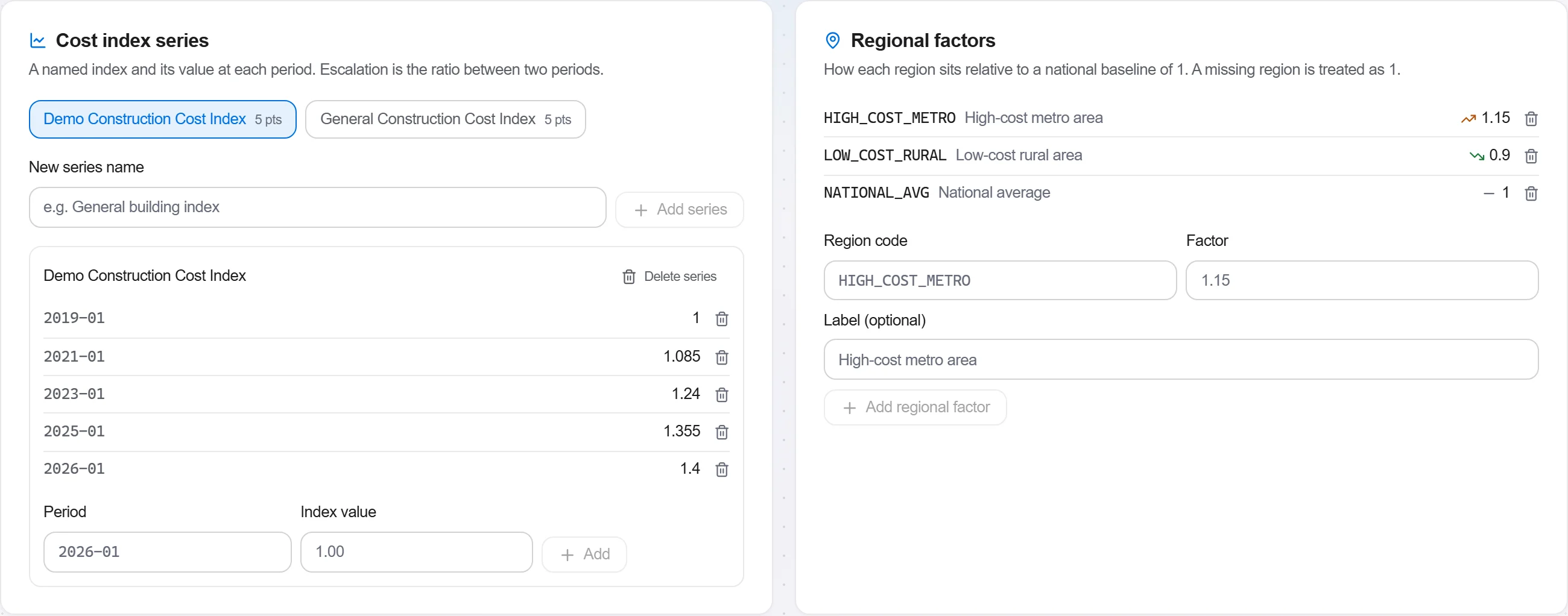
Pick the index series that best matches the work - building, civils, or a trade-specific one - and read the factor between the base and target dates.

原因: The right series matters: labour, steel and energy do not move together. Choosing an index that fits the work is what makes the escalation credible rather than a blanket guess.

输入Base and target datesPublished index series成果Escalation factor
3

Apply it to the bill

工程量清单

Apply the factor to the bill and read the escalated total next to the base figure, so the uplift is a line you can point at rather than a number folded into the rates.

原因: Showing the base and the escalated total side by side keeps the client's trust. It also lets you re-run the uplift cleanly if the start date slips again.

输入Escalation factorBase-date bill成果Escalated total
4

Record it in the basis

估算依据

Write the base date, the index series and the factor into the basis of estimate so anyone reading the price later knows exactly how it was escalated.

原因: An escalation nobody can reconstruct is an escalation nobody trusts. Recording the working is what turns a defensible method into an auditable one.

输入Escalated total成果Recorded basis

更多 估算与成本 案例