

Presupuestación y costos
Price a building from a PDF
Start from a flat PDF drawing and finish with a priced, validated estimate ready to export.…
5 pasos15 minAbrir
Trae las tarifas de la fecha base hacia el punto medio de la construcción usando índices de costos publicados, para que el número refleje cuándo se gasta el dinero de verdad y no el día en que se fijó la tarifa.
4 pasos a lo largo de la plataforma - qué haces en cada uno y por qué importa.
Fija la fecha base de tus tarifas y la fecha meta a la que escalar, normalmente el punto medio del periodo de construcción donde el gasto es más pesado.
Por que: Escalar al punto medio en lugar del inicio o el final es el promedio justo a lo largo de la curva de gasto. Fijar bien estas dos fechas es la mayor parte de la exactitud de todo el ejercicio.
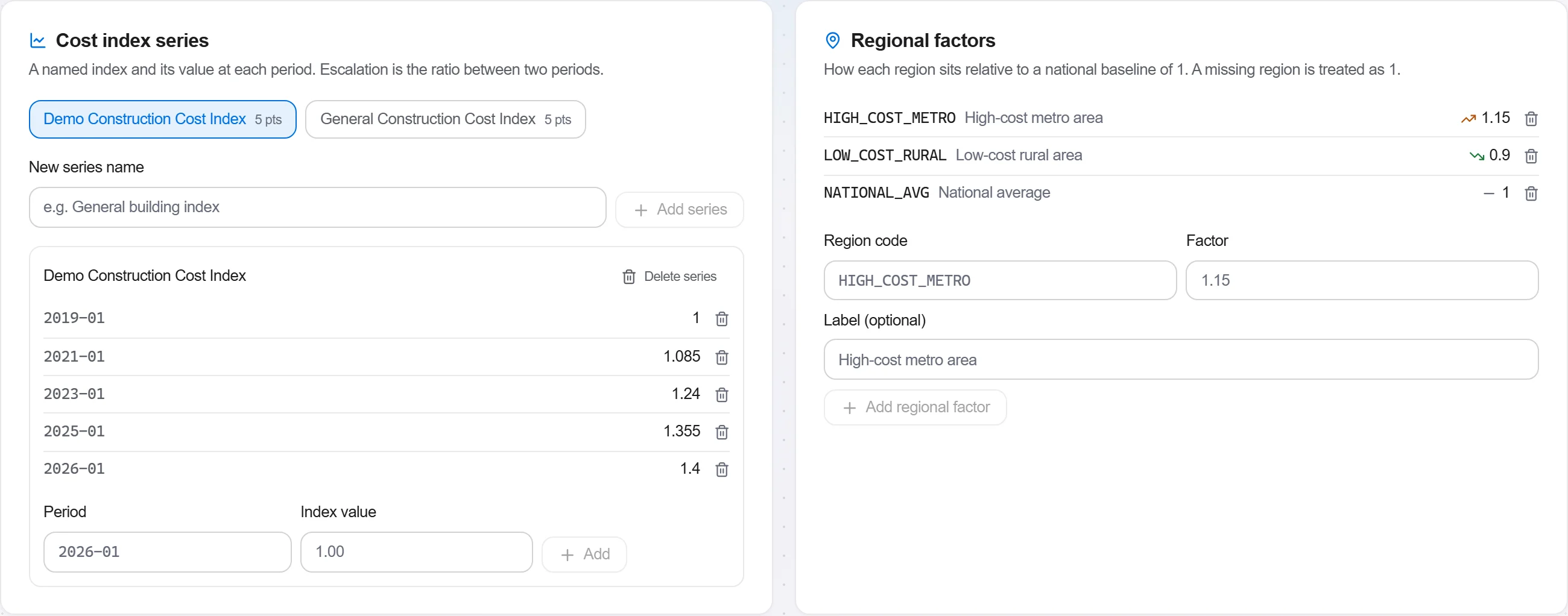
Elige la serie de índices que mejor coincida con el trabajo, edificación, obra civil o uno específico del oficio, y lee el factor entre la fecha base y la meta.
Por que: La serie correcta importa: la mano de obra, el acero y la energía no se mueven juntos. Elegir un índice que embone con el trabajo es lo que hace creíble la escalación en lugar de una suposición general.
Aplica el factor al presupuesto y lee el total escalado junto a la cifra base, para que el incremento sea un renglón que puedas señalar y no un número disuelto en las tarifas.
Por que: Mostrar la base y el total escalado lado a lado mantiene la confianza del cliente. También te deja recalcular el incremento de forma limpia si la fecha de inicio se recorre otra vez.
Escribe la fecha base, la serie de índices y el factor en la base del estimado para que quien lea el precio después sepa con exactitud cómo se escaló.
Por que: Una escalación que nadie puede reconstruir es una escalación que nadie confía. Registrar el procedimiento es lo que convierte un método defendible en uno auditable.
3 / 190 módulos de la plataforma
Start from a flat PDF drawing and finish with a priced, validated estimate ready to export.…
Put a priced bill through the validation rules, clear every warning and error, then export…
Pull priced items from a real cost database, build the bill from them, bundle recurring bui…