

積算とコスト
Price a building from a PDF
Start from a flat PDF drawing and finish with a priced, validated estimate ready to export.…
5ステップ15 分開く
公表されたコスト指数を用いて基準日の単価を施工の中間時点まで進め、単価を定めた日ではなく実際に資金が使われる時点を数字に反映させる。
プラットフォーム全体で4ステップ - 各ステップで何をするか、そしてなぜ重要か。
単価の基準日と、時点調整の目標日、通常は支出が最も重い施工期間の中間時点を固定する。
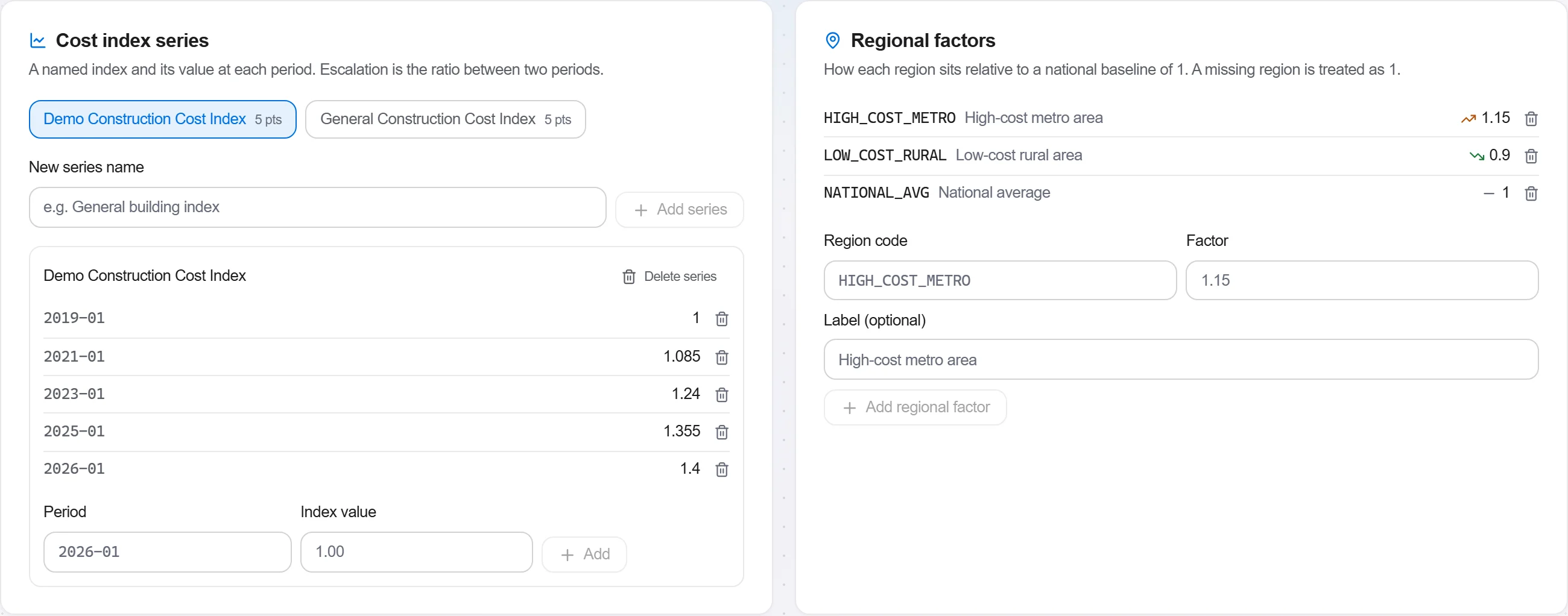
理由: 始点や終点ではなく中間時点に調整することが、支出曲線全体の公正な平均になる。この二つの日付を正しく取ることが、作業全体の精度の大半を占める。
作業に最もよく合う指数系列、建築、土木、または職種別のものを選び、基準日と目標日の間の係数を読み取る。
理由: 適切な系列が重要だ。労務、鋼材、エネルギーは同じように動かない。作業に合う指数を選ぶことが、時点調整を大雑把な当て推量ではなく信頼できるものにする。
係数を内訳書に適用し、調整後合計を基準額の隣に表示する。これにより上乗せ分が、単価に折り込まれた数字ではなく、指し示せる1行になる。
理由: 基準額と調整後合計を並べて示すことが、施主の信頼を保つ。また着工日がまた後ろへずれても、上乗せをきれいに再計算できる。
基準日、指数系列、係数を見積根拠に書き込み、後で価格を読む者がどのように時点調整されたかを正確に把握できるようにする。
理由: 誰も再現できない時点調整は、誰も信頼しない時点調整だ。計算過程を記録することが、根拠ある方法を監査可能な方法に変える。
プラットフォーム 190 モジュール中 3 個
Start from a flat PDF drawing and finish with a priced, validated estimate ready to export.…
Put a priced bill through the validation rules, clear every warning and error, then export…
Pull priced items from a real cost database, build the bill from them, bundle recurring bui…