

Dự toán và chi phí
Price a building from a PDF
Start from a flat PDF drawing and finish with a priced, validated estimate ready to export.…
5 bước15 phútMở
Đưa các đơn giá tại ngày cơ sở tiến tới điểm giữa thời gian thi công bằng các chỉ số chi phí công bố, để con số phản ánh khi tiền thực sự được chi ra thay vì ngày đơn giá được ấn định.
4 bước xuyên suốt nền tảng - bạn làm gì ở mỗi bước và vì sao điều đó quan trọng.
Cố định ngày cơ sở của các đơn giá và ngày mục tiêu để trượt giá tới, thường là điểm giữa của thời gian thi công nơi chi tiêu tập trung nhiều nhất.
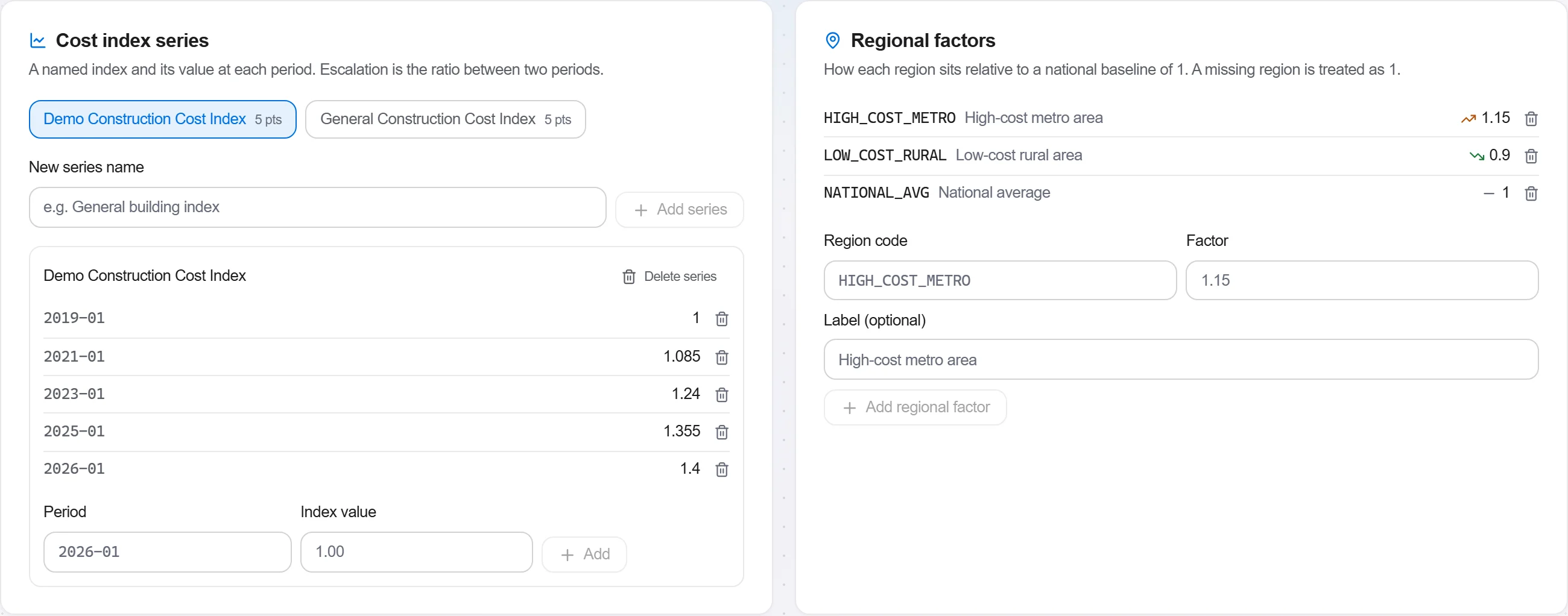
Tại sao: Trượt giá tới điểm giữa thay vì đầu hay cuối là mức trung bình công bằng trên đường cong chi tiêu. Đặt đúng hai ngày này chiếm phần lớn độ chính xác của toàn bộ quá trình.
Chọn chuỗi chỉ số khớp nhất với công việc - xây dựng, hạ tầng, hoặc một chỉ số riêng theo nghề - và đọc hệ số giữa ngày cơ sở và ngày mục tiêu.
Tại sao: Chọn đúng chuỗi rất quan trọng: nhân công, thép và năng lượng không biến động cùng nhau. Chọn một chỉ số phù hợp với công việc là điều làm cho việc trượt giá đáng tin thay vì một phỏng đoán chung chung.
Áp dụng hệ số vào bảng khối lượng và đọc tổng đã trượt giá bên cạnh con số cơ sở, để phần tăng thêm là một dòng bạn có thể chỉ vào thay vì một con số gộp vào trong các đơn giá.
Tại sao: Trưng bày con số cơ sở và tổng đã trượt giá cạnh nhau giữ được lòng tin của chủ đầu tư. Nó cũng cho phép bạn chạy lại phần tăng thêm một cách gọn gàng nếu ngày khởi công lại trượt.
Ghi ngày cơ sở, chuỗi chỉ số và hệ số vào cơ sở dự toán để bất kỳ ai đọc mức giá sau này biết chính xác nó được trượt giá ra sao.
Tại sao: Một sự trượt giá không ai tái dựng được là một sự trượt giá không ai tin. Ghi lại cách tính là điều biến một phương pháp có thể bảo vệ thành một phương pháp có thể kiểm toán.
3 / 190 mô-đun nền tảng
Start from a flat PDF drawing and finish with a priced, validated estimate ready to export.…
Put a priced bill through the validation rules, clear every warning and error, then export…
Pull priced items from a real cost database, build the bill from them, bundle recurring bui…