

Orçamentação e custos
Price a building from a PDF
Start from a flat PDF drawing and finish with a priced, validated estimate ready to export.…
5 etapas15 minAbrir
Traga os preços da data-base para o ponto médio da construção usando índices de custo publicados, para que o número reflita quando o dinheiro é realmente gasto e não o dia em que o preço foi definido.
4 passos ao longo da plataforma - o que fazer em cada um e por que importa.
Fixe a data-base dos seus preços e a data-alvo para a qual reajustar, geralmente o ponto médio do período de construção onde o gasto é mais intenso.
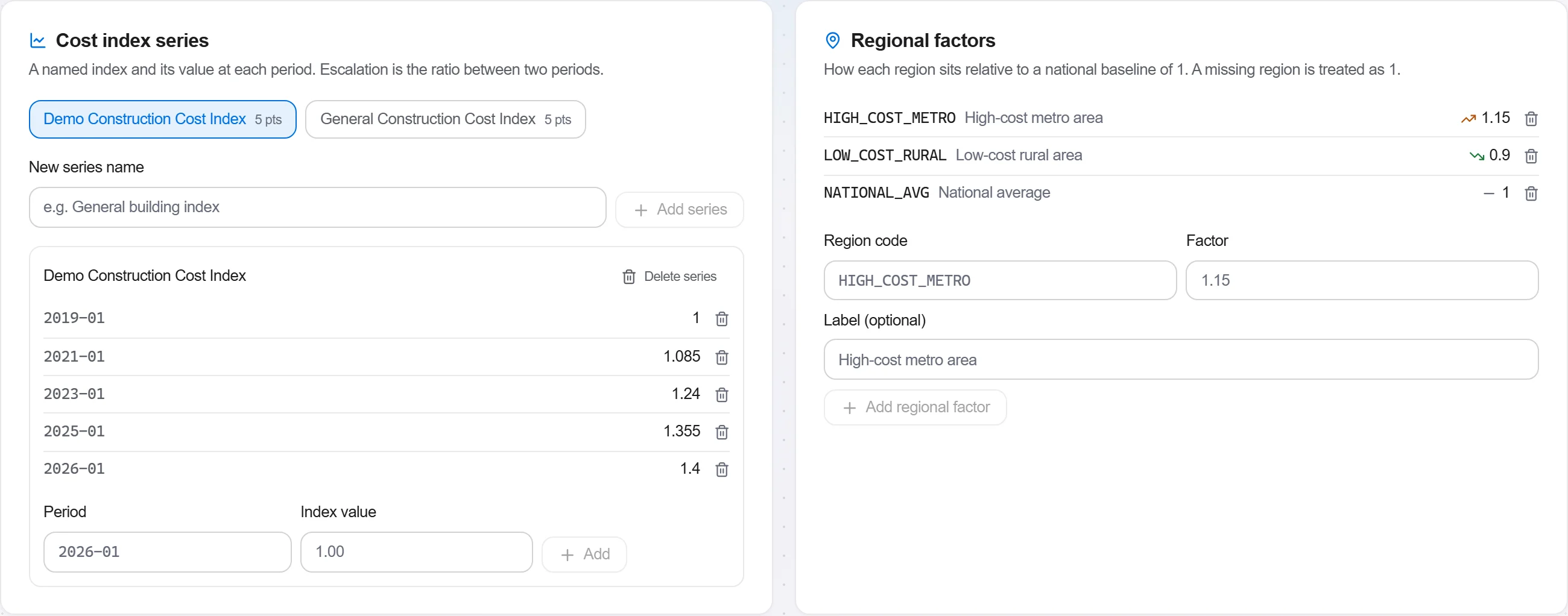
Por quê: Reajustar para o ponto médio, em vez do início ou do fim, é a média justa ao longo da curva de gastos. Acertar essas duas datas é a maior parte da precisão de todo o exercício.
Escolha a série de índice que melhor corresponde ao trabalho, edificações, obras civis ou uma específica da atividade, e leia o fator entre a data-base e a data-alvo.
Por quê: A série certa importa: mão de obra, aço e energia não se movem juntos. Escolher um índice que se ajuste ao trabalho é o que torna o reajuste crível em vez de um chute genérico.
Aplique o fator ao orçamento e leia o total reajustado ao lado do valor base, de modo que o acréscimo seja uma linha para a qual você possa apontar e não um número diluído nos preços.
Por quê: Mostrar o valor base e o total reajustado lado a lado mantém a confiança do cliente. Também permite recalcular o acréscimo de forma limpa se a data de início escorregar de novo.
Anote a data-base, a série de índice e o fator na memória de cálculo do orçamento, para que quem ler o preço mais tarde saiba exatamente como ele foi reajustado.
Por quê: Um reajuste que ninguém consegue reconstruir é um reajuste em que ninguém confia. Registar o cálculo é o que transforma um método defensável num método auditável.
3 / 190 módulos da plataforma
Start from a flat PDF drawing and finish with a priced, validated estimate ready to export.…
Put a priced bill through the validation rules, clear every warning and error, then export…
Pull priced items from a real cost database, build the bill from them, bundle recurring bui…