
估算与成本
Price a building from a PDF
Start from a flat PDF drawing and finish with a priced, validated estimate ready to export.…
5 个步骤15 分钟打开
接收GAEB招标文件, 不重新录入即导入为清单, 为分项计价, 校验结构, 并回传一份客户可直接读入自身系统的已计价GAEB。
贯穿平台的 5 个步骤 - 每一步做什么,以及为什么重要。
把客户发出的GAEB文件与邀标函一并存入项目文件, 使你计价的版本就是存档在案的版本。
原因: 招标文件会被重发。归档你实际使用的确切文件, 意味着日后关于你计价的是哪个版本的疑问一键即可回答, 而不必争辩。
把GAEB导入一份新清单。分组、分项、工程量、单位和长文本完整带入, 使你只需填写一个空的计价列, 无需重录其他任何内容。
原因: 重录几百个分项的清单, 正是错位工程量和漏项悄然产生的地方。导入能让你的报价紧扣客户确切的措辞和编号。
把每个分项匹配到成本目录中的单价或一个组价上, 在标准单价不完全契合时按措辞调整, 直到每一行都带有综合单价。
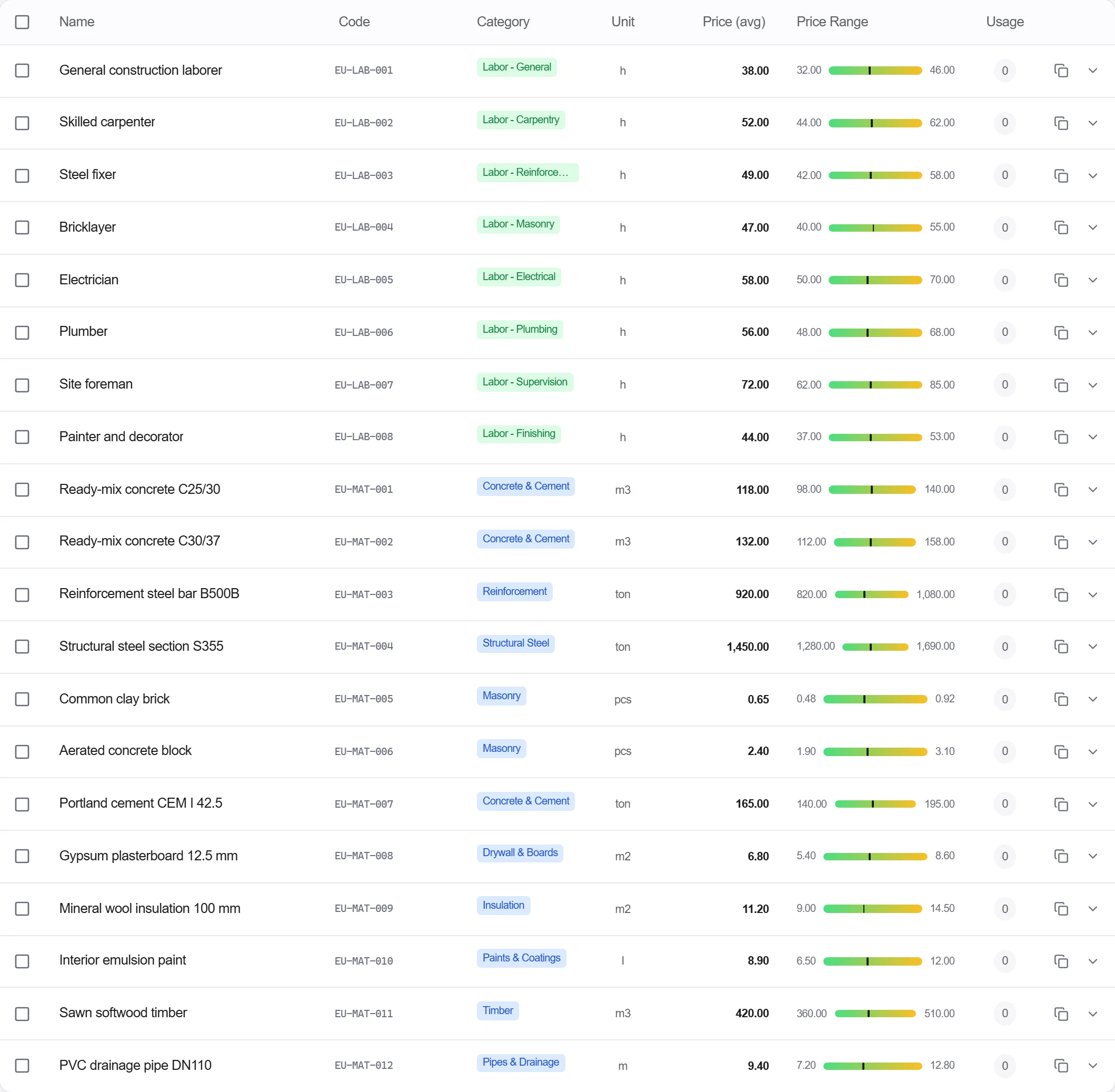
原因: 取自维护良好目录的单价既可辩护又快捷。计价时读一遍分项文本, 正是你抓住藏在描述里的限定条件之处, 否则它会在现场让你付出代价。
让清单跑一遍校验, 抓出任何仍为零的分项、对不上的工程量, 或回传文件必须遵守的GAEB结构规则。
原因: 单个未计价分项就可能使投标作废, 或掩盖一笔你一直背到现场的亏损。校验能把最后关头的手忙脚乱变成一个你可以信赖的绿灯。
把已计价清单导出回GAEB并作为你的报价发出, 使客户无需敲键盘即可把你的价格直接读入其评标。
原因: 一份能干净地加载进客户系统的报价更容易中标。用你收到的同一开放格式回传, 是一份让你的投标处于最前列的小小体贴。
190 个平台模块中的 5 个
Everything in this case follows how construction work is measured, priced and paid for in this market. The forms, the cost breakdown and the payment rules are the ones used there, not a generic version of them.
Standards it follows
You do not have to set any of that up by hand. The first time you open the platform it asks which market you work in. Choose this one and it sets the interface language, loads the matching cost database and records the cost classification, and it adds an example project you can open straight away.
Start from a flat PDF drawing and finish with a priced, validated estimate ready to export.…
Put a priced bill through the validation rules, clear every warning and error, then export…
Pull priced items from a real cost database, build the bill from them, bundle recurring bui…