
計画と管理
Set up a project and hand it over
Take a job from the very first setup right through to handover. Create it, price the work,…
5ステップ20 分開く
支払マイルストーンを実際の工程イベントに結びつけ、スケジュールが契約額に合致するよう各マイルストーンを評価し、施主と合意し、全体をキャッシュフローとして読み取る。
プラットフォーム全体で4ステップ - 各ステップで何をするか、そしてなぜ重要か。
進捗を明確に証明する工程イベント、たとえば基礎完了、防水完了、設備投入、引渡しを選び、それぞれを支払マイルストーンとして設定する。
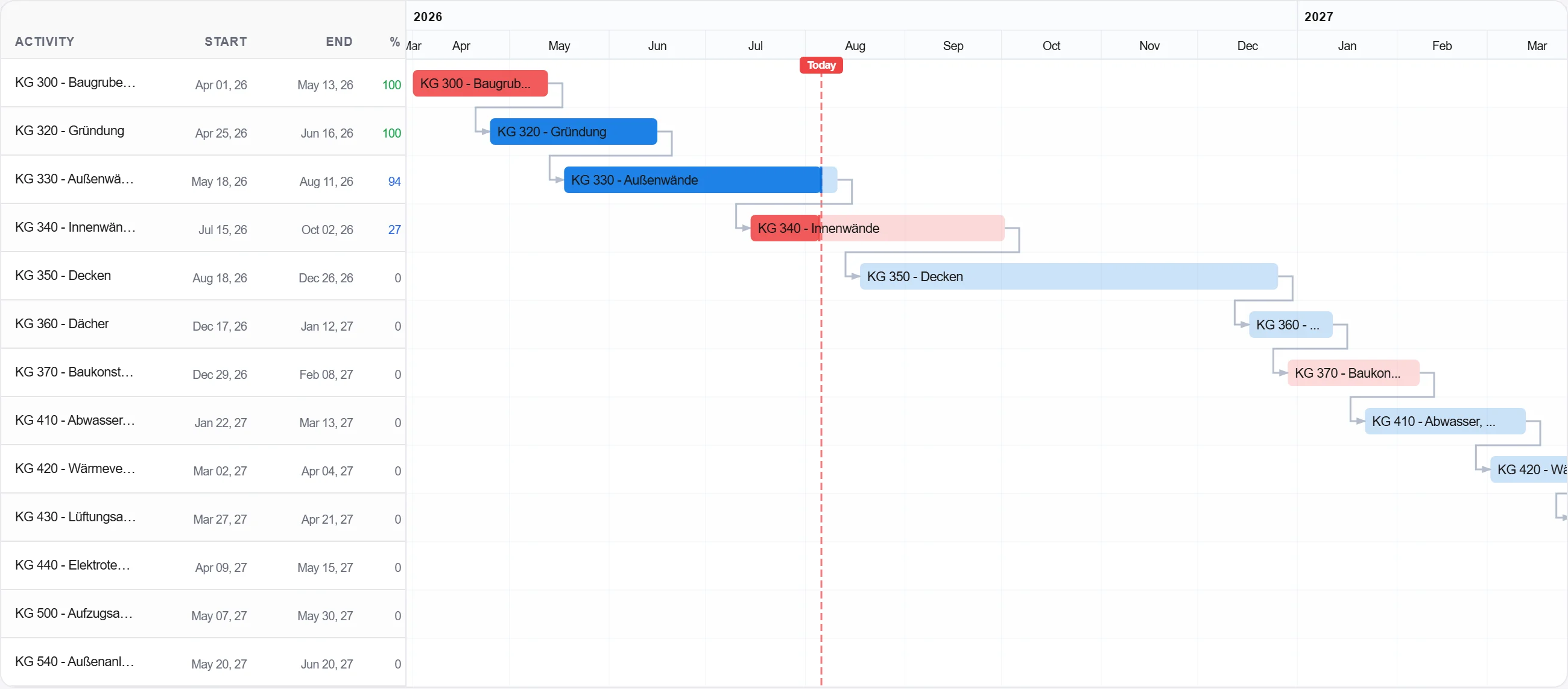
理由: 検証可能なイベントに対する支払は、出来高率をめぐる月ごとの駆け引きをなくす。曖昧さのないマイルストーンを選ぶことが、毎回の争いなく資金を回し続ける。
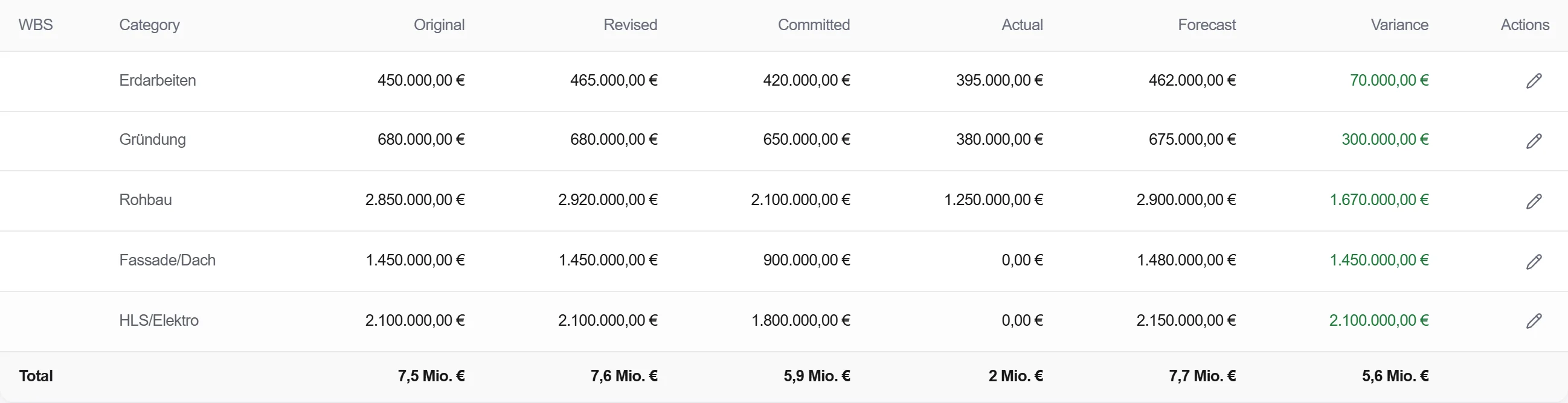
各マイルストーンに、それが表す値付け済みの工事から金額を割り当て、マイルストーンの合計が過不足や二重計上なく契約額にぴたりと一致するか確認する。
理由: 前倒しのマイルストーンは請負者に有利で施主を不安にさせ、後ろ倒しはその逆になる。実際の工事に基づいて各々を評価することが、スケジュールを公正で資金調達可能に保つ。
マイルストーンスケジュールを支払実行の契約上の根拠として施主と合意し、着工前に何が各支払の引き金になるかを双方が確認する。
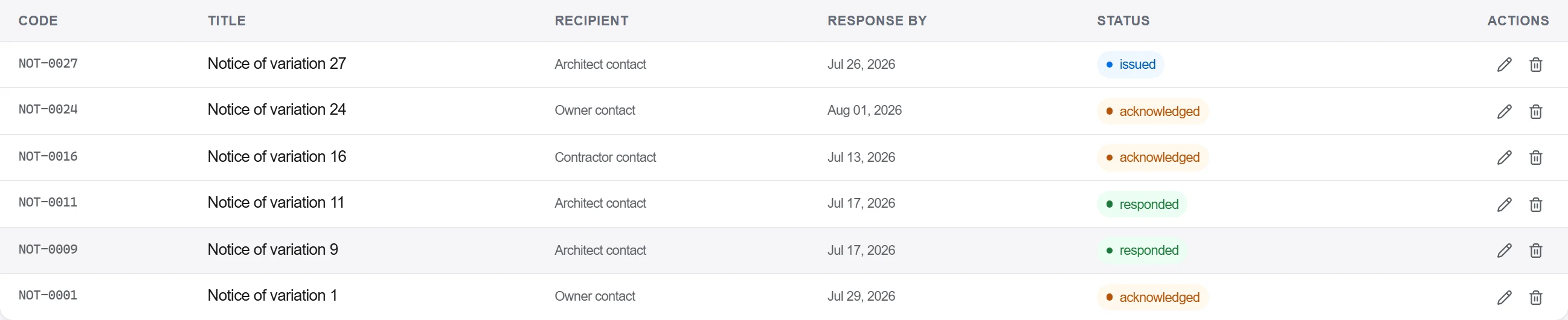
理由: 前もって合意したスケジュールは、期日どおりに支払われるスケジュールだ。金が発生する前に引き金を固めることが、各マイルストーンが新たな交渉になるのを防ぐ。
工程全体にわたるマイルストーン支払をキャッシュフロー予測として見ることで、施主は資金計画を立てられ、あなたは実際にいつ金が入るかを把握できる。
理由: マイルストーンは資金のタイミングを定め、資金のタイミングが工事の資金繰りを支える。曲線を早く見ることで、資金が逼迫する前に凸凹した月を双方で直せる。
プラットフォーム 190 モジュール中 3 個
Take a job from the very first setup right through to handover. Create it, price the work,…
Plan the programme, freeze a baseline to measure against, feed real progress back from site…
See where the job truly stands against the plan and the budget: bring the programme current…