
Commercial & contracts
Turn a change into a paid variation
Capture a scope change while it is fresh, price it as a contract variation on your agreed r…
3 steps11 minOpen
 ENEnglish
 DEDeutsch
 FRFrançais
 ESEspañol
 ES-MXEspañol (México)
 ITItaliano
 PTPortuguês
 NLNederlands
 PLPolski
 CSČeština
 RUРусский
 BGБългарски
 TRTürkçe
 SVSvenska
 NONorsk
 FISuomi
 DADansk
 ARالعربية
 ZH中文
ZH中文 JA日本語
JA日本語 KO한국어
KO한국어 HIहिन्दी
 THไทย
THไทย VITiếng Việt
 IDBahasa Indonesia
 RORomână
 HRHrvatski
 MNМонгол
 ETEesti
 BNবাংলা
 KKҚазақша
 KYКыргызча
 FILFilipino
 URاردو
 FAفارسی
 HEעברית
 ELΕλληνικά
Set the cost you have committed against the value you have earned to the same cut-off date, and read the true margin each period while there is still time to act on it.
3 steps across the platform - what you do at each one, and why it matters.
Total the cost to the cut-off date: certified subcontractor payments, materials, plant, labour and the orders placed but not yet invoiced, so accruals are in and nothing real is left out.
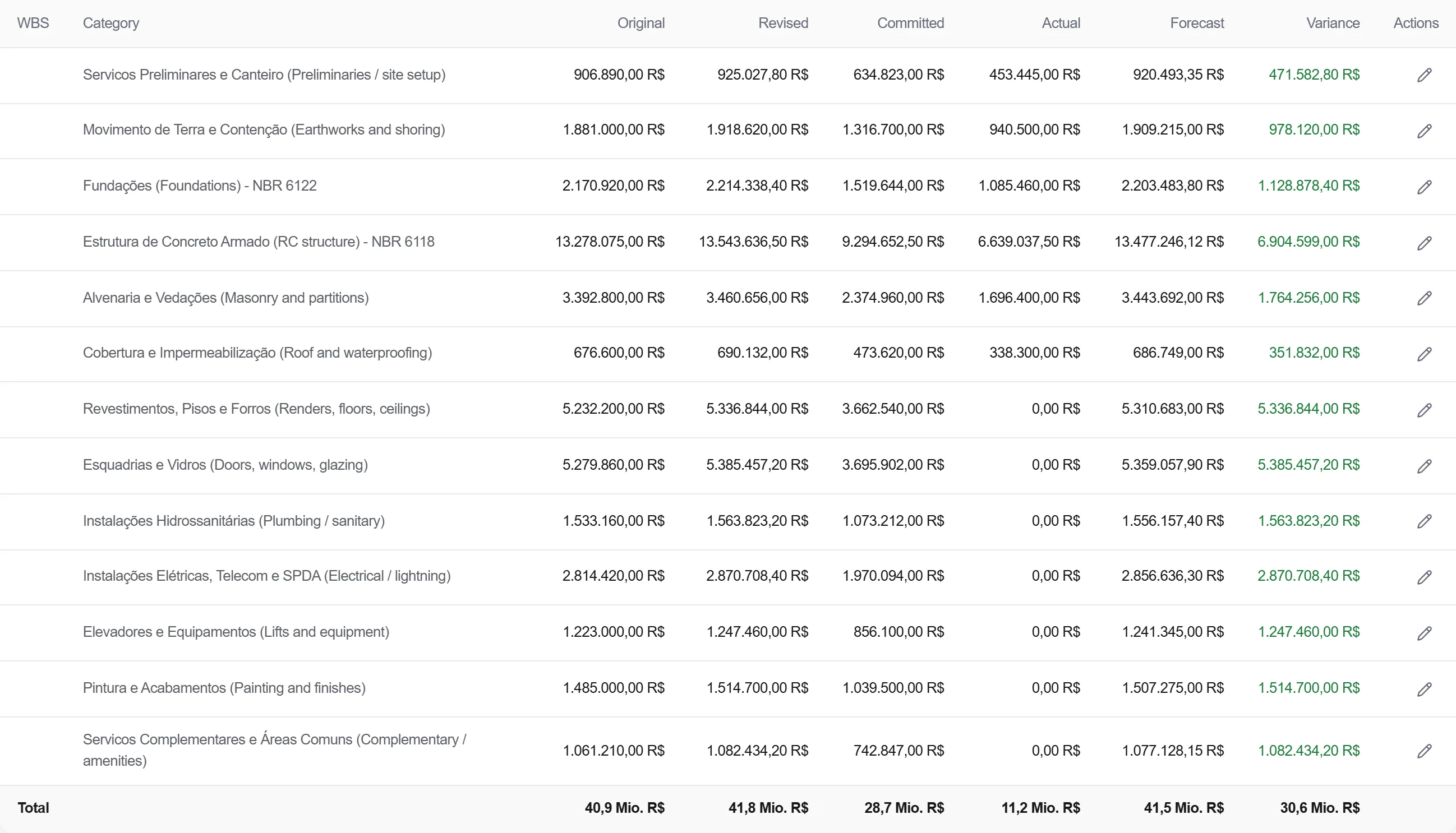
Why: Cost that has been committed but not yet invoiced is the trap that makes a job look healthy right up until the bills arrive. Bringing accruals in now is what stops the margin lurching the wrong way next month.
Value the work genuinely put in place to that same date, add agreed variations and any work in progress, and be honest about over-claiming that will have to be given back later.
Why: Cost and value only tell the truth when they are cut on the exact same date. Value the work straight, and the margin you read is one you can stand behind, not a number you have to explain away.
Subtract cost from value to show the margin this period, compare it against the tender allowance, and trace any drop back to the trade or element that caused it so you know exactly where to act.
Why: A margin that is quietly slipping is recoverable in month three and terminal in month nine. Catching the slide early, against the element that caused it, is the difference between a fix and a loss.
3 / 190 platform modules
Capture a scope change while it is fresh, price it as a contract variation on your agreed r…
Award a trade package to a subcontractor, place it on a subcontract with a schedule of valu…
Value the work put in place this period against the contract, raise the application with th…