Quality & safety
Inspect work and close a non-conformance
Inspect the work against its acceptance criteria, raise a non-conformance the moment it fai…
3 steps10 minOpen
 ENEnglish
 DEDeutsch
 FRFrançais
 ESEspañol
 ES-MXEspañol (México)
 ITItaliano
 PTPortuguês
 NLNederlands
 PLPolski
 CSČeština
 RUРусский
 BGБългарски
 TRTürkçe
 SVSvenska
 NONorsk
 FISuomi
 DADansk
 ARالعربية
 ZH中文
ZH中文 JA日本語
JA日本語 KO한국어
KO한국어 HIहिन्दी
 THไทย
THไทย VITiếng Việt
 IDBahasa Indonesia
 RORomână
 HRHrvatski
 MNМонгол
 ETEesti
 BNবাংলা
 KKҚазақша
 KYКыргызча
 FILFilipino
 URاردو
 FAفارسی
 HEעברית
 ELΕλληνικά
Run a design or engineering change through proper control: raise it with its reason and risk, clear the technical questions it opens by RFI, and carry any cost or time impact into a change order.
3 steps across the platform - what you do at each one, and why it matters.
Open a management-of-change record for the proposed change and state plainly what is changing, why, and the safety, operational and design risk it carries. Route it for review before anyone touches the work.
Why: Engineering changes that skip a control step are how a well-meant fix ends up unsafe or non-compliant. The record is the proof the risk was looked at and the change was authorised, not just done.
Raise an RFI for each open technical question the change throws up, dimensions, interfaces, specification, and get the designer to answer in writing before the detail is fixed. Keep every RFI tied back to the change.
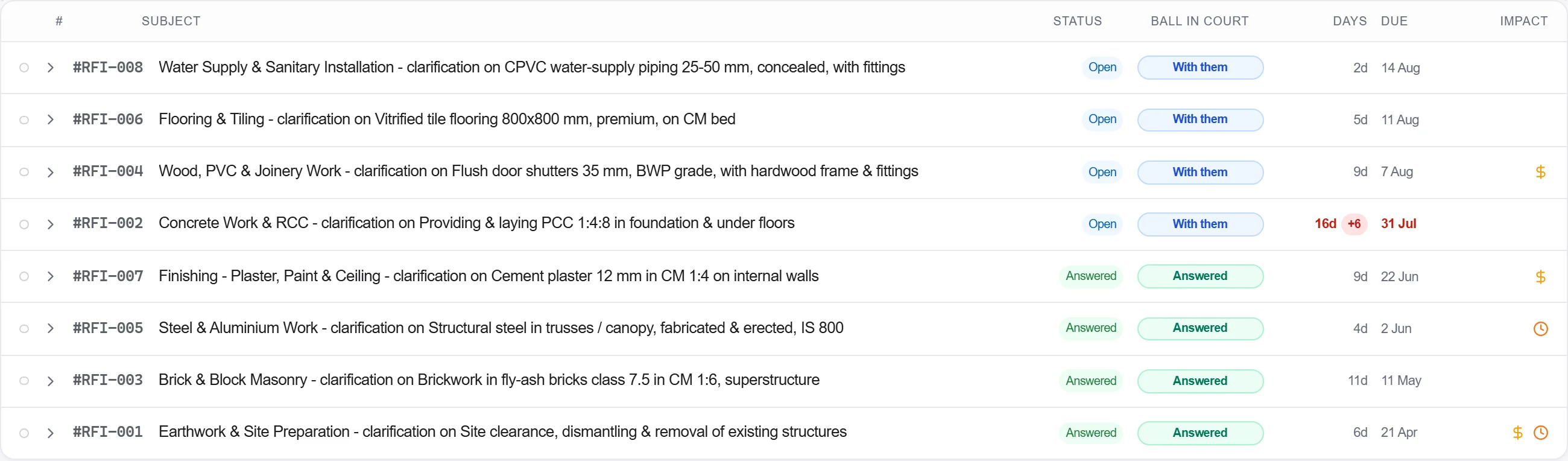
Why: A change built on an assumption is rework waiting to happen. Getting the answer on the record, from the person responsible for the design, is what stops the same question being argued again on site.
If the change moves cost or time, raise a change order that captures the priced impact and the programme effect, linked back to the change record. If the impact is genuinely nil, record that too.
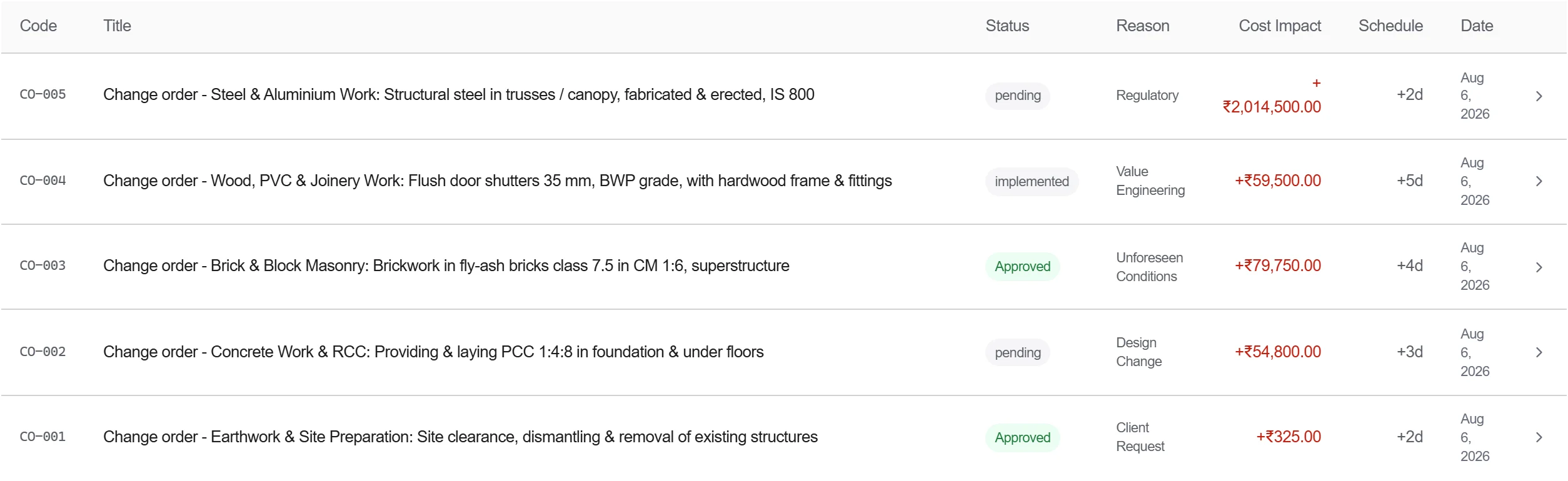
Why: The engineering side can be closed and still leave the money open. A change order is what turns an authorised change into an agreed cost and a moved date, before it quietly becomes your problem.
3 / 190 platform modules
Inspect the work against its acceptance criteria, raise a non-conformance the moment it fai…
Brief the crew on the hazards this shift actually carries, capture who was there, then prov…
Put the product you plan to buy in front of the designer with its data behind it, get it ch…