
Planlægning og styring
Set up a project and hand it over
Take a job from the very first setup right through to handover. Create it, price the work,…
5 trin20 minÅbn
Stop en leverance med lang leveringstid i at bremse sagen: find de leverancer hvis levering løber fra tidsplanen, knyt deres bestillingsdatoer til tidsplanen, og rapporter den eksponering der er tilbage.
3 trin gennem platformen - hvad du gør i hvert, og hvorfor det betyder noget.
Gennemgå indkøbsplanen for de leverancer hvis leveringstid er lang mod tidsplanen, fra tavleanlæg til specialfacader, og notér den dato hver enkelt faktisk kræves på pladsen.
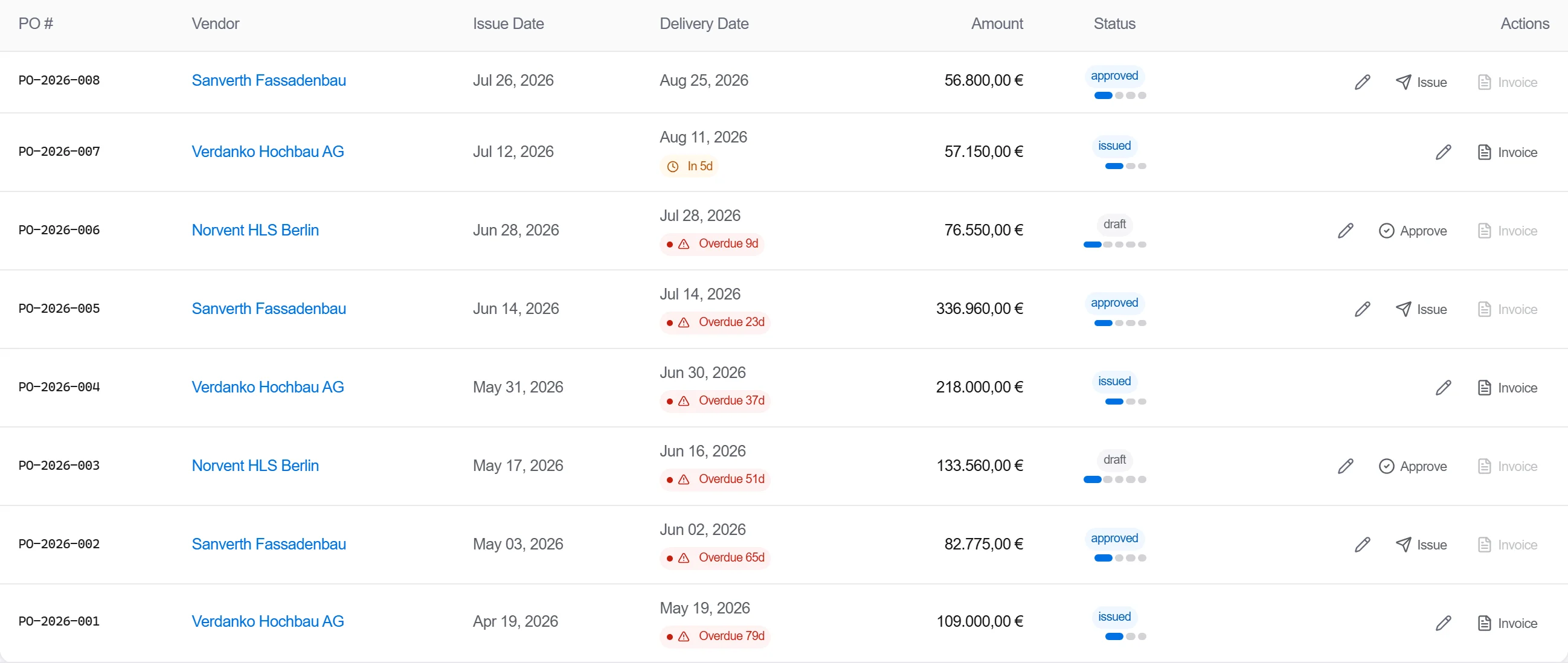
Hvorfor: En leverance med lang leveringstid ingen markerede er den der stopper et fag helt. At finde dem tidligt er det der giver dig de uger du har brug for til at bestille i tide i stedet for at fremskynde til en overpris senere.
Regn tilbage fra hver krævet-på-pladsen-dato gennem leveringstiden til den dato ordren skal afgives, og sæt de bestillingsdatoer som milepæle på den tidsplan teamet arbejder efter.
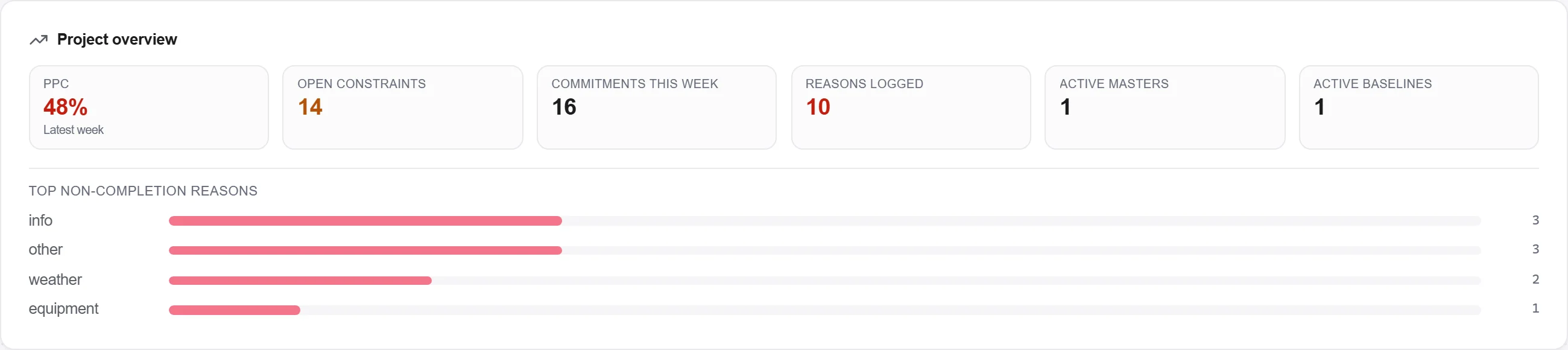
Hvorfor: En krævet-på-pladsen-dato alene fortæller ikke indkøb hvornår der skal købes. At regne leveringstiden ind på tidsplanen er det der gør et leveringsbehov til en bestillingsmilepæl nogen er ansvarlig for.
Rapporter hvilke leverancer med lang leveringstid der er bestilt mod plan og hvilke bestillingsdatoer der skrider, så de leverancer der stadig er i risiko for tidsplanen er synlige for teamet ved hver gennemgang.
Hvorfor: En indkøbsrisiko du ikke kan se er en du styrer med held. At rapportere eksponeringen holder de skridende leverancer foran de folk der kan fremskynde dem før de bliver en forsinkelse på pladsen.
3 / 190 platformmoduler
Take a job from the very first setup right through to handover. Create it, price the work,…
Plan the programme, freeze a baseline to measure against, feed real progress back from site…
See where the job truly stands against the plan and the budget: bring the programme current…