
計画と管理
Set up a project and hand it over
Take a job from the very first setup right through to handover. Create it, price the work,…
5ステップ20 分開く
外部の工程を交換ファイルから取り込み、カレンダーとリンクが移行に耐えたか確認し、受け入れた工程をベースラインに設定して公開し、進捗を固定された基準に照らして測れるようにする。
プラットフォーム全体で4ステップ - 各ステップで何をするか、そしてなぜ重要か。
工程を交換ファイルから取り込み、アクティビティ、所要日数、論理リンク、WBSが1行ずつ打ち直されることなく移るようにする。
理由: 数百アクティビティの工程を打ち直すと、それを工程たらしめる論理を失う。取り込みはネットワークをそのまま保ち、クリティカルパスを記憶からの描き直しではなく本物にする。
誰かが日付を信用する前に、カレンダー、論理リンク、WBSが取り込みに耐えたこと、そして完了日が元データと一致することを確認する。
理由: 交換ファイルは制約を落とし、カレンダーを黙って再割当てする。ずれた完了日を今捕まえるほうが、取り込んだ工程が誤っていたと3か月後に気づくよりはるかに安上がりだ。
合意した工程をベースラインとして凍結する。これは工事がその後ずっと測られる固定の基準だ。
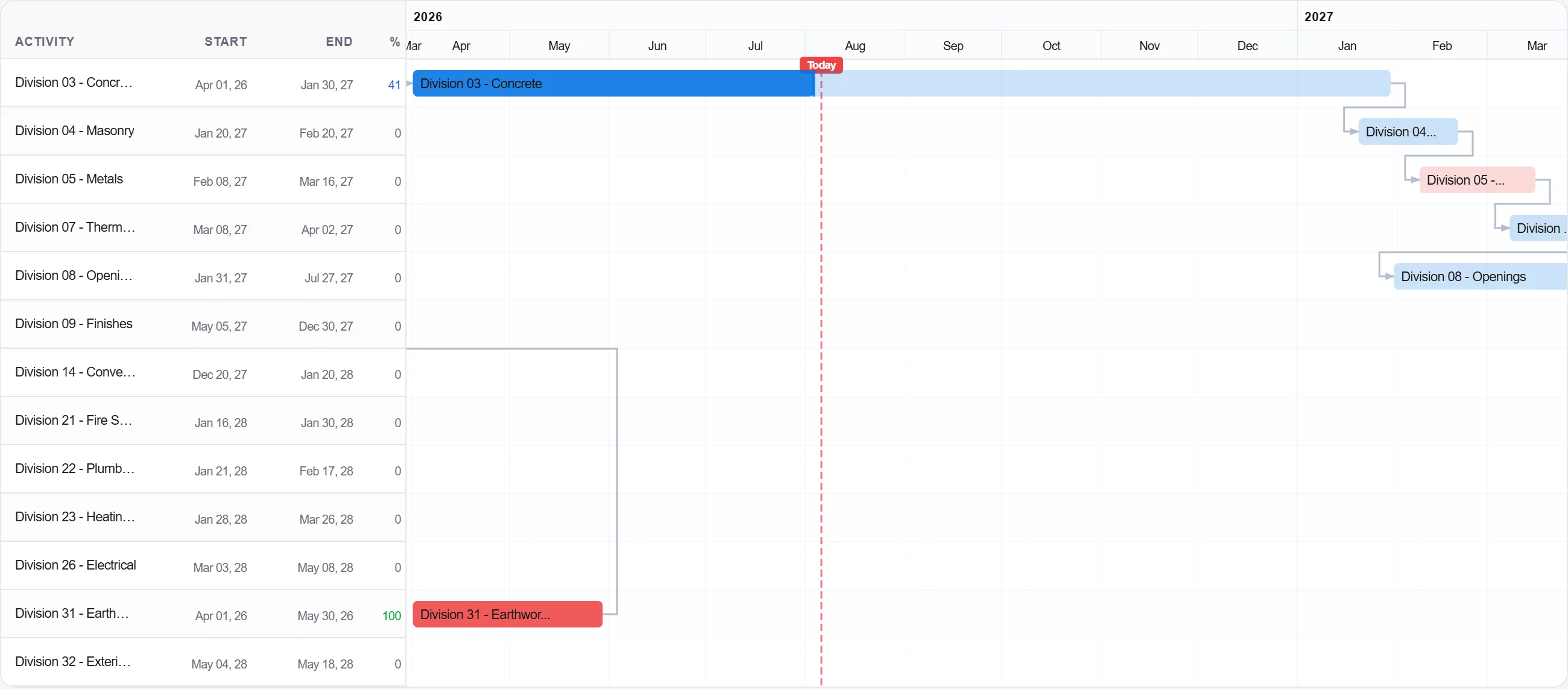
理由: ベースラインは約束だ。凍結されたものがなければ進捗と比べる相手がなく、遅れをめぐる議論はすべて記録の問題ではなく意見の問題になる。
ベースラインを公開し、チームがそれに照らして進捗を記録し、計画対実績の姿が初日から積み上がるようにする。
理由: 誰も照らして追跡しないベースラインは壁の飾りだ。公開することが、工程を事後にレビューする書類ではなく、早く警告してくれる生きた統制に変える。
プラットフォーム 190 モジュール中 3 個
Take a job from the very first setup right through to handover. Create it, price the work,…
Plan the programme, freeze a baseline to measure against, feed real progress back from site…
See where the job truly stands against the plan and the budget: bring the programme current…