打开演示
案例 / 计划与控制
计划与控制

Import a programme and set the baseline

Bring an external programme in from an exchange file, check the calendars and links survived the trip, set the accepted programme as the baseline and publish it so progress is measured against something fixed.

4 个步骤10 分钟总承包商项目/施工经理专业分包商

运作方式,逐步说明

贯穿平台的 4 个步骤 - 每一步做什么,以及为什么重要。

1

Import the programme

高级进度计划

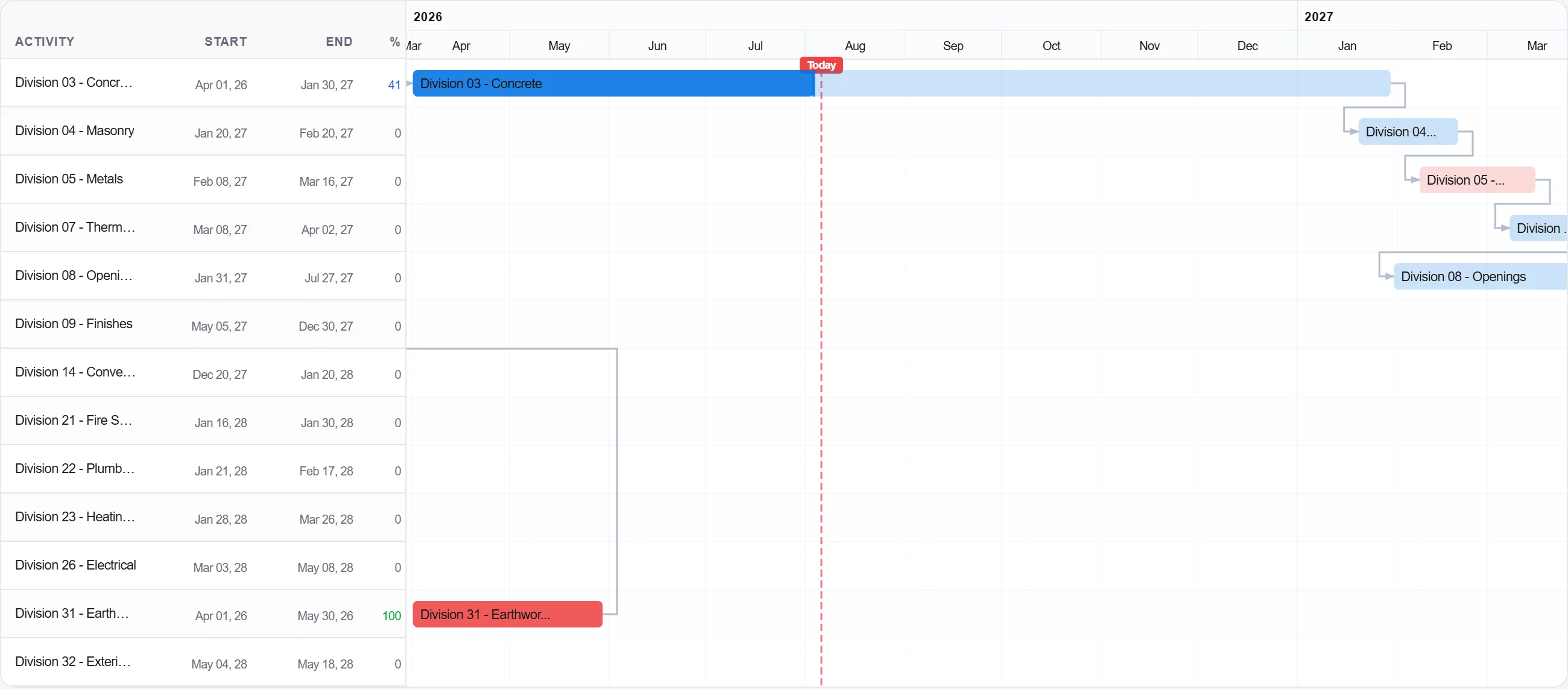
Import the programme from its exchange file so the activities, durations, logic links and WBS come across without being rekeyed line by line.

原因: Retyping a programme of a few hundred activities loses the logic that makes it a programme. Importing keeps the network intact so the critical path is real, not redrawn from memory.

输入Programme exchange file成果Imported activities
2

Check what came across

高级进度计划

Confirm the calendars, the logic links and the WBS survived the import, and that the completion date matches the source, before anyone trusts a date on it.

原因: Exchange files drop constraints and remap calendars silently. Catching a shifted completion date now is far cheaper than discovering the imported programme was wrong three months in.

输入Imported activitiesCalendars and links成果Checked programme
3

Set the baseline

4D 进度计划

Freeze the agreed programme as the baseline, the fixed reference the job will be measured against for the rest of its life.

原因: The baseline is the promise. Without a frozen one there is nothing to compare progress to, and every slippage argument becomes a matter of opinion instead of a matter of record.

输入Checked programme成果Fixed baseline
4

Publish it for tracking

进度

Publish the baseline so the team records progress against it and the planned-versus-actual picture builds from day one.

原因: A baseline nobody tracks against is a wall decoration. Publishing it turns the programme into a live control that warns you early rather than a document reviewed after the fact.

输入Fixed baseline成果Progress tracking on

更多 计划与控制 案例