Planning & controls
Set up a project and hand it over
Take a job from the very first setup right through to handover. Create it, price the work,…
5 steps20 minOpen
 ENEnglish
 DEDeutsch
 FRFrançais
 ESEspañol
 ES-MXEspañol (México)
 ITItaliano
 PTPortuguês
 NLNederlands
 PLPolski
 CSČeština
 RUРусский
 BGБългарски
 TRTürkçe
 SVSvenska
 NONorsk
 FISuomi
 DADansk
 ARالعربية
 ZH中文
ZH中文 JA日本語
JA日本語 KO한국어
KO한국어 HIहिन्दी
 THไทย
THไทย VITiếng Việt
 IDBahasa Indonesia
 RORomână
 HRHrvatski
 MNМонгол
 ETEesti
 BNবাংলা
 KKҚазақша
 KYКыргызча
 FILFilipino
 URاردو
 FAفارسی
 HEעברית
 ELΕλληνικά
Mark up where the programme actually is, gather the week of diary entries and photos that prove it, and issue one honest report the client can read in two minutes.
3 steps across the platform - what you do at each one, and why it matters.
Walk the programme and set the real percent complete on each active task, mark what started and finished this week, and let it show the slippage against the baseline rather than hiding it.
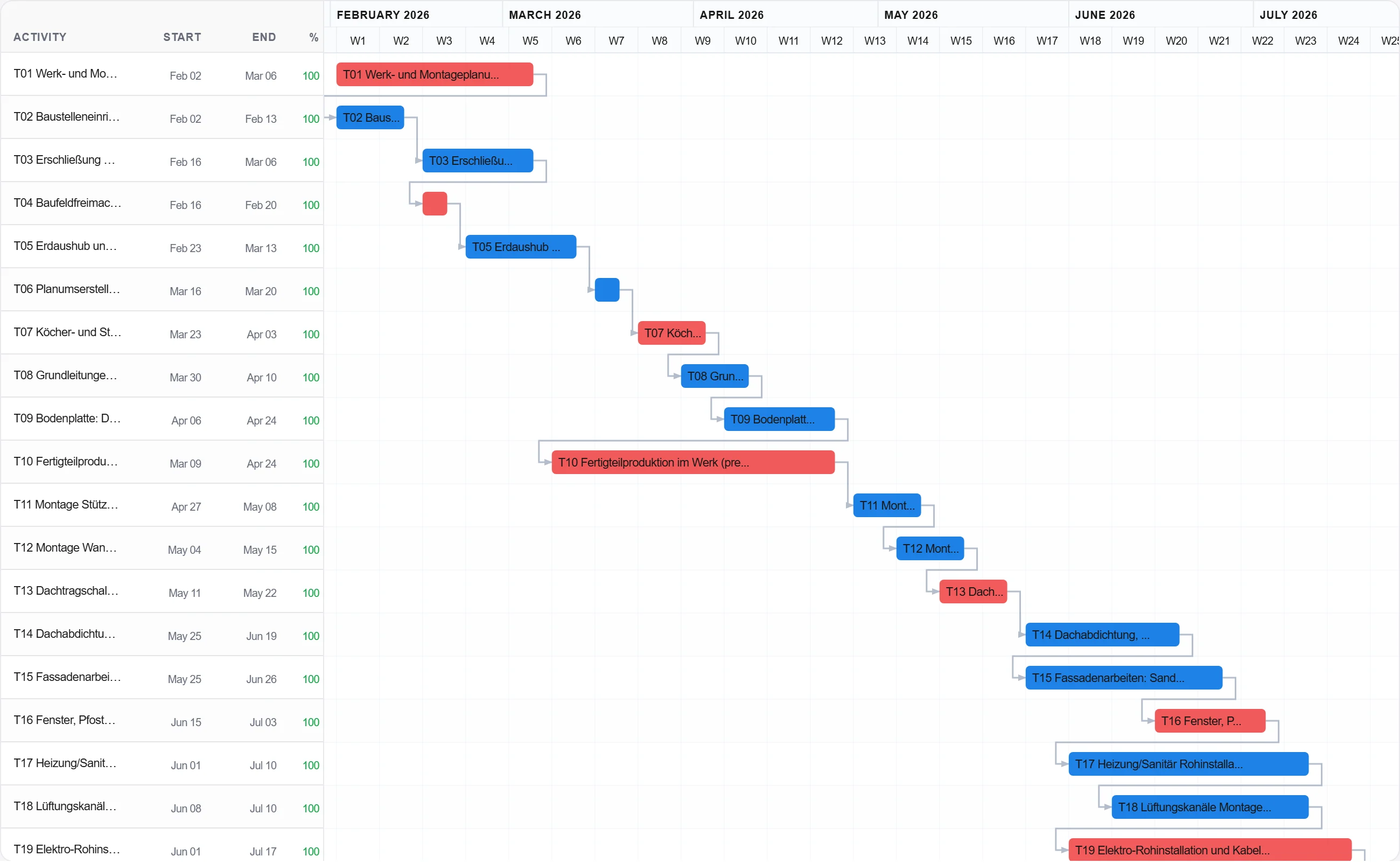
Why: A report built on wishful percentages fools nobody for long and destroys your credibility when the truth lands. Honest actuals now are what make the finish date you quote believable.
Gather the daily diary entries, labour and plant counts, weather and the site photos from the week, so the progress you are claiming is backed by a dated record of what actually happened on the ground.
Why: A number without evidence is just an opinion the client can dispute. The diary and photos are also the contemporaneous record that carries the weight if a delay claim is argued months later.
Pull the progress, the key photos and the look-ahead into one report, call out the risks and the help you need from the client, and issue it on the same day every week.
Why: A report that always lands on the same day, reads straight and flags problems early is what builds the trust that gets decisions made fast. A late, spun report does the opposite.
3 / 190 platform modules
Take a job from the very first setup right through to handover. Create it, price the work,…
Plan the programme, freeze a baseline to measure against, feed real progress back from site…
See where the job truly stands against the plan and the budget: bring the programme current…