
Planning & controls
Set up a project and hand it over
Take a job from the very first setup right through to handover. Create it, price the work,…
5 steps20 minOpen
 ENEnglish
 DEDeutsch
 FRFrançais
 ESEspañol
 ES-MXEspañol (México)
 ITItaliano
 PTPortuguês
 NLNederlands
 PLPolski
 CSČeština
 RUРусский
 BGБългарски
 TRTürkçe
 SVSvenska
 NONorsk
 FISuomi
 DADansk
 ARالعربية
 ZH中文
ZH中文 JA日本語
JA日本語 KO한국어
KO한국어 HIहिन्दी
 THไทย
THไทย VITiếng Việt
 IDBahasa Indonesia
 RORomână
 HRHrvatski
 MNМонгол
 ETEesti
 BNবাংলা
 KKҚазақша
 KYКыргызча
 FILFilipino
 URاردو
 FAفارسی
 HEעברית
 ELΕλληνικά
See where the job truly stands against the plan and the budget: bring the programme current, read the CPI and SPI, and put a credible number on the outturn cost and finish date.
3 steps across the platform - what you do at each one, and why it matters.
Roll every activity forward to the data date, set an honest percent complete on the ones in progress, and make sure the committed and actual costs for the period are booked in.
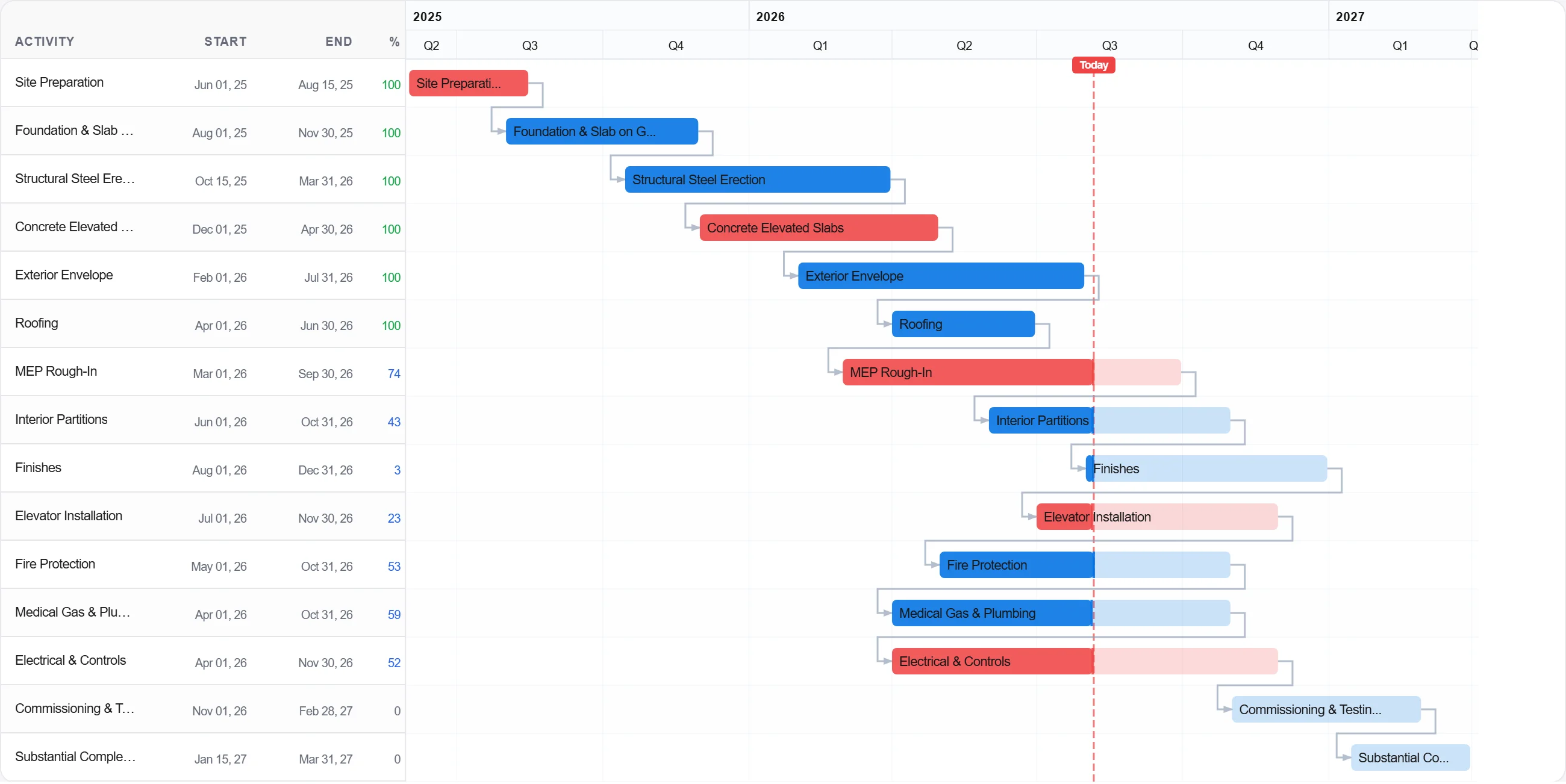
Why: Earned value inherits every optimistic progress claim you feed it. A disciplined cut-off, with no work counted before it is truly done, is the only thing that makes the indices worth reading.
Compare the value you have earned against what was planned and what you have spent, then read the cost and schedule performance indices and the variances they produce.
Why: A superintendent who says the job feels behind is guessing; an SPI of 0.9 is a measurement. Anything under one on cost or schedule means the gap is trending wider, not sitting still.
Extend the current cost and productivity trend to an estimate at completion and a likely finish date, then set both against the budget and the baseline for the report.
Why: A forecast overrun flagged in month four is a problem you can still steer; the same number in month ten is just an apology. Early warning is the whole reason to run earned value at all.
3 / 190 platform modules
Take a job from the very first setup right through to handover. Create it, price the work,…
Plan the programme, freeze a baseline to measure against, feed real progress back from site…
Stand up a new job so everything downstream has one clean spine to attach to: create the re…