
Planning & controls
Build a baseline and track progress
Plan the programme, freeze a baseline to measure against, feed real progress back from site…
4 steps12 minOpen
 ENEnglish
 DEDeutsch
 FRFrançais
 ESEspañol
 ES-MXEspañol (México)
 ITItaliano
 PTPortuguês
 NLNederlands
 PLPolski
 CSČeština
 RUРусский
 BGБългарски
 TRTürkçe
 SVSvenska
 NONorsk
 FISuomi
 DADansk
 ARالعربية
 ZH中文
ZH中文 JA日本語
JA日本語 KO한국어
KO한국어 HIहिन्दी
 THไทย
THไทย VITiếng Việt
 IDBahasa Indonesia
 RORomână
 HRHrvatski
 MNМонгол
 ETEesti
 BNবাংলা
 KKҚазақша
 KYКыргызча
 FILFilipino
 URاردو
 FAفارسی
 HEעברית
 ELΕλληνικά
Take a job from the very first setup right through to handover. Create it, price the work, plan the programme, track it on site, then close it out clean. Five steps across the full lifecycle.
5 steps across the platform - what you do at each one, and why it matters.
Open the new project form and enter the essentials: name, client, site location and the currency you will bill in. Save it to spin up the project record everything else attaches to.
Why: The project record is the spine that holds the estimate, the programme and the site log together. Get it right first and every later module has one place to write to.
Open the bill of quantities and build up positions with their quantities and unit rates, pulling from the cost database or your saved assemblies. The running total climbs as you go.
Why: The priced bill is the agreed scope in numbers. It sets the budget line the programme is resourced against and that site progress gets measured back to.
Open the schedule and lay out the activities, give each a duration and link them in the sequence the trades actually follow. The critical path lights up the tasks that set the completion date.
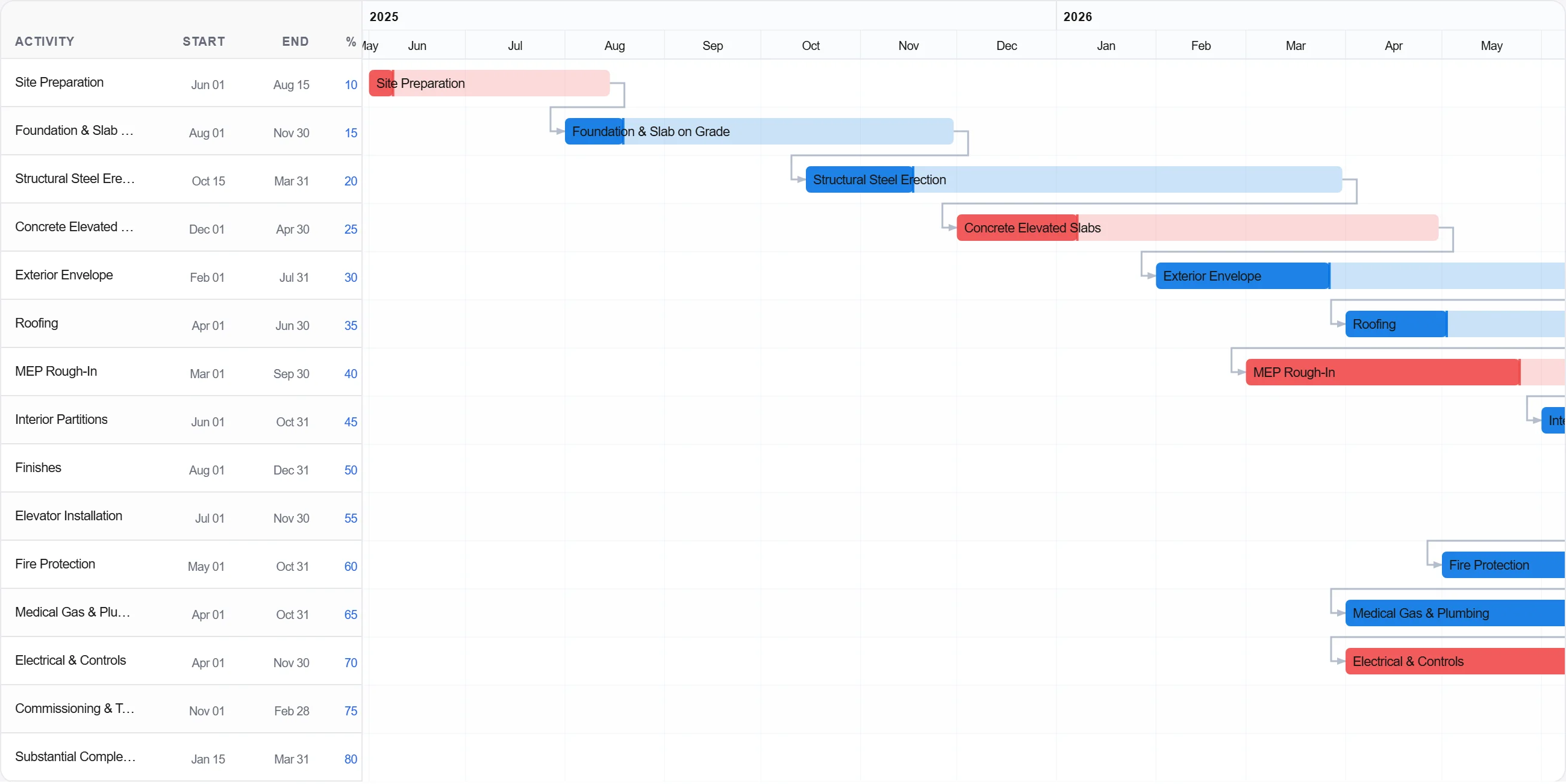
Why: A schedule converts a priced scope into dated work fronts. It tells the site team what comes next and surfaces a slip while there is still float to absorb it.
Keep the daily diary as the job runs, logging progress, the crews on site, plant, deliveries and the weather each day. Every entry stacks into a dated history of the works.
Why: A daily record shows actual progress against both the programme and the budget. It is also the first file you open when a delay, a variation or a claim needs proving.
Open handover and closeout to clear the punch list, gather the O and M manuals and warranties, and get the client sign-off.
Closeout opens empty on a new project. The screen sets out what a handover package has to bind together, and the panel that starts one seeds its checklist from the project type.
Why: A tidy handover closes the job cleanly. The client walks away with a finished, documented building and you keep a full record of how it was delivered, snags and all.
5 / 190 platform modules
Plan the programme, freeze a baseline to measure against, feed real progress back from site…
See where the job truly stands against the plan and the budget: bring the programme current…
Stand up a new job so everything downstream has one clean spine to attach to: create the re…