

Төсөв ба өртөг
Price a building from a PDF
Start from a flat PDF drawing and finish with a priced, validated estimate ready to export.…
5 алхам15 минНээх
Зураг төсөл хараахан тогтоож чадаагүй жагсаалтын хэсгүүдийг - нөхцөлт дүн, үндсэн өртгийн дүн болон нөөц - хэмжсэн ажлаас тусад нь барьснаар тус бүр эзэмшигчтэй, цэвэрхэн зарцуулагдах боломжтой болно.
Платформ даяар 4 алхам - алхам бүрт юу хийх, яагаад чухал болохыг.
Цар хүрээгээр дамжин зураг төсөл хараахан бат үнэлж чадахгүй элемент бүрийг жагсаа: зураг төсөлгүй өнгөлгөө, зах зээлд байсаар буй мэргэжлийн багц, хуулиар тогтоосон холболт, үндсэн өртгийн зүйл.
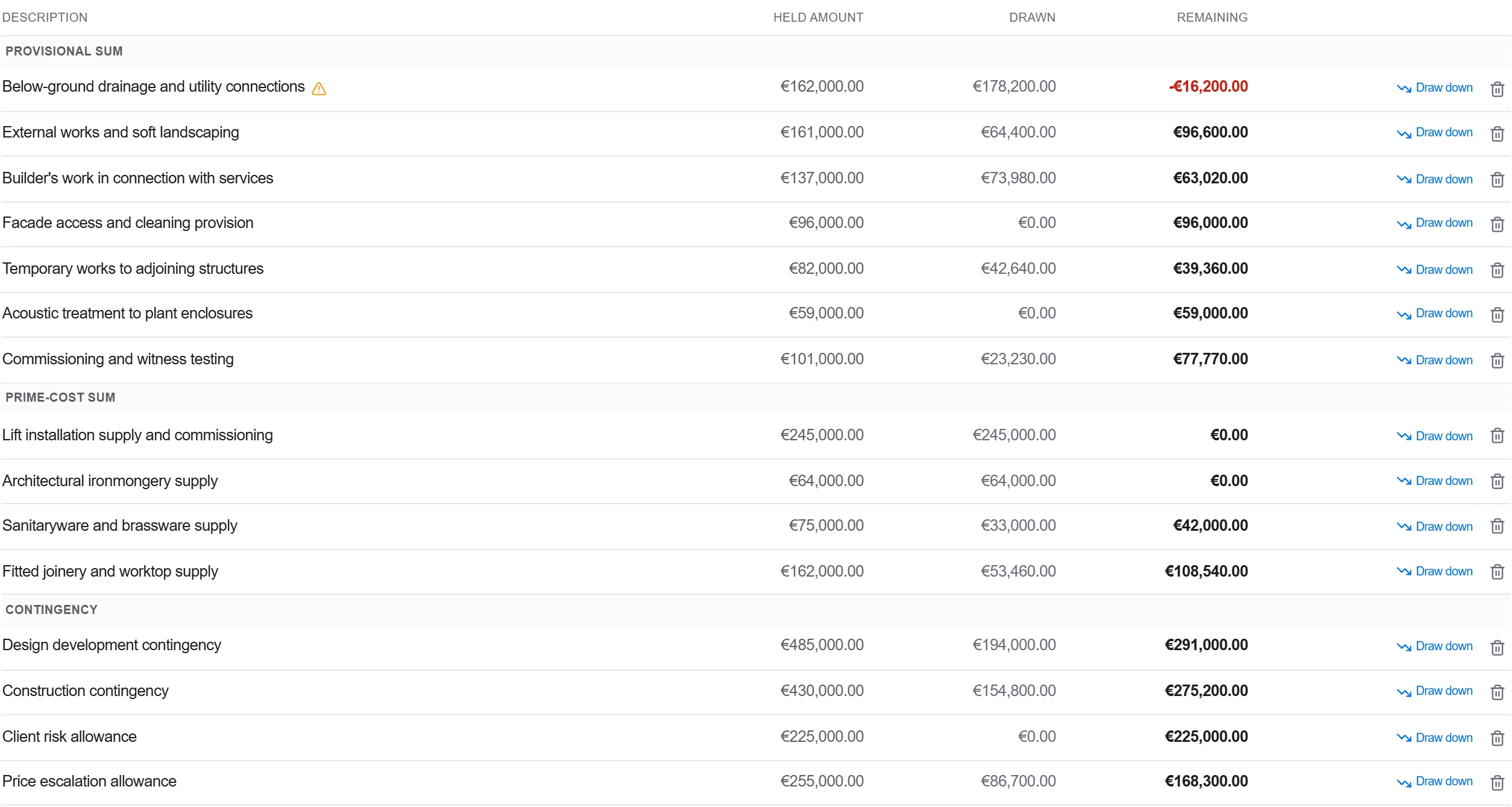
Яагаад: Зөөлөн цэгүүдийг урьдчилан нэрлэх нь тэдгээрийг хоёр удаа үнэлэх эсвэл огт орхигдуулахаас сэргийлдэг. Мөн захиалагчид тооны аль хэсэг хараахан батжуулагдаагүйг яг хэлдэг.
Тус бүрийг тодорхойлсон эсвэл тодорхойлоогүй нөхцөлт дүн, үндсэн өртгийн дүн эсвэл нөөц гэж тэмдэглэ, дараа нь тооны цаадах үндэс болон батжуулахыг хэн эзэмшихийг бүртгэ.
Яагаад: Тодорхойлсон дүн хуваарь болон урьдчилсан зардлыг агуулдаг; тодорхойлоогүй нь агуулдаггүй. Одоо төрлийг зөв тогтоох нь эцэст нь заавар өгсөн үед хугацаа, өртгийг нэхэмжлэх боломжтой эсэхийг шийддэг.
Дүнгүүдийг жагсаалтад өөрийн хэсэгт, хэмжсэн ажлаас тодорхой тусад нь оруулснаар тендерийн нийт дүн бат үнэ болон нөхцөлт мөнгийг тусад нь харуулна.
Яагаад: Тусад нь барьсан дүнгүүдийг ажлын туршид хэмжсэн үнийг хөндөлгүйгээр зарцуулж, тохируулж болно. Үнэд булагдсан бол тэдгээрийг хянах эсвэл буцаах боломжгүй болдог.
Юу ч үнэ болон нөхцөлт дүн хоёуланд байхгүй, дүн бүр эзэмшигчтэй, нийт дүн жагсаалт гарахаас өмнө тохирч буйг шалга.
Яагаад: Багцыг давхар тоолох нь ажлаас гараа гаргах амархан арга; түүнийг алдах нь мөнгө алдах амархан арга юм. Түргэн шалгалт хоёр урхийг нэг дор хаадаг.
Платформын 190 модулиас 3
Start from a flat PDF drawing and finish with a priced, validated estimate ready to export.…
Put a priced bill through the validation rules, clear every warning and error, then export…
Pull priced items from a real cost database, build the bill from them, bundle recurring bui…