

Procjena i troškovi
Price a building from a PDF
Start from a flat PDF drawing and finish with a priced, validated estimate ready to export.…
5 koraka15 minOtvori
Obradite dijelove troškovnika koje projekt još ne može fiksirati - privremene iznose, iznose osnovnih troškova i rezerve - držane odvojeno od izmjerenog rada tako da svaki ima vlasnika i može se čisto povlačiti.
4 koraka kroz platformu - što radite u svakom i zašto je važno.
Prođite kroz opseg i popišite svaki element koji projekt još ne može čvrsto procijeniti: neprojektirane obrade, specijalistički paket još na tržištu, zakonske priključke, stavku osnovnog troška.
Zašto: Imenovanje slabih točaka unaprijed sprječava da se dvaput procijene ili posve promaše. Također govori klijentu točno koji dijelovi broja tek treba potvrditi.
Označite svaki kao definiran ili nedefiniran privremeni iznos, iznos osnovnog troška ili rezervu, zatim zabilježite osnovu iza brojke i tko je vlasnik njezine potvrde.
Zašto: Definiran iznos nosi program i pripremne radove; nedefiniran ne. Ispravan tip sada odlučuje možete li tražiti vrijeme i trošak kad se konačno naloži.
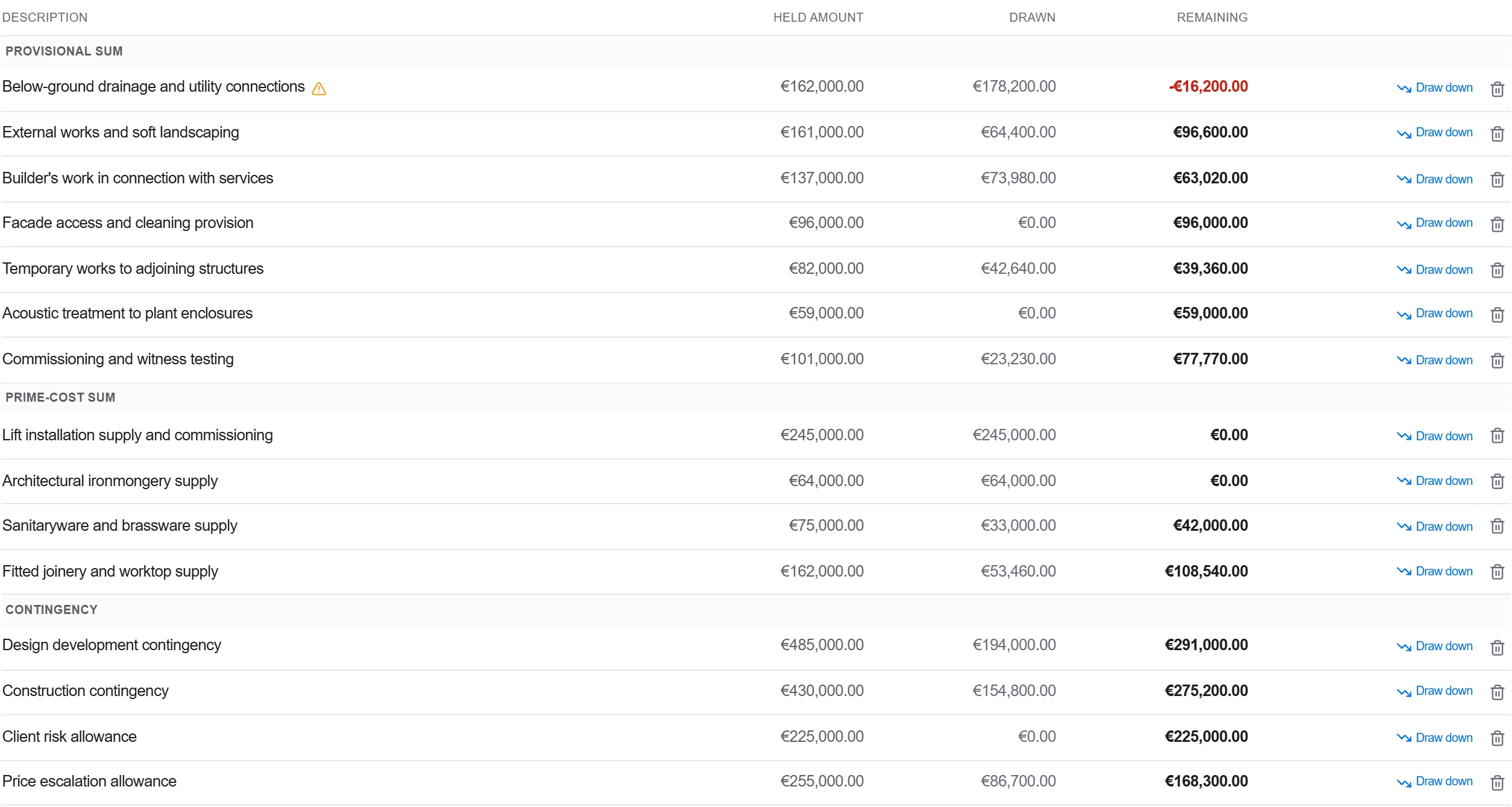
Unesite iznose u troškovnik u vlastiti odjeljak, jasno odvojeno od izmjerenog rada, tako da natječajni ukupni iznos prikazuje čvrstu cijenu i privremeni novac odvojeno.
Zašto: Držani odvojeno, iznosi se mogu trošiti i usklađivati kroz posao bez diranja izmjerenih cijena. Zakopani u cijenama postaju nemogući za praćenje ili vraćanje.
Provjerite da ništa ne sjedi i u cijeni i u privremenom iznosu, da svaki iznos ima vlasnika i da se ukupni iznosi slažu prije nego troškovnik izađe.
Zašto: Dvostruko brojenje paketa lak je način da se izbacite iz posla; njegov propust lak je način da izgubite novac. Brza provjera zatvara obje zamke odjednom.
3 / 190 modula platforme
Start from a flat PDF drawing and finish with a priced, validated estimate ready to export.…
Put a priced bill through the validation rules, clear every warning and error, then export…
Pull priced items from a real cost database, build the bill from them, bundle recurring bui…