

التقدير والتكلفة
Price a building from a PDF
Start from a flat PDF drawing and finish with a priced, validated estimate ready to export.…
5 خطوة15 دقيقةفتح
تعامل مع أجزاء الجدول التي لا يستطيع التصميم تثبيتها بعد - المبالغ الاحتياطية ومبالغ التكلفة الأولية والمخصصات - محفوظة منفصلة عن العمل المقيس كي يكون لكل منها مالك ويمكن سحبه بنظافة.
4 خطوات عبر المنصة - ما تفعله في كل منها ولماذا يهم.
راجع النطاق واسرد كل عنصر لا يستطيع التصميم تسعيره بثبات بعد: التشطيبات غير المصممة، وحزمة متخصصة ما زالت في السوق، والوصلات النظامية، وبند تكلفة أولية.
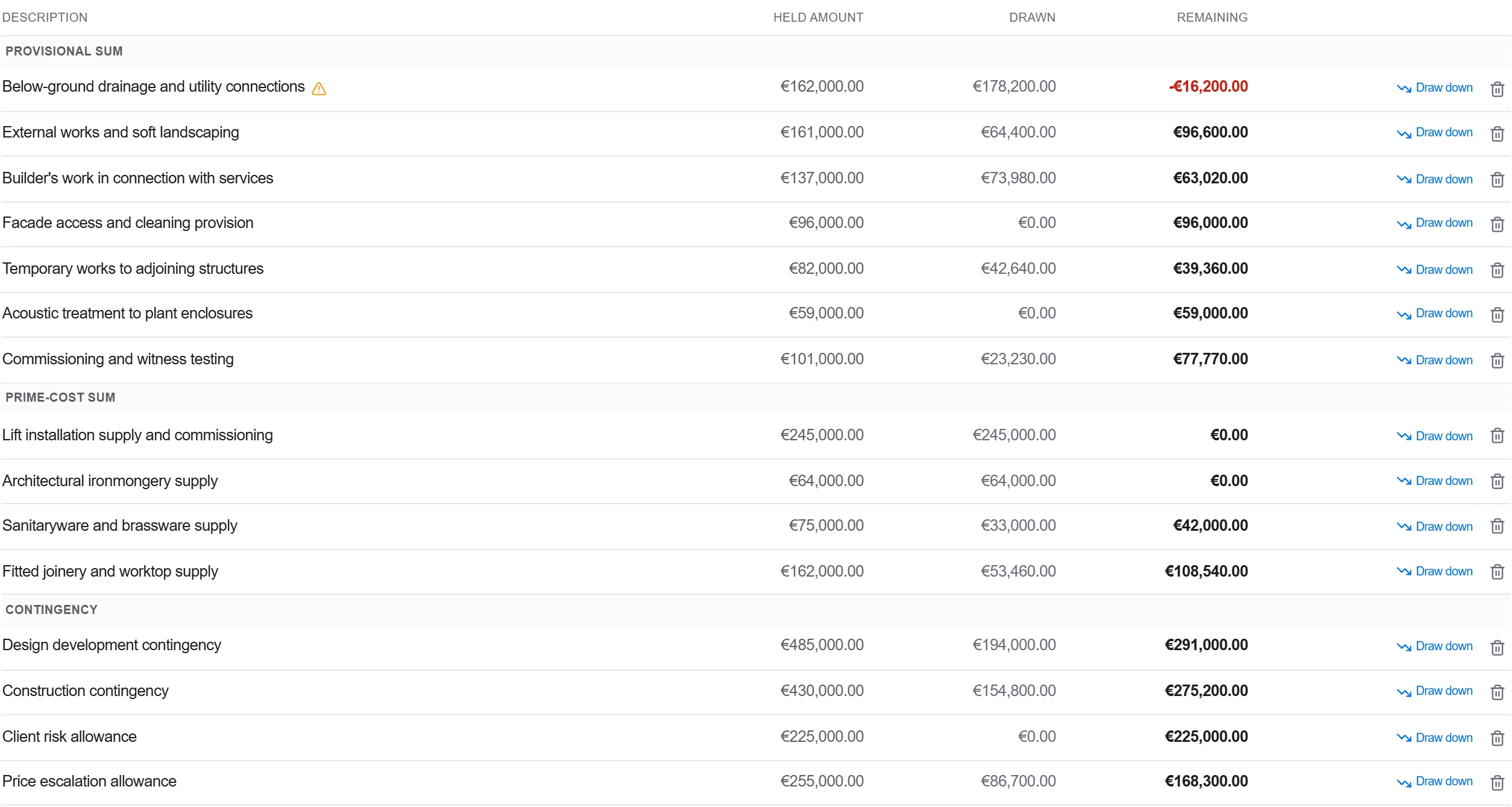
لماذا: تسمية النقاط الرخوة مسبقاً هي ما يمنع تسعيرها مرتين أو إغفالها كلياً. كما تخبر العميل بالضبط أي أجزاء الرقم لا تزال بحاجة إلى تثبيت.
صنّف كل واحد كمبلغ احتياطي محدد أو غير محدد، أو مبلغ تكلفة أولية، أو مخصص، ثم سجّل الأساس خلف الرقم ومن يملك تثبيته.
لماذا: المبلغ المحدد يحمل البرنامج والأعمال التمهيدية؛ وغير المحدد لا يحملها. ضبط النوع الآن يقرر ما إذا كان يمكنك المطالبة بالوقت والتكلفة حين يُصدَر التوجيه به أخيراً.
أدخل المبالغ إلى الجدول في قسمها الخاص، منفصلة بوضوح عن العمل المقيس، بحيث يُظهر إجمالي المناقصة السعر الثابت والمال الاحتياطي منفصلين.
لماذا: المحفوظة منفصلة يمكن صرفها وتعديلها خلال العمل دون إزعاج الأسعار المقيسة. المدفونة في الأسعار تصبح مستحيلة التتبع أو الإرجاع.
تحقق من ألا يوجد شيء في سعر ومبلغ احتياطي معاً، وأن لكل مبلغ مالكاً، وأن الإجماليات تتطابق قبل صدور الجدول.
لماذا: الاحتساب المزدوج لحزمة طريقة سهلة لتخرج نفسك من العمل بالسعر؛ وإغفاله طريقة سهلة لخسارة المال. مرور تحقق سريع يغلق الفخّين معاً.
3 / 190 من وحدات المنصة
Start from a flat PDF drawing and finish with a priced, validated estimate ready to export.…
Put a priced bill through the validation rules, clear every warning and error, then export…
Pull priced items from a real cost database, build the bill from them, bundle recurring bui…