

Kalkulation & Kosten
Price a building from a PDF
Start from a flat PDF drawing and finish with a priced, validated estimate ready to export.…
5 Schritte15 Min.Öffnen
Die Teile eines Leistungsverzeichnisses handhaben, die die Planung noch nicht festlegen kann - Bedarfspositionen, Kostenvorgabepositionen und Rückstellungen - getrennt von der aufgemessenen Leistung gehalten, sodass jede einen Verantwortlichen hat und sauber abgerufen werden kann.
4 Schritte über die Plattform hinweg - was Sie bei jedem tun und warum es zählt.
Den Leistungsumfang durchgehen und jedes Element auflisten, das die Planung noch nicht fest bepreisen kann: ungeplante Ausbauten, ein noch am Markt befindliches Fachpaket, behördliche Anschlüsse, eine Kostenvorgabeposition.
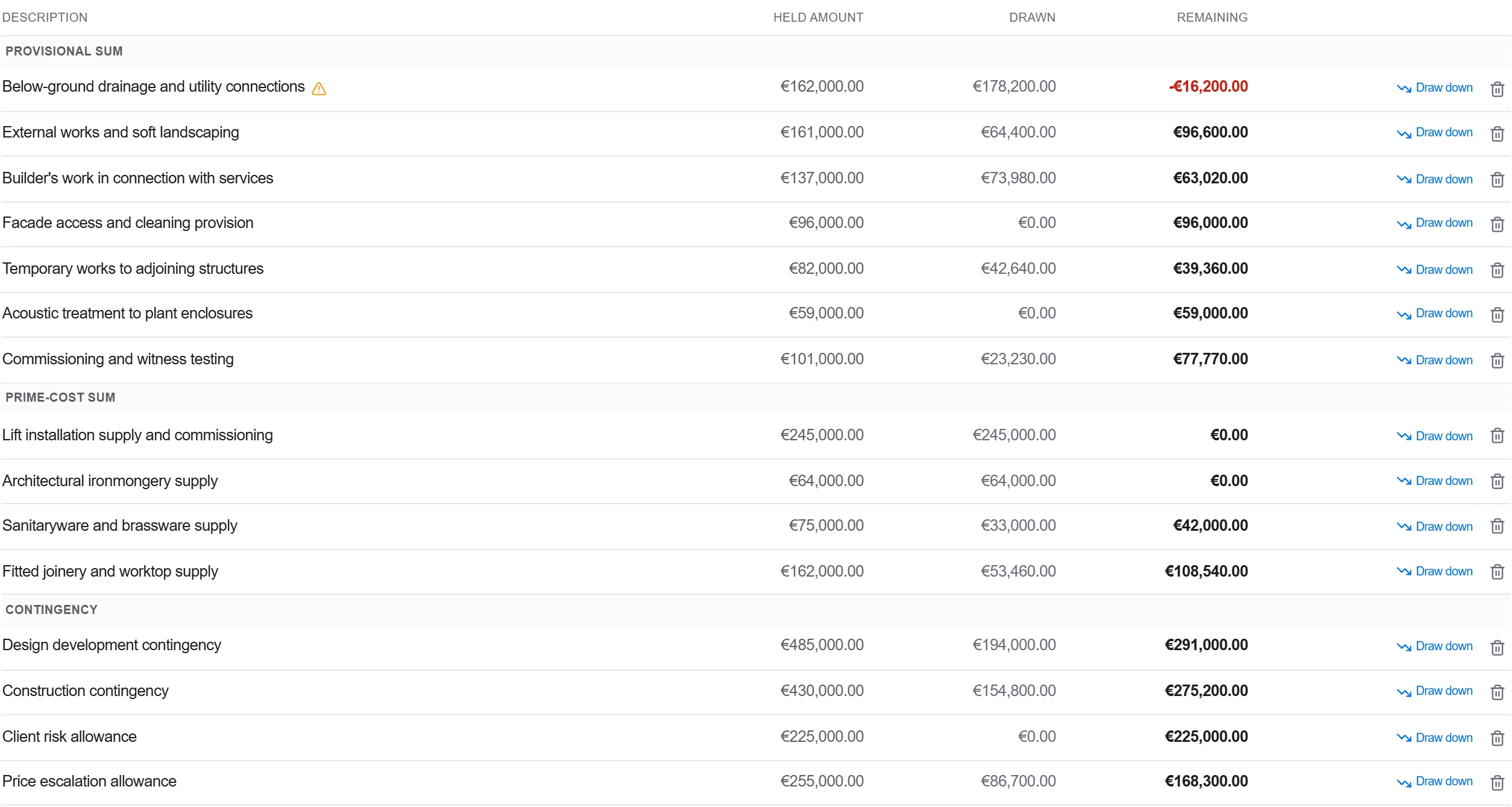
Warum: Die weichen Stellen vorab zu benennen, verhindert, dass sie doppelt bepreist oder ganz übersehen werden. Es sagt dem Auftraggeber außerdem genau, welche Teile der Zahl noch zu festigen sind.
Jede als bestimmte oder unbestimmte Bedarfsposition, als Kostenvorgabeposition oder als Rückstellung kennzeichnen, dann die Grundlage hinter der Zahl und den für die Festigung Verantwortlichen festhalten.
Warum: Eine bestimmte Position trägt Termin und Baustelleneinrichtung; eine unbestimmte nicht. Die Art jetzt richtig zu treffen, entscheidet, ob Sie Zeit und Kosten beanspruchen können, wenn sie schließlich angewiesen wird.
Die Positionen in einem eigenen Abschnitt in das Leistungsverzeichnis übernehmen, klar getrennt von der aufgemessenen Leistung, sodass die Angebotssumme Festpreis und Bedarfsgelder getrennt ausweist.
Warum: Getrennt gehalten, können die Positionen im Lauf des Auftrags verausgabt und angepasst werden, ohne die aufgemessenen Sätze zu stören. In den Sätzen vergraben werden sie unmöglich zu verfolgen oder zurückzugeben.
Prüfen, dass nichts sowohl in einem Satz als auch in einer Bedarfsposition steht, dass jede Position einen Verantwortlichen hat und dass die Summen stimmen, bevor das Leistungsverzeichnis herausgeht.
Warum: Ein Paket doppelt zu zählen, ist ein leichter Weg, sich aus einem Auftrag herauszupreisen; es zu übersehen, ist ein leichter Weg, Geld zu verlieren. Ein kurzer Prüflauf schließt beide Fallen auf einmal.
3 / 190 Plattform-Modulen
Start from a flat PDF drawing and finish with a priced, validated estimate ready to export.…
Put a priced bill through the validation rules, clear every warning and error, then export…
Pull priced items from a real cost database, build the bill from them, bundle recurring bui…