
打开演示
案例 / 估算与成本
估算与成本

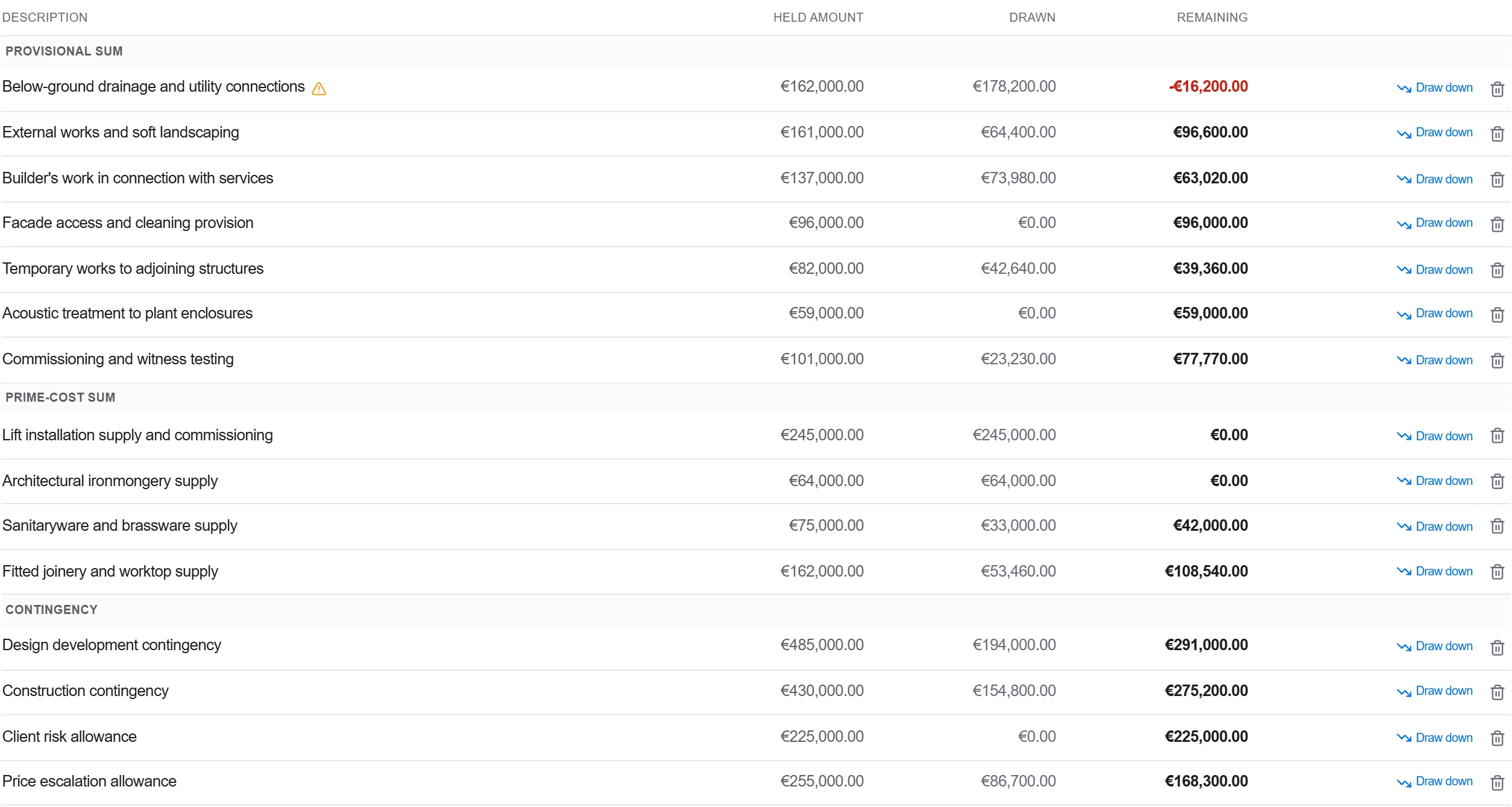
Manage provisional sums and allowances

Handle the parts of a bill the design cannot yet fix - provisional sums, prime cost sums and allowances - kept separate from measured work so each one has an owner and can be drawn down cleanly.

4 个步骤10 分钟造价咨询 / 工料测量师总承包商开发商/业主

运作方式,逐步说明

贯穿平台的 4 个步骤 - 每一步做什么,以及为什么重要。

1

Find what cannot be fixed yet

暂列金额与应急费

Go through the scope and list every element the design cannot yet price firmly: undesigned finishes, a specialist package still out to market, statutory connections, a prime cost item.

原因: Naming the soft spots up front is what stops them being priced twice or missed entirely. It also tells the client exactly which parts of the number are still to be firmed up.

输入Incomplete designScope gaps成果List of sums
2

Set the type and the basis

暂列金额与应急费

Mark each one as a defined or undefined provisional sum, a prime cost sum or an allowance, then record the basis behind the figure and who owns firming it up.

原因: A defined sum carries programme and preliminaries; an undefined one does not. Getting the type right now decides whether you can claim time and cost when it is finally instructed.

输入List of sums成果Basis and owner set
3

Carry them into the bill

工程量清单

Bring the sums into the bill in their own section, clearly separate from measured work, so the tender total shows firm price and provisional money apart.

原因: Kept separate, the sums can be expended and adjusted through the job without disturbing the measured rates. Buried in the rates they become impossible to track or hand back.

输入Classified sums成果Separate bill section
4

Check for double counting

校验

Validate that nothing sits in both a rate and a provisional sum, that every sum has an owner, and that the totals reconcile before the bill goes out.

原因: Double counting a package is an easy way to price yourself out of a job; missing it is an easy way to lose money. A quick validation pass closes both traps at once.

输入Bill with sums成果No double counts

更多 估算与成本 案例