

Сметы и калькуляция
Price a building from a PDF
Start from a flat PDF drawing and finish with a priced, validated estimate ready to export.…
Шагов: 515 минОткрыть
Работайте с частями ведомости, которые проект пока не может зафиксировать - резервные суммы, суммы основных затрат и лимиты - держа их отдельно от обмеренных работ, чтобы у каждой был владелец и она чисто выбиралась.
4 шагов через всю платформу - что делать на каждом и почему это важно.
Пройдите по объёму и перечислите каждый элемент, который проект пока не может твёрдо оценить: незапроектированные отделки, профильный пакет, ещё выставленный на рынок, обязательные подключения, позицию основных затрат.
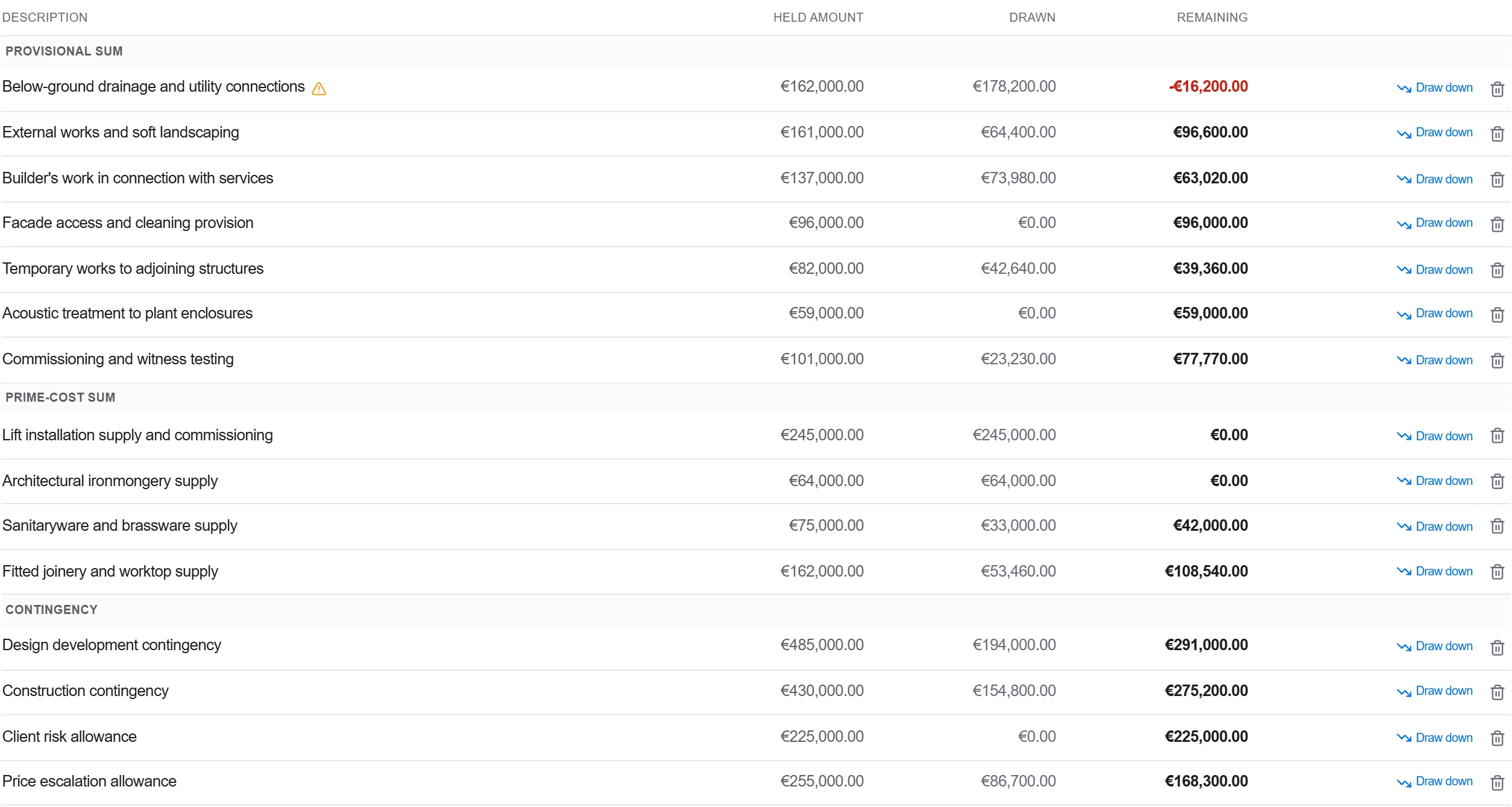
Зачем: Называние слабых мест заранее не даёт им быть расценёнными дважды или упущенными целиком. Оно также говорит заказчику, какие именно части цифры ещё предстоит уточнить.
Отметьте каждую как определённую или неопределённую резервную сумму, сумму основных затрат или лимит, затем запишите обоснование за цифрой и того, кто отвечает за её уточнение.
Зачем: Определённая сумма несёт сроки и накладные расходы; неопределённая нет. Правильный выбор типа сейчас решает, сможете ли вы претендовать на время и стоимость, когда её наконец поручат.
Внесите суммы в ведомость в их собственном разделе, чётко отдельно от обмеренных работ, чтобы тендерный итог показывал твёрдую цену и резервные деньги раздельно.
Зачем: Держась отдельно, суммы можно расходовать и корректировать по ходу работы без нарушения обмеренных расценок. Зарытые в расценки, они становятся невозможны для отслеживания или возврата.
Проверьте, что ничто не сидит одновременно в расценке и резервной сумме, что у каждой суммы есть владелец и что итоги сходятся, прежде чем ведомость уйдёт.
Зачем: Дважды посчитать пакет это лёгкий способ выставить себя из работы по цене; пропустить его это лёгкий способ потерять деньги. Быстрая проверка закрывает обе ловушки разом.
3 / 190 модулей платформы
Start from a flat PDF drawing and finish with a priced, validated estimate ready to export.…
Put a priced bill through the validation rules, clear every warning and error, then export…
Pull priced items from a real cost database, build the bill from them, bundle recurring bui…