
Commercial & contracts
Turn a change into a paid variation
Capture a scope change while it is fresh, price it as a contract variation on your agreed r…
3 steps11 minOpen
 ENEnglish
 DEDeutsch
 FRFrançais
 ESEspañol
 ES-MXEspañol (México)
 ITItaliano
 PTPortuguês
 NLNederlands
 PLPolski
 CSČeština
 RUРусский
 BGБългарски
 TRTürkçe
 SVSvenska
 NONorsk
 FISuomi
 DADansk
 ARالعربية
 ZH中文
ZH中文 JA日本語
JA日本語 KO한국어
KO한국어 HIहिन्दी
 THไทย
THไทย VITiếng Việt
 IDBahasa Indonesia
 RORomână
 HRHrvatski
 MNМонгол
 ETEesti
 BNবাংলা
 KKҚазақша
 KYКыргызча
 FILFilipino
 URاردو
 FAفارسی
 HEעברית
 ELΕλληνικά
Close the contract cleanly: settle the final account from the agreed variations and valuations, release the retention that is due, and report the outturn against budget.
3 steps across the platform - what you do at each one, and why it matters.
Pull the agreed variations and the certified valuations into one final account, settle the last few open items, and confirm the total both sides are signing up to.

Why: A final account assembled from loose emails is one nobody trusts to sign. Building it from the variations and valuations already agreed is what turns a negotiation into a number everyone can accept.
Against the agreed account, release the retention that has fallen due now the defects are cleared, and set the final payment, keeping back only what a live defect still justifies.
Why: Retention sat on past its release date is the subcontractor's money you are holding for no reason, and it poisons the next tender. Releasing it on time is fair, and it is what gets you a keen price next round.
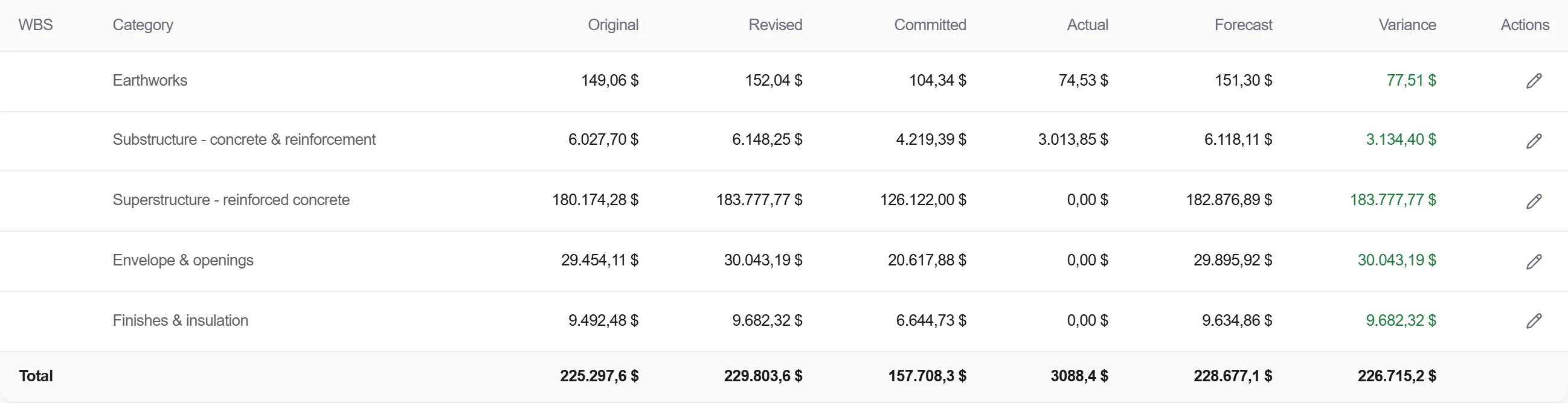
Run the report that sets the settled final account against the budget you started with, break down where the money moved, and file it as the closing position on the job.
Why: A job closed with no outturn report teaches you nothing for the next one. Setting final against budget is how you see which trades and variations drove the result and price the next project sharper.
3 / 190 platform modules
Capture a scope change while it is fresh, price it as a contract variation on your agreed r…
Award a trade package to a subcontractor, place it on a subcontract with a schedule of valu…
Value the work put in place this period against the contract, raise the application with th…