
Commercial & contracts
Turn a change into a paid variation
Capture a scope change while it is fresh, price it as a contract variation on your agreed r…
3 steps11 minOpen
 ENEnglish
 DEDeutsch
 FRFrançais
 ESEspañol
 ES-MXEspañol (México)
 ITItaliano
 PTPortuguês
 NLNederlands
 PLPolski
 CSČeština
 RUРусский
 BGБългарски
 TRTürkçe
 SVSvenska
 NONorsk
 FISuomi
 DADansk
 ARالعربية
 ZH中文
ZH中文 JA日本語
JA日本語 KO한국어
KO한국어 HIहिन्दी
 THไทย
THไทย VITiếng Việt
 IDBahasa Indonesia
 RORomână
 HRHrvatski
 MNМонгол
 ETEesti
 BNবাংলা
 KKҚазақша
 KYКыргызча
 FILFilipino
 URاردو
 FAفارسی
 HEעברית
 ELΕλληνικά
Spread the priced work across the programme to see cash in and cash out month by month, find where the balance dips negative, and report it early enough to do something about it.
3 steps across the platform - what you do at each one, and why it matters.
Tie the priced bill to the schedule so each activity carries its cost, then let the spend spread across the timeline to give a month-by-month cost curve rather than one lump total.
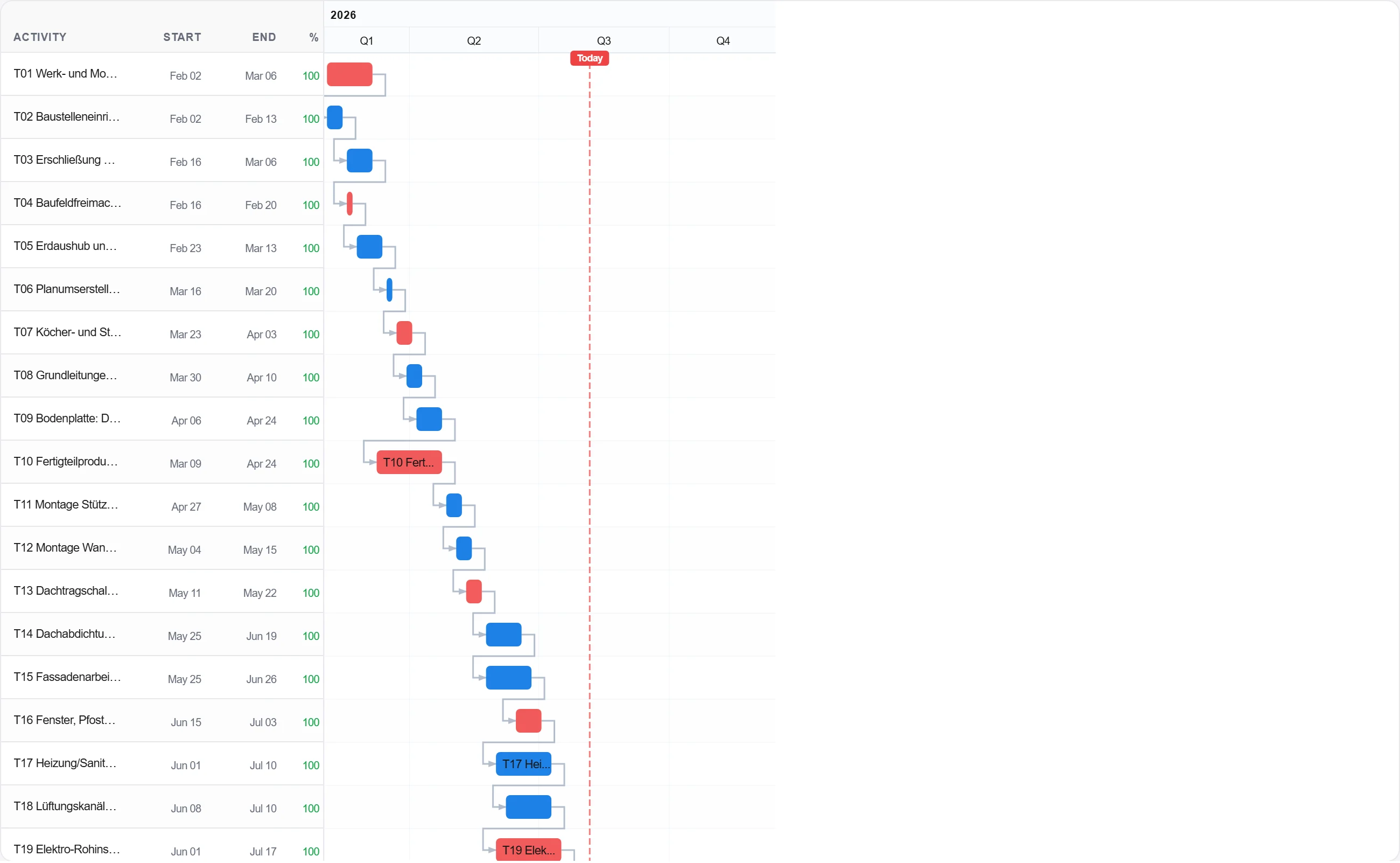
Why: A total tells you what the job costs but not when the money leaves, and construction lives or dies on timing. Spreading cost over the programme turns the budget into the profile a cash forecast can be built on.
Set the income against the cost curve using the payment terms, retention and the lag between valuation and money in, then read the running balance to find where it goes negative.
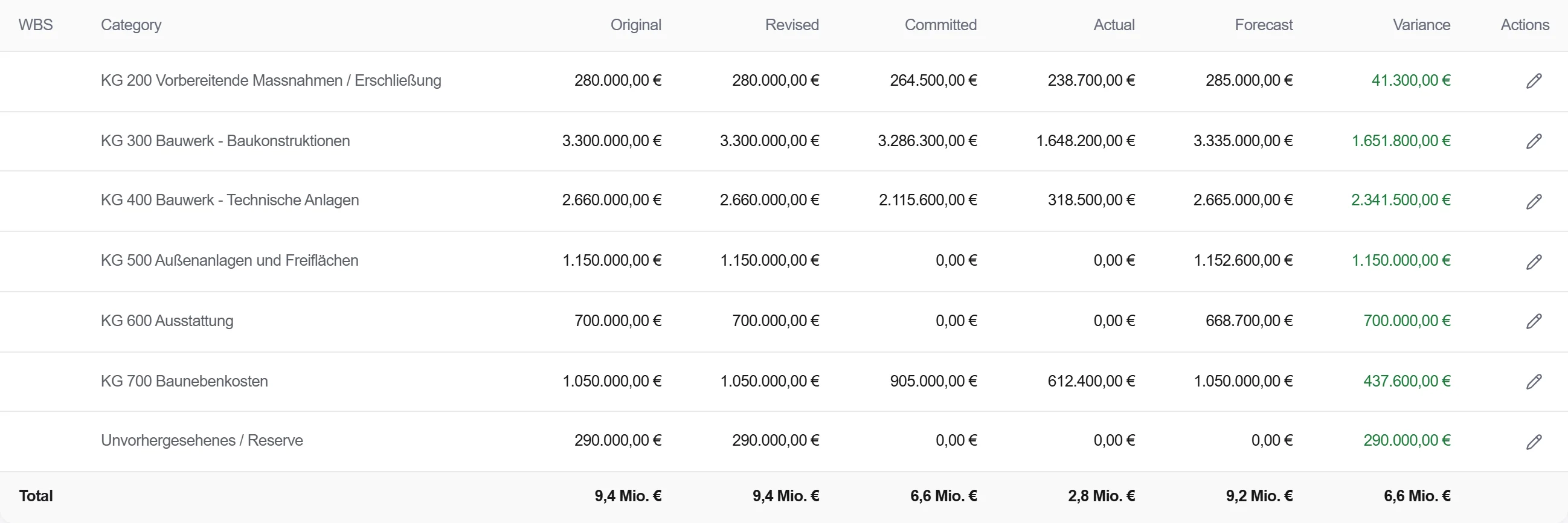
Why: A profitable job can still run out of cash mid-build because payment always lags spend. Seeing the low point in advance is what lets you arrange funding or reprofile work before it becomes a crisis on site.
Produce the cash flow report with the funding requirement and the peak exposure marked, and update it each period as actual valuations and payments replace the forecast ones.
Why: A cash forecast is only useful if it reaches the people who arrange the money and is kept current. Refreshed every period, it turns from a one-off guess into an early warning the whole business can act on.
3 / 190 platform modules
Capture a scope change while it is fresh, price it as a contract variation on your agreed r…
Award a trade package to a subcontractor, place it on a subcontract with a schedule of valu…
Value the work put in place this period against the contract, raise the application with th…