
Planning & controls
Set up a project and hand it over
Take a job from the very first setup right through to handover. Create it, price the work,…
5 steps20 minOpen
 ENEnglish
 DEDeutsch
 FRFrançais
 ESEspañol
 ES-MXEspañol (México)
 ITItaliano
 PTPortuguês
 NLNederlands
 PLPolski
 CSČeština
 RUРусский
 BGБългарски
 TRTürkçe
 SVSvenska
 NONorsk
 FISuomi
 DADansk
 ARالعربية
 ZH中文
ZH中文 JA日本語
JA日本語 KO한국어
KO한국어 HIहिन्दी
 THไทย
THไทย VITiếng Việt
 IDBahasa Indonesia
 RORomână
 HRHrvatski
 MNМонгол
 ETEesti
 BNবাংলা
 KKҚазақша
 KYКыргызча
 FILFilipino
 URاردو
 FAفارسی
 HEעברית
 ELΕλληνικά
Pull the next two to three weeks off the master programme, clear the constraints sitting in front of each task, and commit a weekly plan the crews can genuinely make.
3 steps across the platform - what you do at each one, and why it matters.
Take the two to three weeks of work coming up off the master programme and break the tasks down to the level a foreman actually plans at: a pour, a lift, a room, not a summary bar.

Why: The master programme sets the direction but is too coarse to run a week from. Breaking the near-term work down to real activities is what makes the plan something a gang can be held to.
For each task, list what has to be true before it can start: design released, materials on site, preceding trade finished, permit live, access clear. Assign each blocker to someone and chase it down before the week begins.
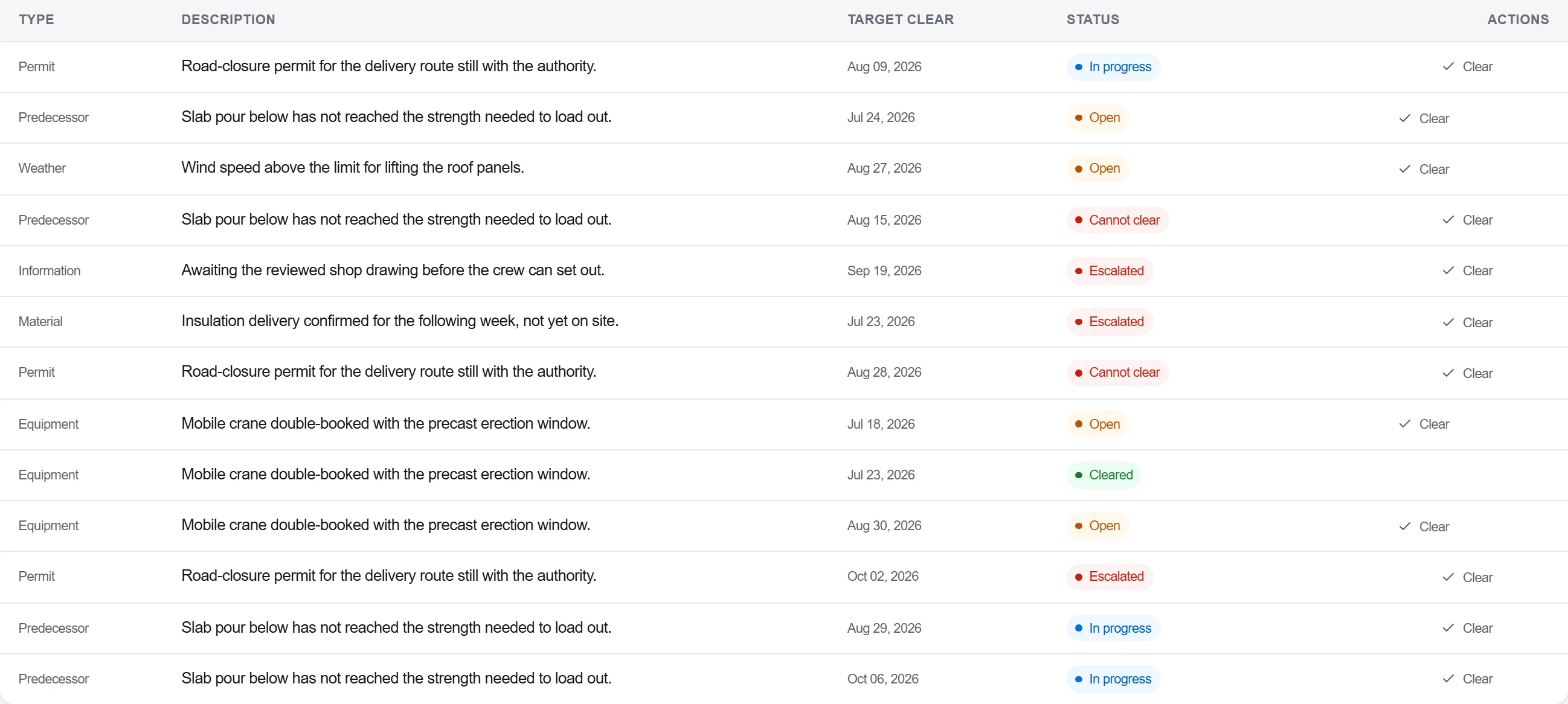
Why: A task put on the plan before its constraints are cleared is a promise that will break and stall the trades behind it. Screening the blockers out first is what makes a weekly commitment worth the paper.
Issue the weekly work plan of tasks that are genuinely ready, get each foreman to commit to what their crew will complete, and at week end measure how many of those promises were actually met.
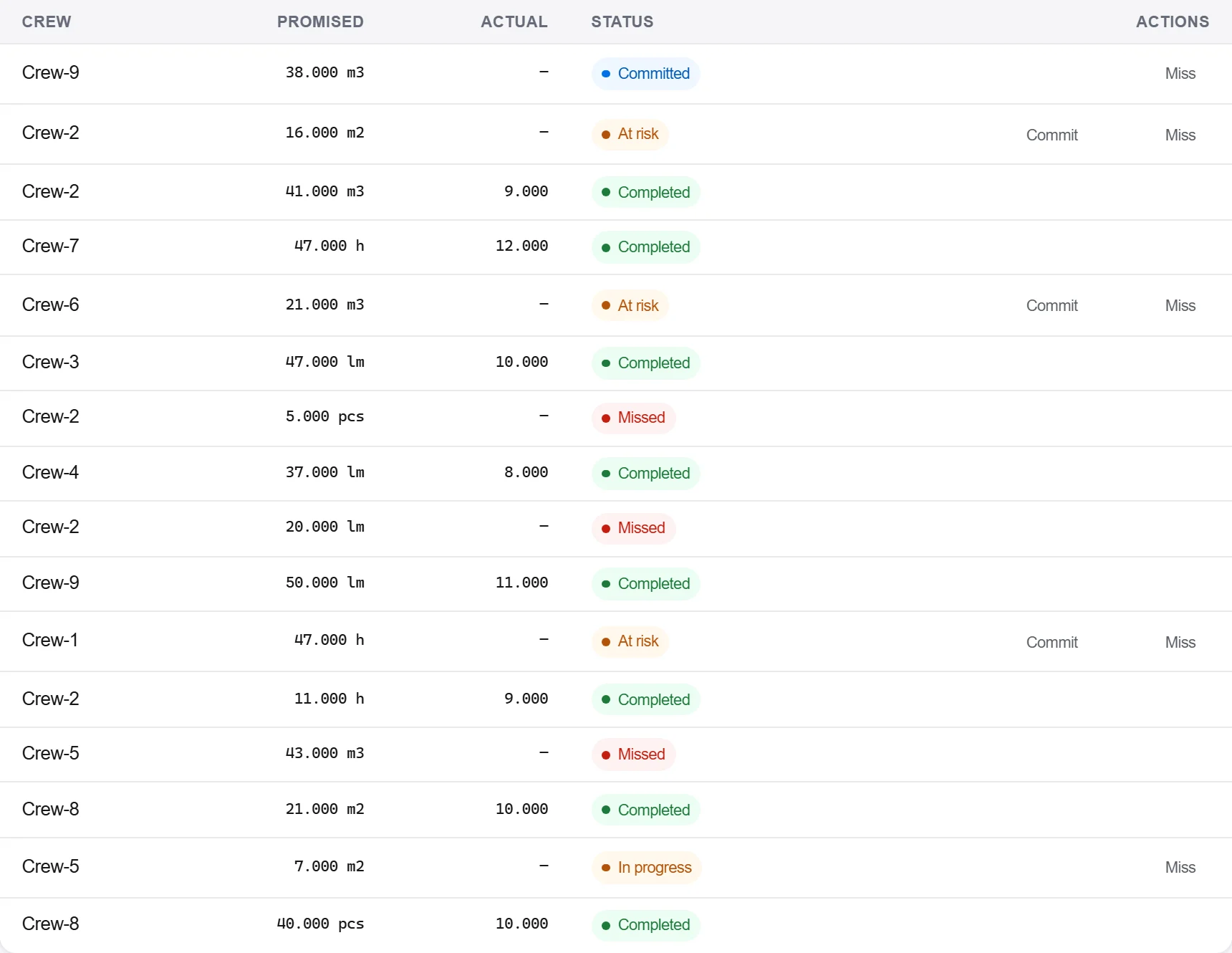
Why: Only planning work that is truly ready is what makes crews trust the plan and hit it. Tracking the promises kept, week on week, is the honest early signal of whether the programme is really under control.
3 / 190 platform modules
Take a job from the very first setup right through to handover. Create it, price the work,…
Plan the programme, freeze a baseline to measure against, feed real progress back from site…
See where the job truly stands against the plan and the budget: bring the programme current…