Site & field
Run the site day
Close the day out properly: record the diary, book the labour and plant hours, upload the p…
4 steps9 minOpen
 ENEnglish
 DEDeutsch
 FRFrançais
 ESEspañol
 ES-MXEspañol (México)
 ITItaliano
 PTPortuguês
 NLNederlands
 PLPolski
 CSČeština
 RUРусский
 BGБългарски
 TRTürkçe
 SVSvenska
 NONorsk
 FISuomi
 DADansk
 ARالعربية
 ZH中文
ZH中文 JA日本語
JA日本語 KO한국어
KO한국어 HIहिन्दी
 THไทย
THไทย VITiếng Việt
 IDBahasa Indonesia
 RORomână
 HRHrvatski
 MNМонгол
 ETEesti
 BNবাংলা
 KKҚазақша
 KYКыргызча
 FILFilipino
 URاردو
 FAفارسی
 HEעברית
 ELΕλληνικά
A verbal instruction costs you nothing you can prove. Log the call while it is fresh, confirm it back in writing, and if it moved the scope start the change record before you build it.
3 steps across the platform - what you do at each one, and why it matters.
Straight after the call, log it, who rang, when, and exactly what was said or instructed, in their words rather than your paraphrase. Do it while you still remember the detail.
Why: A fortnight on, nobody agrees what was said on the phone. A dated log written the same hour is the difference between a fact and your word against theirs.
Send a short confirmation-of-verbal-instruction note back to whoever gave it, setting out what you understood and that you are acting on it unless told otherwise. File it against the project.
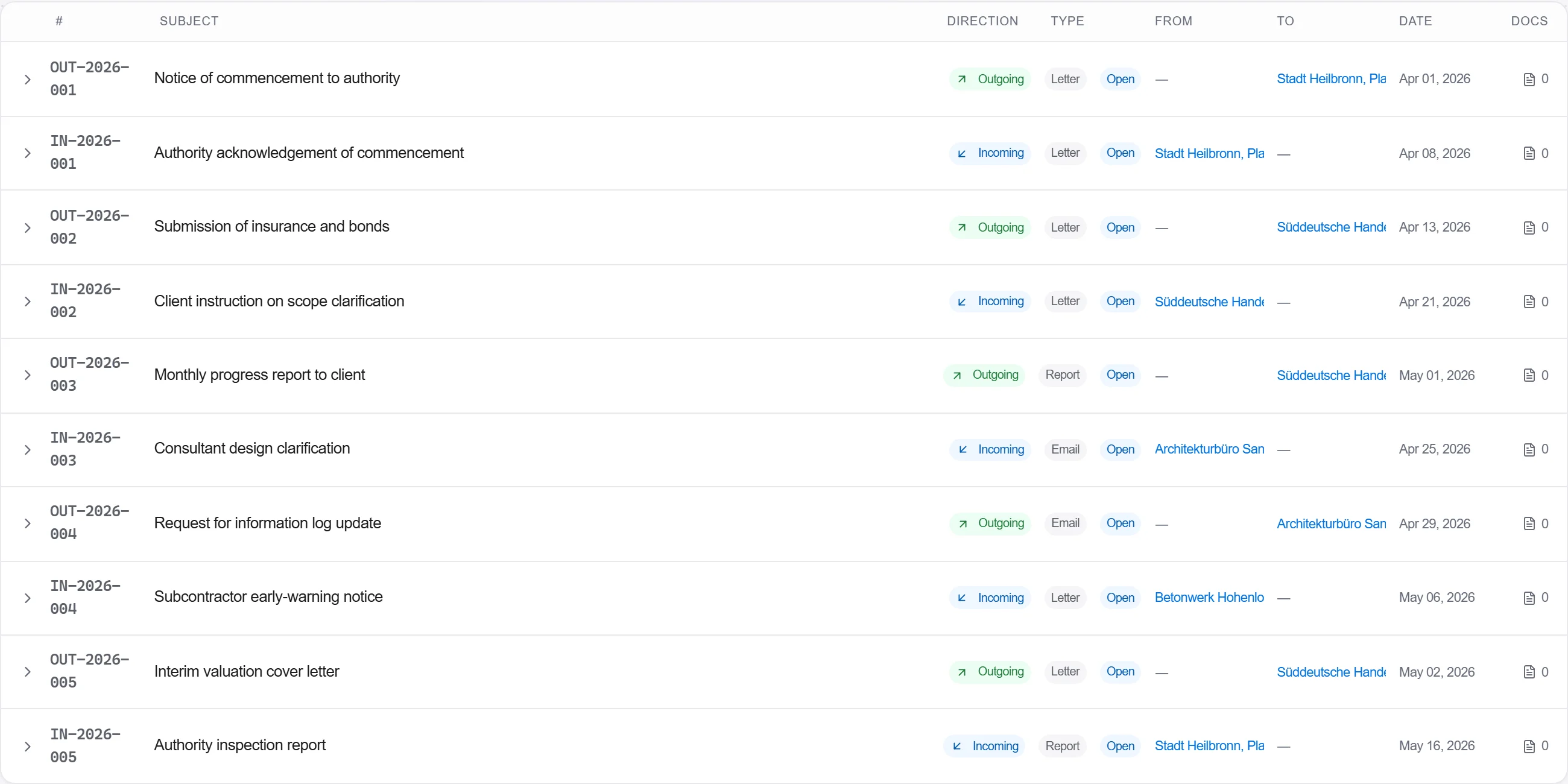
Why: A verbal instruction only binds once it is put in writing and left unchallenged. The confirmation note turns a corridor conversation into an instruction you can rely on and, later, be paid for.
If the instruction added to or changed the scope, raise the change order now, before the work is done, so the extra is captured against an agreed reason and the clock starts on your entitlement.
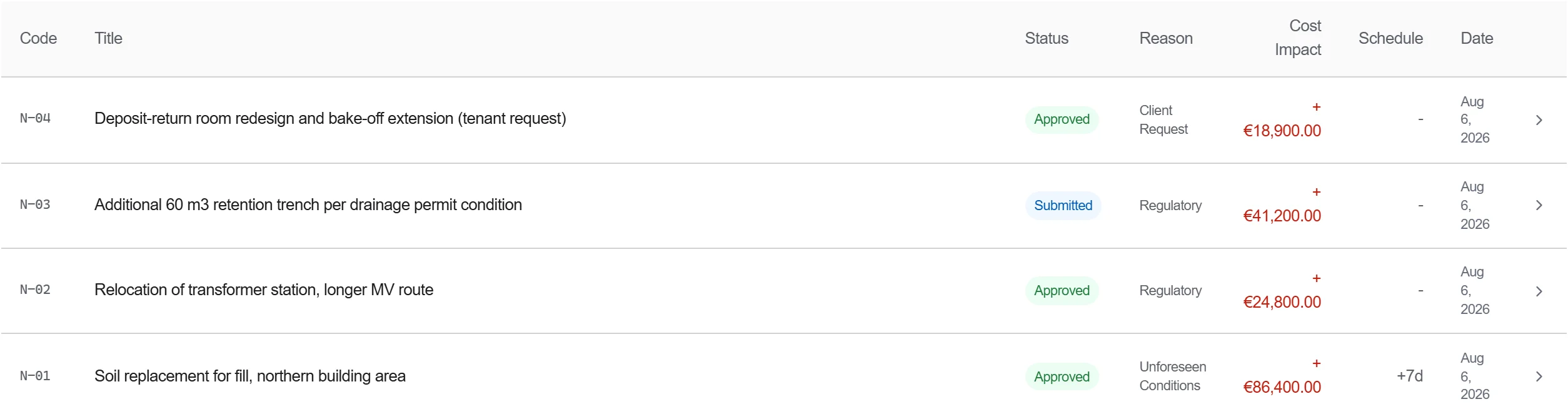
Why: Work done first and papered afterwards is the work that never gets paid. Starting the change record before you act is what keeps a verbal instruction from turning into free scope.
3 / 190 platform modules
Close the day out properly: record the diary, book the labour and plant hours, upload the p…
Turn a question from the working face into a tracked request, drive it to the party who own…
Turn instructed extra work into a claim that gets paid: record the labour, plant and materi…